A consultation for braces by dentist/orthodontist is a necessary to determine the need for braces, to size the braces and decide on various other factors concerning the impending braces. The consultation will last about a half an hour and cover various aspects of the braces as well as provide patients and their parents with all the necessary information.
During consultation, you will be asked questions such as:
What you don’t like about your teeth/face?
What do you want to achieve at the end of the treatment?
You expectation form the treatment
Examination
Next, the orthodontist will examine your face profile (such as skeletal pattern, facial height and symmetry) , position of you nose, upper and lower lips and position of you chin.
Then, he will looks into your mouth to see the position of the upper front teeth; how much the teeth inclined, whether they are in front or behind the lower front teeth. He will examine each segment of your teeth; whether the teeth overlap each other (insufficient space) or spacing, any tooth tilted, submerge
Finally, oral hygiene, any teeth need to be restored, decayed teeth or impacted wisdom teeth to be extracted.
Other Investigations
Photos of patient face for orthodontic assessment
To complete the assessment, photos of your face and teeth as well as X-rays of the mouth will be taken at the consultation, and a molding of the teeth may be taken.
Photos of patient’s teethDental Panoramic Tomogram or OPG radiographCephalometry Analysis done with computer software
Two radiographs that required you to have are the dental panoramic tomography (OPG) and lateral cephalometry radiograph. Dental panoramic tomography (OPG) allows orthodontist to examine the whole upper and lower jaw; to look of any missing teeth, impacted or embedded teeth. It is a good radiograph to look for any pathological lesion in the jaw bone. Lateral cephalometry radiograph is used to determine the upper and lower jaw relationship. Computer software is used to analyze the severity of jaws discrepancy and is it important for treatment planning.
Dental Model – Duplication of patient’s mouth
Diagnosis
The main focus at the braces consultation is determining the need for braces. This diagnosis is often obtained before the consultation appointment but will be discussed in reference to treatment plans for your orthodontic problems.
Treatment
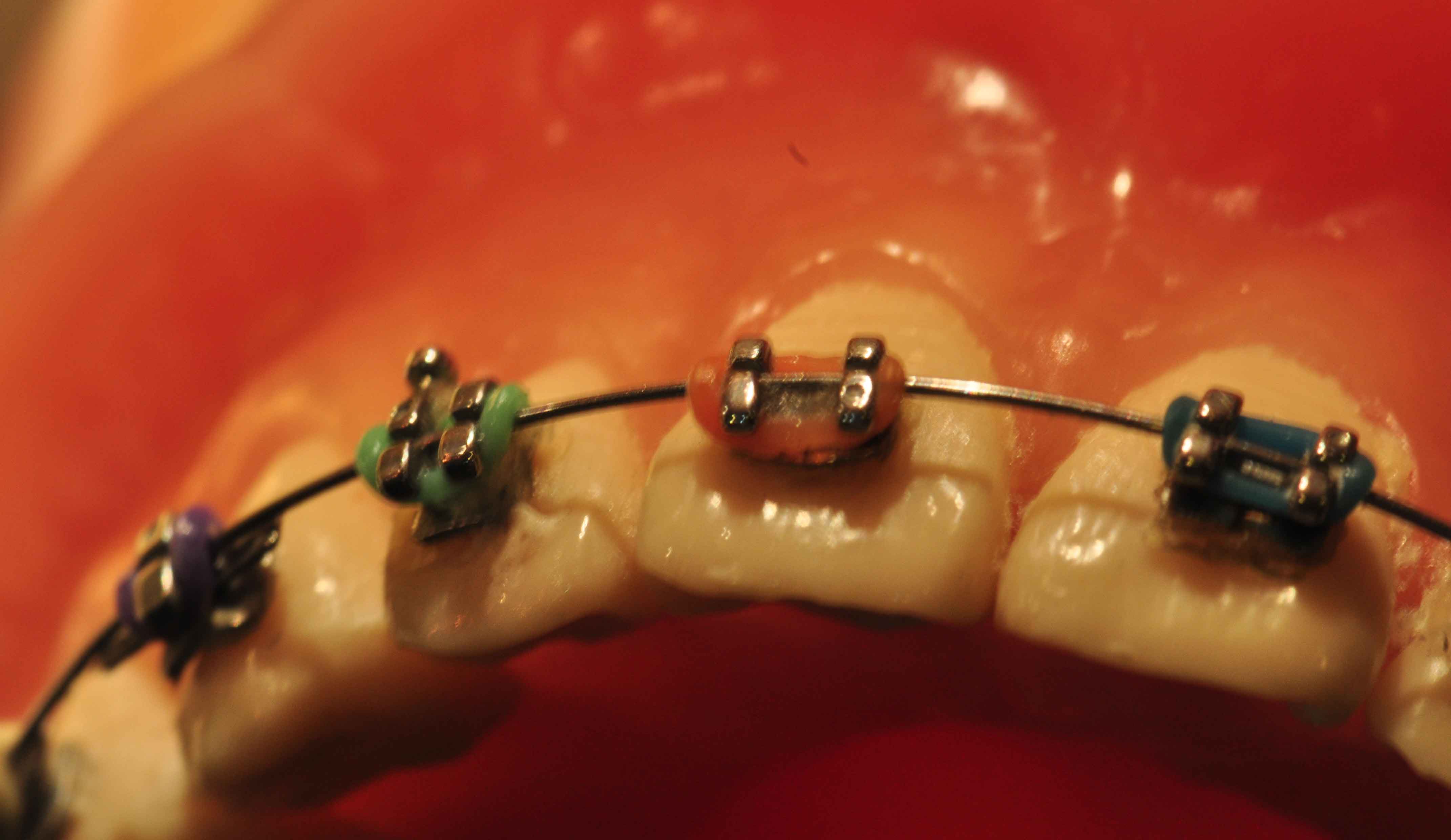
Each specific treatment plan will be discussed and outlined at the braces consultation. Treatment plans may include wearing a retainer for a few weeks before having the braces placed. The amount of time the braces will need to remain in place will also be discussed at the consultation. It is during the discussion of treatment when the orthodontist will explain to you the necessary care for braces. At the consultation visit, you will be allowed to decide the types of braces (metal or crystal) and the colors of each brackets.
He will also discuss with you other dental treatments that you needed before orthodontic treatment such as scaling, restoration work and extraction. Sometime, you are required to undergo minor surgery to remove impacted or embedded tooth prior orthodontic treatment.
Other Options
Alternative treatments will also be discussed at the braces consultation. Alternative treatments may include only wearing a retainer or wearing a clear mouth guard apparatus.
Warnings
At the consultation appointment, the orthodontist will discuss the risks and complications associated with wearing braces. The orthodontist will then warn you about pain and discomfort associated with the braces and possible problems the braces can create, such as the removal of enamel from the teeth and gum soreness and bleeding. He will ask you to clean your teeth very well to prevent teeth decay during orthodontic treatment. You will have to wear a retainer at the end of the treatment to minimize relapse.
Financial Arrangements
Because braces are expensive, it is important that payment arrangements be discussed at the consultation appointment. At the consultation, the orthodontist may ask the patient and guardians if the patient has dental insurance. If the patient does not have dental insurance, the orthodontist may be able to set the patient up on a payment plant or may require the total cost of the braces be paid up front or by installment.
As a rule, positive orthodontic results can be achieved by informed and cooperative patients. Thus the following information is routinely supplied to all who consider orthodontic treatment. While recognizing the benefits of healthy teeth and a pleasing smile, you should also be aware that orthodontic treatment has limitations and potential risks. These are seldom enough to avoid treatment, but should be considered in making the decision to undergo orthodontic treatment. Orthodontic treatment usually proceeds as planned; however, like all areas of the healing arts, response to treatment and results cannot be guaranteed.
Benefits of Orthodontic Treatment
Orthodontics plays an important role in improving overall oral health. Orthodontics also helps create balance and harmony between the teeth and face for a beautiful, healthy smile. An attractive smile enhances one’s self esteem, which may actually improve the quality of life itself. Properly aligned teeth are easier to brush, and thereby may decrease the tendency to decay, or to develop diseases of the gum and supporting bone.
Nature & Purpose of Orthodontic Procedures
Orthodontics strives to improve the bite by helping to direct forces placed on the teeth. This protects the teeth from trauma during ordinary everyday activities, such as chewing and stress. Properly aligned teeth also help minimize excessive stress on bones, roots, gum tissues and the temporomandibular joints. Orthodontic treatment has the potential to eliminate future dental problems including the problem of abnormal wear. Treatment can facilitate good oral hygiene to minimize decay and future periodontal problems. In addition, orthodontics can provide a pleasant smile, which may enhance one’s self-image.
Orthodontic Treatment Risks
All forms of medical and dental treatment, including orthodontics, have some risks and limitations. Fortunately, in orthodontics complications are infrequent and when they do occur they are usually of minor consequence. Nevertheless, they should be considered when making the decision to undergo orthodontic treatment. The major risks involved in orthodontic treatment may include, but are not limited to: 1. DECALCIFICATION:(Permanent enamel markings) Tooth decay, gum disease, and permanent markings (decalcification) on the teeth can occur if orthodontic patients eat foods containing excessive sugar and/or do not brush their teeth frequently and property. These same problems can occur without orthodontic treatment, but the risk is greaterto an individual wearing braces. 2. ROOT SHORTENING: In some patients the length of the roots may be shortened during orthodontic treatment. Some patients are prone to this happening, some are not. Usually this does not have significant consequences, but on occasion it may become a threat to the longevity of the teeth involved. 3. GOOD ORAL HYGIENE: The health of the bone and gums which support the teeth may be affected by orthodontic tooth movement if a condition already exists, and in some rare cases where a condition does not appear to exist. In general, orthodontic treatment lessens the possibility of tooth loss or gum infection due to misalignment of the teeth or jaws. Inflammation of the gums and loss of supporting bone can occur if bacterial plaque is not removed daily with good oral hygiene. 4. RELAPSE TENDENCY: Teeth may have a tendency to change their positions after orthodontic treatment. This usually is only a minor change and faithful wearing of retainers as instructed should help reduce this tendency. Throughout life the bite can change adversely from various causes, such as: eruption of wisdom teeth, growth and/or maturational changes, mouth breathing, playing of musical instruments and other oral habits, all of which may be out of the control of the orthodontist. 5.JAW JOINT PROBLEMS: Occasionally problems may occur in the jaw joints, i.e., temporomandibular joints (TMJ), causing joint pain, headaches or ear problems. These problems may occur with or without orthodontic treatment. Any of the above-noted symptoms should be promptly reported to the orthodontist. 6.LOSS OF TOOTH VITALITY: Sometimes a tooth may have been traumatized by a previous accident or a tooth may have large fillings, which can cause damage to the nerve of the tooth. Orthodontic tooth movement may in some cases aggravate this condition and in rare instances may lead to root canal treatment. 7.POST-ADJUSTMENT PAIN: Sometimes orthodontic appliances may accidentally be swallowed or aspirated or may irritate or damage oral tissues. The gums, cheeks and lips may be scratched or irritated by loose or broken appliances or by traumatic blows to the mouth. Usual post adjustment tenderness should be expected, and the period of tenderness or sensitivity varies with each patient and the procedure performed. Typical post-adjustment tenderness may last 24 to 48 hours. You should inform our office of any unusual symptoms, broken or loose appliances, as soon as they are noted. 8. MINOR INJURIES: On rare occasions, when dental instruments are used in the mouth, the patient may inadvertently get scratched, enamel abrasions, poked or receive a blow to a tooth with potential damage to or soreness of affected oral structures. Abnormal wear of tooth structures is also possible if the patient grinds their teeth excessively. We will use extreme care to avoid minor injuries. 9. ADJUNCTIVE SURGERY: Sometimes oral surgery; tooth removal or orthodontic surgery, is necessary in conjunction with orthodontic treatment, especially to correct crowding or severe jaw imbalances. Risks involved with treatment and anesthesia should be discussed with your general dentist or oral surgeon before making your decision to proceed with this procedure. 11. UNFAVORABLE GROWTH: Atypical formation of teeth, or insufficient or abnormal changes in the growth of the jaws may limit our ability to achieve the desired result. If growth becomes disproportionate during or after treatment, or a tooth forms very late, the bite may change, requiring additional treatments or, in some cases, oral surgery. Growth disharmony and unusual tooth formations are biological processes beyond the orthodontist’s control. Growth changes that occur after orthodontic treatment may alter the quality of treatment results. 12. TREATMENT TlME: The total time required to complete treatment may exceed the original estimate. Excessive or deficient bone growth, poor cooperation in wearing the appliance(s) the required hours per day, poor oral hygiene, broken appliances and missed appointments can lengthen the treatment time and affect the quality of the end results. 13. CERAMIC BRACES: When clear and tooth colored brackets (ceramics) have been utilized, there have been some reported incidents of patients experiencing bracket breakage and/or damage to teeth, including attrition and enamel flaking or fracturing on debonding. Fractured brackets may result in ceramic remnants, which might be harmful to the patient especially if swallowed or aspirated. 14. ADJUNCTIVE DENTAL CARE: Due to the wide variation in the size and shape of teeth, achievement of the most ideal result (for example, complete closure of excessive space) may require restorative dental treatment (in addition to orthodontic care). The most common types of treatment are cosmetic bonding, crown and bridge restorative dental care and/or periodontal therapy. You are encouraged to ask questions regarding dental and medical care adjunctive to orthodontic treatment of those doctors who provide these services. (i.e. general dentist, periodontist, oral surgeon). 15. MEDICAL PROBLEMS: General medical problems can affect orthodontic treatment. You should keep your orthodontist informed of any changes in your medical health. 16. PERFECTION IS OUR GOAL: In dealing with human beings and problems of growth and development, genetics and patient cooperation, achieving perfection is not always possible. Orthodontics is an art, not an exact science; therefore, a functionally and esthetically adequate result, not 100% perfection, must be acceptable. Your comments in regard to your expectations prior to, during and after orthodontic treatment will help us understand your concerns. Please keep us regularly informed of your feelings, concerns and results that do not meet your expectations.
Possible Alternative Treatments
For the vast majority of patients, orthodontic treatment is an elective procedure. One possible alternative to orthodontic treatment is no treatment at all. You could choose to accept your present oral condition. The specific alternative to the orthodontic treatment of any particular patient depends on the nature of the individual’s teeth, supporting structures and appearance. Alternatives could include:
1. Extraction versus treatment without extraction(s);2. Orthodontic surgery versus treatment without orthodontic surgery;
3. Possible prosthetic solutions (bridges, implants, partials, replacement teeth); and
4. Possible compromised approaches (To be discussed with you, if applicable)
Porcelain bridge
Nowadays, more and more people want to replace their missing teeth with the material that is as near as possible to their natural teeth. Porcelain fused to metal bridge is one of the conventional choice. However, because of the presence of metal in this type of material, the bridge somehow look dull, opaque and non-translucent. On top of that, it has a ‘dark’ margin due to the thinning of porcelain at that area especially dark gum line that is very obvious when patient smile.
Porcelain bridge is invented to over come all the problems above. Because of its metal-free property, porcelain bridge can look like ‘real’ teeth and strong enough to withstand the biting force. The preparation on the teeth prior to porcelain bridge placement is same with the conventional bridge. Currently, for missing single tooth, we provide glass type of porcelain (eg. IPS e.max®) while for multiple missing teeth, zirconia bridge (eg. Procera®) will be used.
Cases of porcelain bridge
Case one: Missing front tooth
This young lady had a missing upper front tooth. She wanted replacement which looked as natural as possible. A porcelain bridge was suggested.
Unfortunately, the space for the front left central incisor was inadequate for a front tooth!!
Impression of her upper jaw and a study model was fabricated for assessment.
Diagnostic wax-up of the her bridge was made on the study model. Then, the patient’s teeth were prepared for bridge construction.
The porcelain bridge was constructed by laboratory technician. Back view of the bridge (below).
Full porcelain bridge IPS e.max®.
The porcelain bridge was cemented with transparent resin cement.
She was very pleased with the final outcome. Now she can smile!
Case 2: Badly decay front teeth
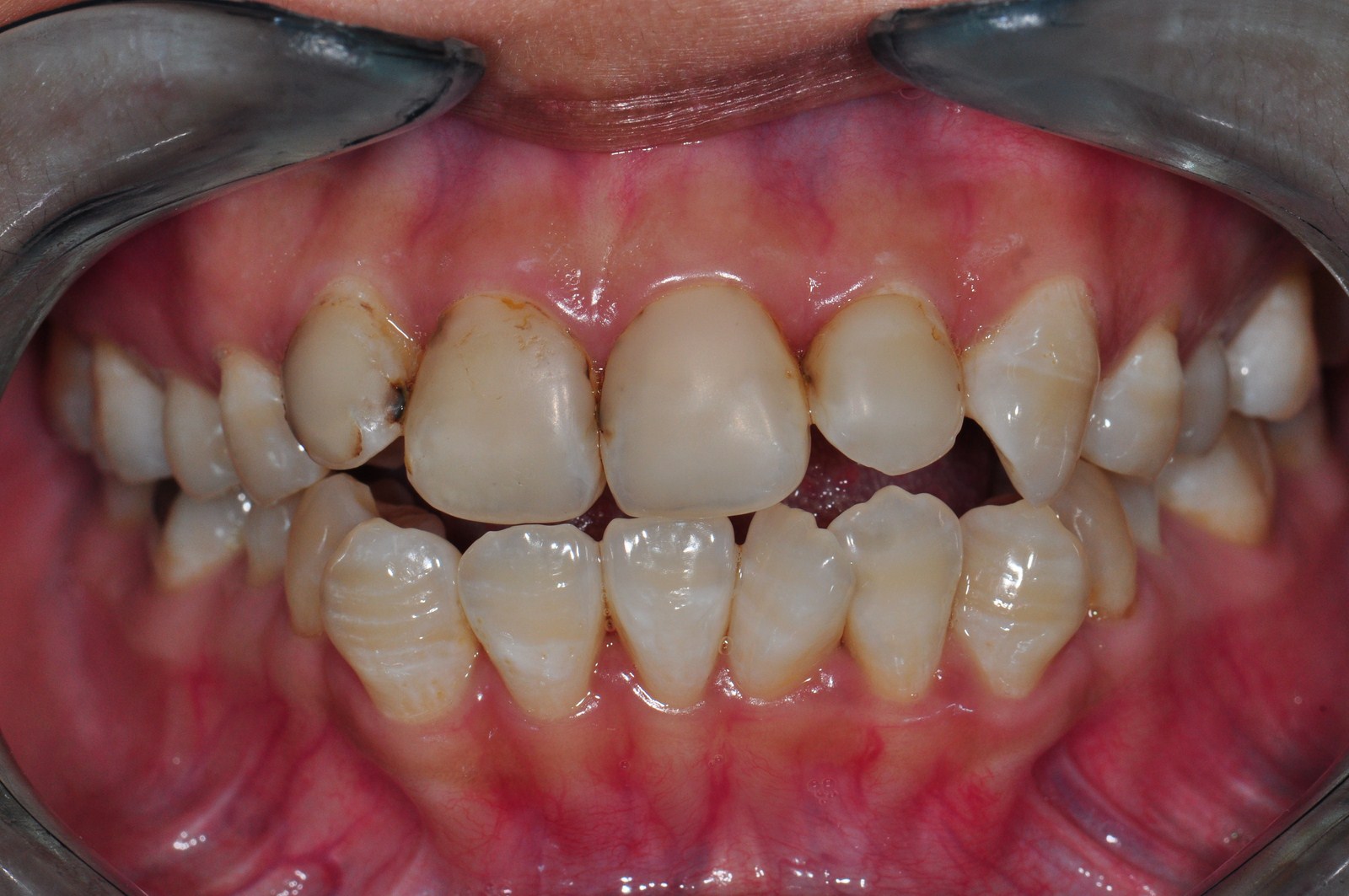
This young man presented with a badly decay front teeth with both lateral incisor placed behind. He wanted to make over all his front teeth.
In the assessment, we found numerous problems: decay front teeth, lateral front teeth placed backward and the canines looked unnatural. We started with root canal treatment on his front teeth. Due to backward position of the lateral incisors, we have the teeth extracted and after healing, he was ready for bridge construction. We proposed to him to have 2 porcelain bridge (each consist of 3 unit tooth) from his canine to the other side of his canine. (Want to know more about root canal treatment click here).
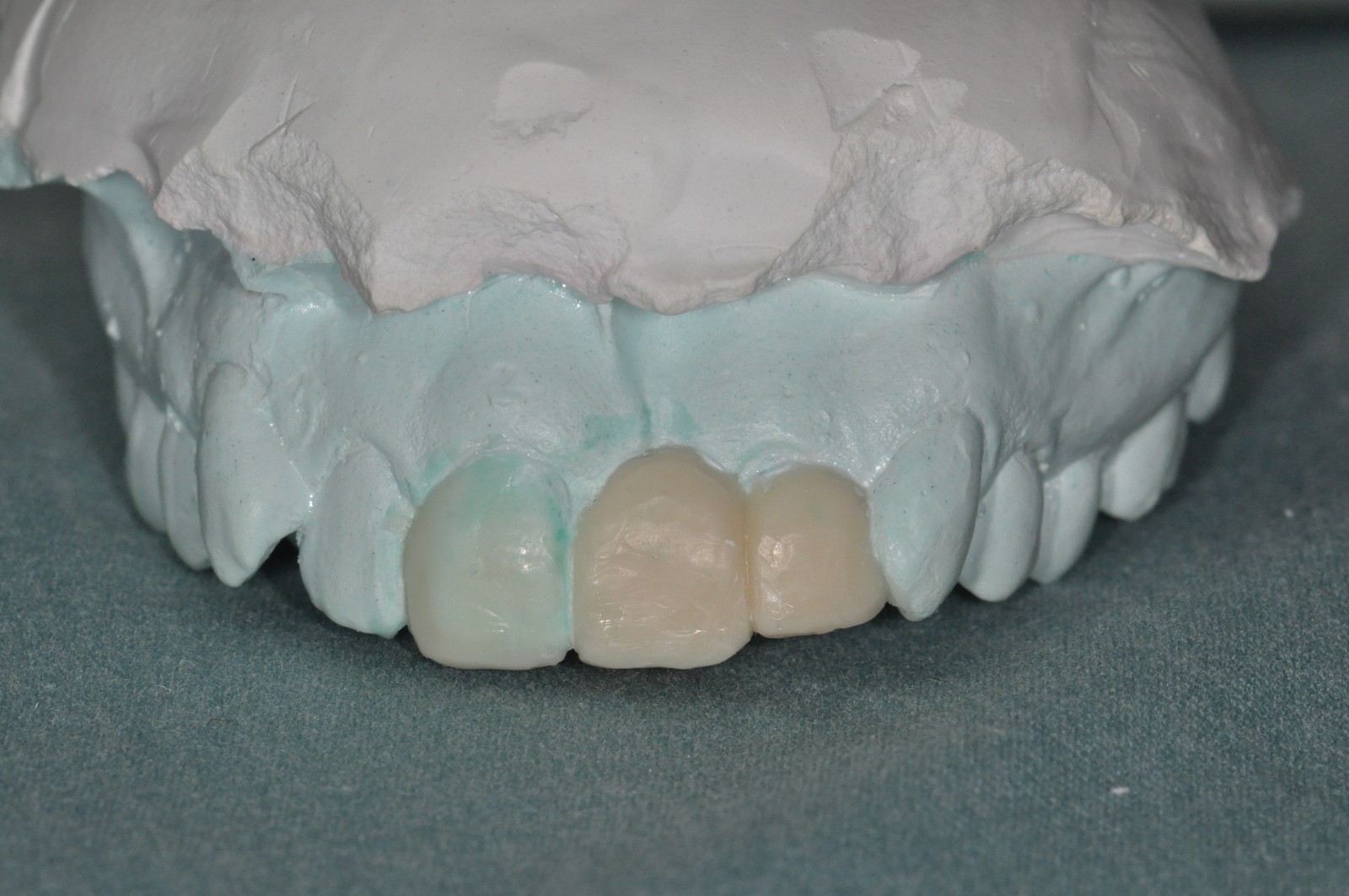
An study model was duplicated from his mouth and diagnostic wax-up was done to reassemble the final outcome of his bridges.
The teeth was prepared for bridges construction under local anaesthesia.
A provisional bridge was fabricated for him to wear while waiting for the final bridge
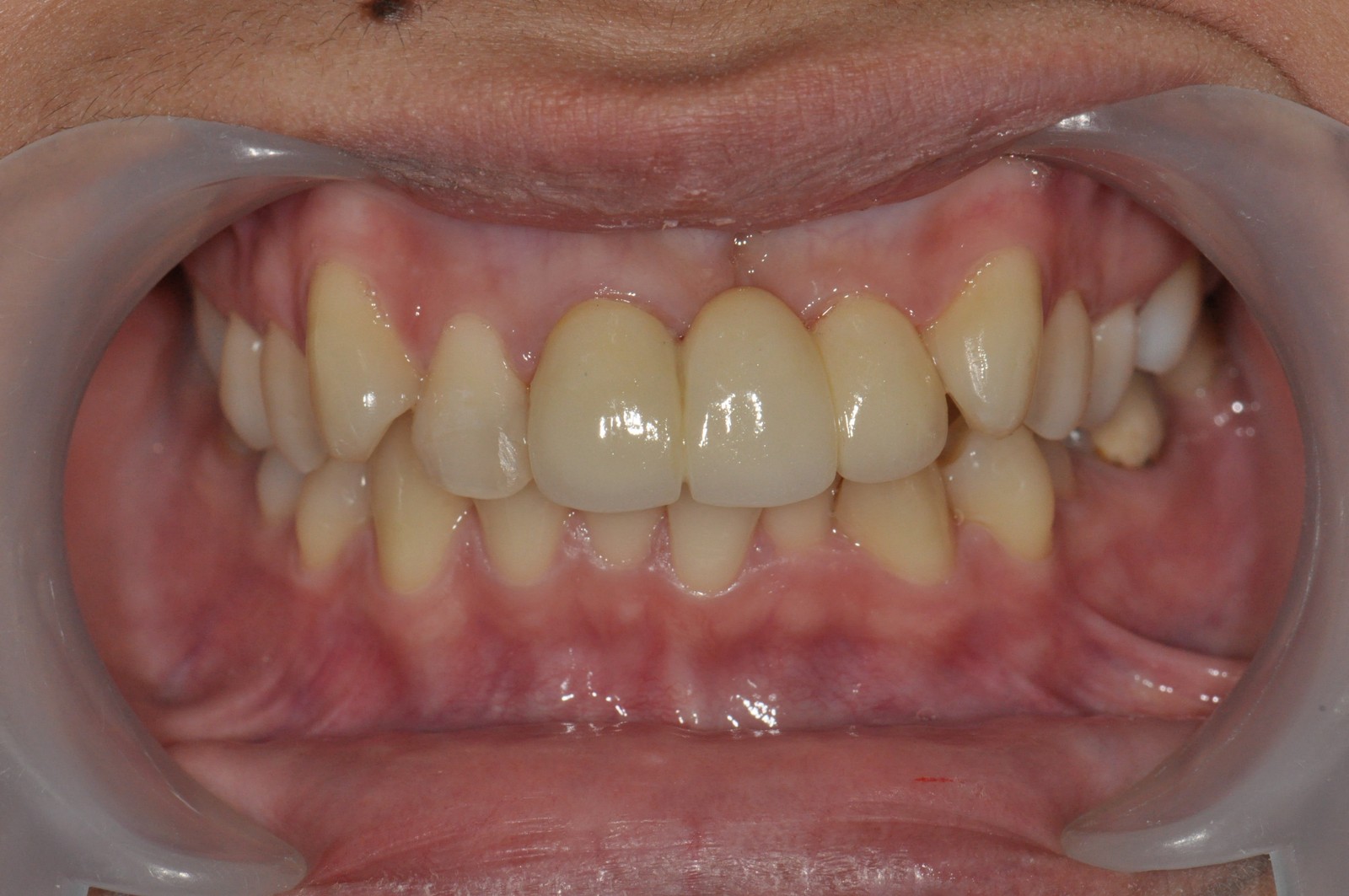
Finally, the porcelain bridges were cemented with transparent resin cement
The back view of the bridges with healing socket of the extracted lateral incisors.
Now, he can smile confidently!!
Most people want a gap in their mouth filled for cosmetic reasons, and understandably so: beautiful smile is a very important part of the impression you make to the outside world. However, there is a more important reason to close gaps in your mouth where teeth are missing; it is actually harmful to have a missing tooth, because teeth tend to drift out of place when there is a gap and move forward into the space that has been created. This leads to all kinds of serious problems, including bone loss, and, if left untreated, you can loose more teeth. Therefore, replacing a tooth is important!! Usually it can be done by fabricating a denture, bridge or implant.
What is a dental bridge?
Dental BridgeBridge stting on the implants
A bridge is a way of replacing one or more missing teeth in the mouth. It is also known as fixed partial denture, which used to replace a missing tooth by joining permanently to adjacent teeth or dental implants. Unlike traditional removable dentures, a dental bridge is permanent as it’s anchored to the teeth at one, or both, sides using metal bands held in place by resin or cement. If well cared for, a dental bridge should last for 10 to 15 years.
Anatomy of a dental bridge
A bridge consist of a ‘false teeth/tooth which is called pontic connected by connectors to retainers. Bothe retainers sit on the abutment teeth: Retainers. Part of the bridge will have metal castings, called retainers. They are made to fit onto what the dentist has cut away on the abutment teeth. Retainers also secure and support the bridge’s artificial tooth or teeth. Pontics. A pontic is an artificial tooth that is suspended from the retainer casting. A pontic occupies the space formerly filled by the crown of a natural tooth. Connectors. A pontic is attached to a retainer by a connector. Connectors can be rigid or nonrigid. Nonrigid connectors take the form of male- and female-locking arrangements. Rigid connectors are classified as either cast or soldered. Abutments. The teeth that support and hold the retainer are called abutments. It is almost mandatory that an bridge be supported by an abutment at both ends. This requirement is waived in special situations. When a pontic is suspended from only one retainer, it is cantilevered.
Composition of a dental bridge
The materials used for the bridges include gold, porcelain fused to metal, or in the correct situation porcelain alone (full porcelain). The amount and type of reduction done to the abutment teeth varies slightly with the different materials used. The recipient of such a bridge must be careful to clean well under this prosthesis.
Types of dental bridge
There are three types of dental bridge: fixed, resin bonded, and cantilever. The type of bridge used will depend on the quality of the teeth on either side of the gap, as well as the position of the gap. 1.) Fixed Bridges With a fixed bridge, the false tooth, or pontic, is anchored to new crowns attached to the teeth either side of the gap. These crowns are usually made from porcelain with the new tooth made from either ceramic or porcelain. This forms a very strong bridge that can be used anywhere in the mouth. 2) Resin Bonded Bridges Sometimes called Maryland Bonded, these dental bridges do not involve crowning the adjacent teeth, so are useful where these show little or no previous damage. The new tooth is generally made from plastic and is attached via metal bands bonded to the adjacent teeth using resin. This type of bridge is particularly suitable for front teeth where stress is minimal, and the bond can be made out of view behind the teeth. 3) Cantilever Bridges These dental bridges are used where there is a healthy tooth only on one side of the gap. The bridge is anchored to one or more teeth on just one side. As a result, this type of bridge is generally only suitable for low stress bridges such as front teeth.
How your bridge is fitted
Getting a bridge usually requires two or more visits. While the teeth are numb, the two anchoring teeth are prepared by removing a portion of enamel to allow for a crown. Next, a highly accurate impression (mold) is made which will be sent to a dental laboratory where the bridge will be fabricated. In addition, a temporary bridge will be made and worn for several weeks until your next appointment. At the second visit, you permanent bridge will be carefully checked, adjusted, and cemented to achieve a proper fit. Occasionally your dentist may only temporarily cement the bridge, allowing your teeth and tissue time to get used to the new bridge. The new bridge will be permanently cemented at a later time.
Cases done in our clinic:
Case One: Multiple missing teeth This patient was a young female, wearing denture for more many years. She came to us, wanted something fix or permanent which looked more natural than her denture. She presented with multiple missing (below). After assessing her, we suggested a 9 unit bridge extending from upper left canine to her upper right molar with non-rigid connector between her upper right canine and first premolar. We also suggested her to have a implant-supported bridge for her upper left quadrant. Shade or colour selection was chosen and the remaining teeth were prepared for bridge construction under local anaesthesia. Impression of her teeth were taken and a dental model was fabricated. The laboratory technician construction the bridge on the model. The non-rigid connector just behind the right canine used to connect the rest of the bridge a the posterior right (above) The connector at the back of the upper right canine was covered properly with porcelain. The anterior part of the bridge was cemented onto patient’s mouth (above and below – the back view) Finally, the back portion of the bridge is cemented to the back molar Final result!! Case Two: Multiple missing teeth This gentleman complained that his old denture was getting shorten and he wanted something permanent His denture looked really old with discolouration over the ‘pink’ part of the denture On the palatal view showed multiple missing teeth involving the upper front and right side. A 9 unit bridge was constructed and cemented onto patient’s mouth. Due to bone resorption at the front part, ‘pink’ porcelain was added to supported his upper lip giving him a youthful look. Palatal view: the bridge extended from left canine to right molar Final result!!
Maintenance of dental bridge
Superfloss
Dental hygiene becomes a little more complicated if you have a bridge, making normal flossing impossible in that area, nevertheless you do have to take care that the teeth adjoining the artificial tooth are thoroughly cleaned. Even the best fitting bridge will still have gaps around and beneath it, and these can quickly accumulate damaging debris if you do not follow a strict hygiene regime.Your dentist can show you how to do this, using special floss (eg. superfloss) or flossing needles. These floss go ‘under’ the pontic area and area near to the abutment to remove the food usually stagnant there.
How Long do Bridges Last?
While crowns and bridges can last a lifetime, they do sometimes come loose or fall out. The most important step you can take to ensure the longevity of your crown or bridge is to practice good oral hygiene. A bridge can lose its support if the teeth or bone holding it in place are damaged by dental disease. Keep your gums and teeth healthy by brushing with fluoride toothpaste twice a day and flossing daily. Also see your dentist and hygienist regularly for checkups and professional cleanings. To prevent damage to your new crown or bridge, avoid chewing hard foods, ice or other hard objects.
Resin Veneers or better know as composite veneers are thin shells of tooth-colored, translucent filling, custom made to fit over teeth and improve their color, shape and overall appearance. Placement of composite veneers can dramatically improve your smile and appearance.
Composite veneer technique
Types of problems that composite veneers can correct
Placement of dental veneers is sometimes referred to as “instant orthodontics” because they can be used to cover a variety of dental problems involving teeth in the “smile zone” including:
Generalize spacing and ‘peg’ shape right lateral incisor
Chipped incisor
Unsightly or stained fillings
Dental veneers (either composite or porcelain veneer) can improve the appearance of the teeth but they cannot realign the jaw or correct overbites and underbites. Orthodontics are required to correct these more complicated problems.
Composite veneers can be done on the spot. The time spent might be from 30 minutes to 2 hours or more depends on the number of tooth involved. They do not required second visit.
Composite veneers produce the same aesthetic result as porcelain veneers. Therefore, no one can tell whether you have a composite or porcelain done except your dentist!
Composite veneers can be repair if there is any chipping or fracture.
Composite veneers are very cheap (From MYR150 toMYR250 per tooth; depends on how difficult and big the defect is).
The major disadvantages of porcelain veneers over composite resin include the following:
Porcelain veneers are not made at chairside. Porcelain veneers are fabricated in a dental laboratory and therefore require at least two visits. Composite resin veneers are accomplished in one visit. An adequate amount of tooth structure is removed to allow for placement of composite resin in the desired shape without added tooth bulk. Bonding agent is applied. Composite resin is then added, light cured, then finished and polished.
Porcelain veneers are more expensive than composite veneers. The placement of veneers requires more time, expertise and resources in order to fabricate and bond and therefore cost more.
Porcelain veneers cannot be repaired. If they break porcelain veneers must be replaced.
The advantages of porcelain veneers
Porcelain veneers have several advantages compared to composite resin including:
Porcelain veneers are very durable. Although porcelain veneers are very thin, usually between 0.5 – 0.7 millimeters and inherently brittle, once bonded to healthy tooth structure it becomes very strong. Porcelain veneers can last for many years, usually 10-15 years, if you take good care of them using good oral hygiene and avoiding using them to crack or chew hard objects like ice.
Porcelain veneers create a very life-like and natural tooth appearance. The translucent properties of the porcelain allows the veneers to mimic the light handling characteristics of enamel giving it a sense of depth which is not possible with other cosmetic bonding materials such as composite resin.
Porcelain veneers resist staining. Unlike other cosmetic dental bonding materials, porcelain is a smooth, impervious ceramic and therefore will not pick up permanent stain from cigarette smoking or from dark or richly colored liquids or spices.
Porcelain veneers are conservative. Only a small amount of tooth structure is removed, if any during the procedure.
Cases done in our practice using composite veneers…
Case 1
This young man complaint of generalized spacing and a peg-shaped right lateral incisor. Composite material was used to close all the gaps between his teeth (Below).
Case 2
This patient fell down and broke her front teeth while playing spot. The tooth was restore with composite veneer. ‘Stained’ or chalky white patches resin composite was place on the front surface of the veneer to mimic the neighbour teeth (Below).
Case 3
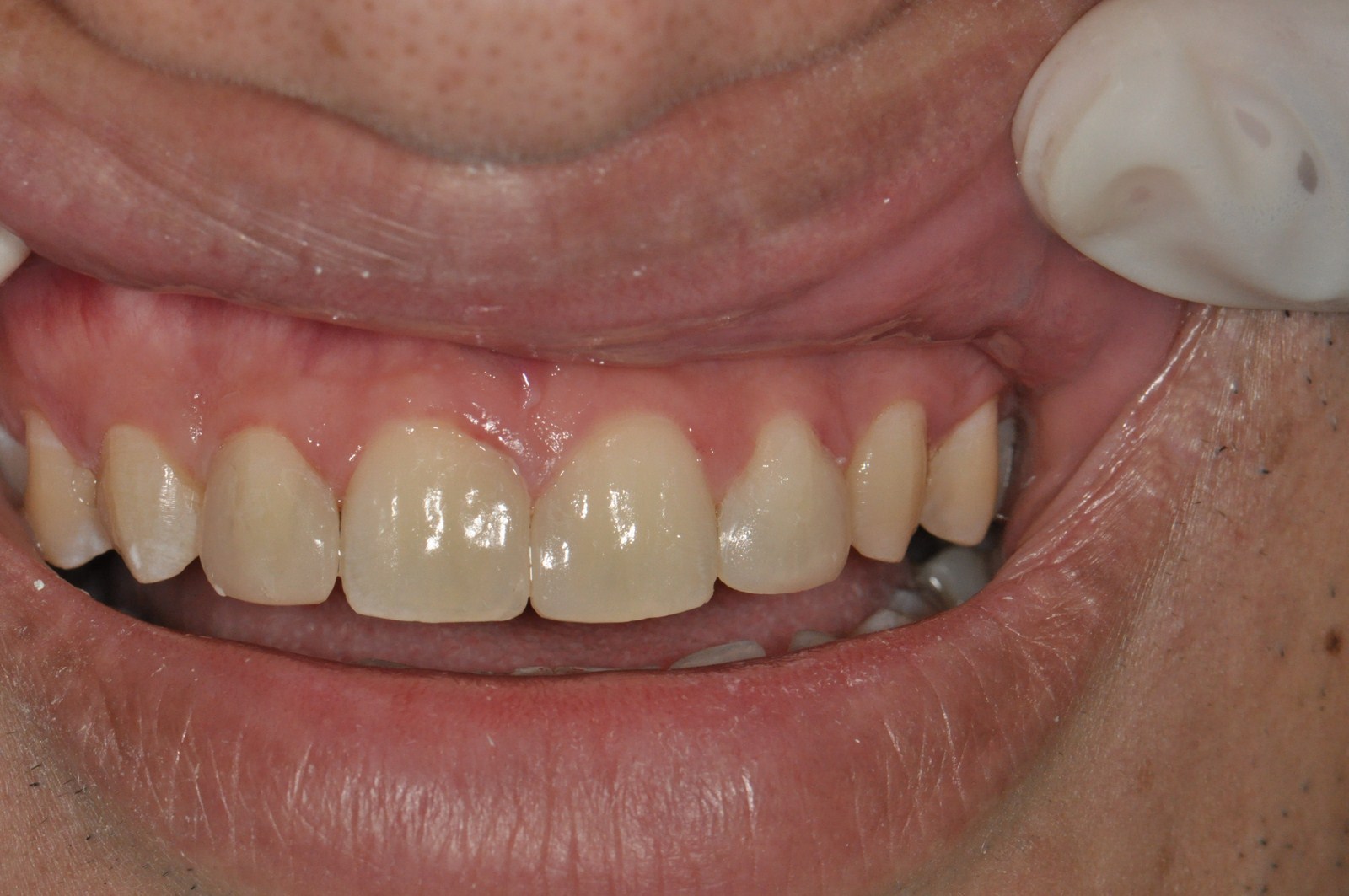
Old filling at the center of his upper front teeth looked yellowish and rough. Those fillings were removed and replaces by new composite veneers (Below).
Case 4
Yellow stain due to uneven surface at the front teeth and old yellow filling were replace by composite veneers (Below).
Case 5
Multiple decays at the front teeth were treated with composite veneer (Below).
Case 6
Defect of the lateral incisor was repaired with resin composite (Below).
Case 7
Generalize unevenness of this young man front teeth gave a older look. With composite veneer correction, he looks youthful again!! (Below).
Case 8
Old composite veneers on all the six front teeth on this lady was stained at the margin. The composite were removed and were replaced with the new one (Below).
Are you a good candidate for dental veneers?
Dental veneers are not appropriate for everyone or every tooth. Case selection is an extremely important factor in the success of this technique. Veneering teeth is not a reversible procedure if tooth structure must be removed to achieve your desired result Only an examination by your dentist can determine whether dental veneers are appropriate for making the changes you want. Some of the situations where certain teeth or people are not good candidates for dental veneers include:
Unhealthy teeth. Dental decay and active gum disease must be treated prior to fabricating and bonding dental veneers.
Weakened teeth. If a significant amount of tooth structure is missing or has been replaced by a large filling the teeth will not be strong enough to function with a dental veneer.
Teeth with an inadequate amount of enamel present. Dental veneers are more successfully bonded onto tooth enamel.
People who habitually clench or grind on their teeth. Habitual clenching and grinding of the teeth can easily chip or break dental veneers. Dental nightguards may be a solution for this in some cases.
Persons without a stable bite.
Severely malpositioned teeth or misaligned teeth. Orthodontic treatment may be required to achieve the desired result.
How to maintain Dental Veneers?
Dental veneers can chip or come off if not cared for properly. To improve their durability and longevity you need to maintain consistent good oral hygiene and have regular dental examinations and cleanings at least twice each year. In addition, you must avoid using them to bite or crack hard objects like nuts and ice.
What are the alternatives to composite veneers?
The closest cosmetic alternative to composite veneers is porcelain veneers which are more durable and more resistance to staining. However, they are more costly and require at least 2 visits. On top of that, there is another method to improve smile: Snap-on Smile, a multi-purpose restorative appliance that requires no preparation or altering of tooth structure, no injections, and no adhesives. It is non-invasive, making it completely reversible.
Dental crowns may also be used to correct the same problems that dental veneers correct, however it is a much less conservative procedure.
Tooth color is determined by a combination of phenomena associated with optical properties and light. Essentially, tooth color is determined by the color of dentin and by intrinsic and extrinsic colorations. Intrinsic color is determined by the optical properties of enamel and dentin and their interaction with light. Extrinsic color depends on material absorption on the enamel surface. Any change in enamel, dentin, or coronal pulp structure can cause a change of the light-transmitting properties of the tooth – teeth discolouration.
Tooth Discolouration
Tooth discoloration varies in etiology, appearance, location, severity, and affinity to tooth structure. It can be classified as:
extrinsic
intrinsic
or a combination of both
according to its location and etiology.
Extrinsic Causes
Mouthwash (Chlorhexidine) staining
The principal causes are chromogens (colour agent) derived from habitual intake of dietary sources, such as wine, coffee, tea, carrots, oranges, licorice, chocolate, or from tobacco, mouth rinses, or plaque on the tooth surface. Extrinsic staining caused by tobacco and coffee
The most commonly used procedure to remove discoloration from a tooth surface is by using abrasives (such as prophylactic pastes) or a combination of abrasive and surface active agents such as toothpastes. These methods prevent stain accumulation and to a certain extent remove extrinsic stains; however, satisfactory stain removal depends on the type of discoloration. Unfortunately, the chemical interactions that determine the affinity of different types of materials that cause extrinsic dental stains are not well-understood.
Intrinsic Causes
Unlike extrinsic discolorations that occur on the surface, intrinsic discoloration is due to the presence of chromogenic (coloured) material within enamel or dentin, incorporated either during tooth developing (odontogenesis) or after eruption. This type of stain can be divided into 2 groups, preeruptive and posteruptive. The most common type of pre-eruptive staining is endemic fluorosis caused by excessive fluoride ingestion during tooth development. Post-eruptive stain usually associated with pulp problems such as pulp necrosis, or root canal material. Generally, intrinsic stain can be divided into: Systemic causes are
genetic: congenital erythropoietic porphyria, cystic fibrosis of the pancreas, hyperbilirubinemia, amelogenesis imperfecta, and dentinogenesis imperfecta
Intrinsic staining: Tetracycline staining Intrinsic staining: Fluorosis Local causes are
pulp necrosis,
intrapulpal hemorrhage,
pulp tissue remnants after endodontic therapy (RCT),
Internal bleaching procedures are performed on devitalized (dead) teeth that have undergone root canal therapy (or RCT) but are discolored due to internal staining of the tooth structure by blood and other fluids that leached in. Unlike external bleaching, which brightens teeth from the outside in, internal bleaching brightens teeth from the inside out. Yellow-brown discoloration of tooth after RCT treatment and the clinical results after 3 applications of the walking bleach technique.
Bleaching the tooth internally involves drilling a hole to the pulp chamber, cleaning, sealing, and filling the root canal with a rubber-like substance, and placing a peroxide gel into the pulp chamber so the gel can work directly inside the tooth on the dentin layer.In this variation of whitening the peroxide is sealed within the tooth over a period of some days and replaced as needed, the so called “walking bleach” technique.
‘Walking bleach’ technique
Before treatment a radiograph would be made to check the quality of the root filling.
The quality and colour (shade) of any restoration present are assessed.
Tooth colour was evaluated and clinical photographs were taken at the beginning of and throughout the procedure.
Rubber dam should applied to isolate the treated tooth, to prevent reinfection of the root canal, and to protect the adjacent structures from the bleaching agent.
The restorative and the obutarating material was removed until below gum margin
A layer of cement was applied on top of the obturating material.
Bleaching agent: sodium perborate mixed with 30% hydrogen peroxide into paste form was be loaded into the pulp chamber of the tooth.
Finally, a temporary restoration was used to cover the cavity
The patient was rescheduled approximately 1 month later and the procedure was repeated 2 to three times.
Walking bleach, A, Internal staining of dentin caused by remnants of obturating materials (OM) in the chamber as well as by materials and tissue debris in pulp horns (PH). B, Coronal restoration is removed completely. C, A protective cement base (B) is placed over the gutta-pecha. A paste (P) of sodium perborate and hydrogen peroxide is placed. D, A thick mix of temporay cement (Z) seals access. E, At a subsequent appointment when the desired shade reached, a permanent cement is placed (TS) at the pulp chamber and composite resin (C) to seal of the access
Complication
External resorption – Internal bleaching occasionally induces external cervical root resorption. Chemicals combine with heat are likely cause necrosis of the cementum, inflammation of the periodontal ligament, and root resorption. Crown (Coronal) fracture – Increased brittleness of the crown part of the tooth, particularly when heat is applied resulting in the tooth is more susceptible to fracture.
Chemical burn – 30% hydrogen peroxide is caustic and will cause chemical burns and sloughing of gingiva. Therefore, rubber dam is needed to protect the gum from chemical burn.
Limitation
Even though internal bleaching can produce satisfactory result in most cases, no all will achieve the desirable result. Therefore, other options such as full porcelain crown, porcelain veneer will be the alternative to whiten non-vital tooth!!
Infection: Although rare, it does occur. The dentist may opt to prescribe antibiotics pre- and/or post-operatively if they determine the patient to be at risk.
Prolonged bleeding: The dentist has a variety of means at their disposal to address bleeding; however, it is important to note that small amounts of blood mixed in the saliva after extractions are normal, even up to 72 hours after extraction. Usually, however, bleeding will almost completely stop within eight hours of the surgery, with only minuscule amounts of blood mixed with saliva coming from the wound. A gauze compress will significantly reduce bleeding over a period of a few hours.
Swelling: Often dictated by the amount of surgery performed to extract a tooth (e.g. surgical insult to the tissues both hard and soft surrounding a tooth). Generally, when a surgical flap must be elevated (i.e. and the periosteum covering the bone is thus injured), minor to moderate swelling will occur. A poorly-cut soft tissue flap, for instance, where the periosteum is torn off rather than cleanly elevated off the underlying bone, will often increase such swelling. Similarly, when bone must be removed using a drill, more swelling is likely to occur.
Sinus exposure and oral-antral communication: This can occur when extracting upper molars (and in some patients, upper premolars). The maxillary sinus sits right above the roots of maxillary molars and premolars. There is a bony floor of the sinus dividing the tooth socket from the sinus itself. This bone can range from thick to thin from tooth to tooth from patient to patient. In some cases it is absent and the root is in fact in the sinus. At other times, this bone may be removed with the tooth, or may be perforated during surgical extractions. The doctor typically mentions this risk to patients, based on evaluation of radiographs showing the relationship of the tooth to the sinus. It is important to note that the sinus cavity is lined with a membrane called the Sniderian membrane, which may or may not be perforated. If this membrane is exposed after an extraction, but remains intact, a “sinus exposed” has occurred. If the membrane is perforated, however, it is a “sinus communication”. These two conditions are treated differently. In the event of a sinus communication, the dentist may decide to let it heal on its own or may need to surgically obtain primary closure—depending on the size of the exposure as well as the likelihood of the patient to heal. In both cases, a resorbable material called “gelfoam” is typically placed in the extraction site to promote clotting and serve as a framework for granulation tissue to accumulate. Patients are typically provided with prescriptions for antibiotics that cover sinus bacterial flora, decongestants, as well as careful instructions to follow during the healing period.
Nerve injury: This is primarily an issue with extraction of third molars, but can occur with the extraction of any tooth should the nerve be close to the surgical site. Two nerves are typically of concern, and are found in duplicate (one left and one right): 1. the inferior alveolar nerve, which enters the mandible at the mandibular foramen and exits the mandible at the sides of the chin from the mental foramen. This nerve supplies sensation to the lower teeth on the right or left half of the dental arch, as well as sense of touch to the right or left half of the chin and lower lip. 2. The lingual nerve (one right and one left), which branches off the mandibular branches of the trigeminal nerve and courses just inside the jaw bone, entering the tongue and supplying sense of touch and taste to the right and left half of the anterior 2/3 of the tongue as well as the lingual gingiva (i.e. the gums on the inside surface of the dental arch). Such injuries can occur while lifting teeth (typically the inferior alveolar), but are most commonly caused by inadvertent damage with a surgical drill. Such injuries are rare and are usually temporary, but depending on the type of injury (i.e. Seddon classification: neuropraxia, axonotmesis, & neurotmesis), can be prolonged or even permanent.
Displacement of tooth or part of tooth into the maxillary sinus (upper teeth only). In such cases, almost always the tooth or tooth fragment must be retrieved. In some cases, the sinus cavity can be irrigated with saline (antral lavage) and the tooth fragment may be brought back to the site of the opening through which it entered the sinus, and may be retrievable. At other times, a window must be made into the sinus in the Canine fossa–a procedure referred to as “Caldwell luc”.
Dry socket (Alveolar osteitis) is a painful phenomenon that most commonly occurs a few days following the removal of mandibular (lower) wisdom teeth. It is commonly believed that it occurs because the blood clot within the healing tooth extraction site is disrupted. More likely,alveolar osteitis is a phenomenon of painful inflammation within the empty tooth socket because of the relatively poor blood supply to this area of the mandible (which explains why dry socket is usually not experienced in other parts of the jaws). Inflamed alveolar bone, unprotected and exposed to the oral environment after tooth extraction, can become packed with food and debris. A dry socket typically causes a sharp and sudden increase in pain commencing 2–5 days following the extraction of a mandibular molar, most commonly the third molar. This is often extremely unpleasant for the patient; the only symptom of dry socket is pain, which often radiates up and down the head and neck. A dry socket is not an infection, and is not directly associated with swelling because it occurs entirely within bone — it is a phenomenon of inflammation within the bony lining of an empty tooth socket. Because dry socket is not an infection, the use of antibiotics has no effect on its rate of occurrence. The risk factor for alveolar osteitis can dramatically increase with smoking after an extraction.
Bone fragments Particularly when extraction of molars is involved, it is not uncommon for the bones which formerly supported the tooth to shift and in some cases to erupt through the gums, presenting protruding sharp edges which can irritate the tongue and cause discomfort. This is distinguished from a similar phenomena where broken fragments of bone or tooth left over from the extraction can also protrude through the gums. In the latter case, the fragments will usually work their way out on their own. In the former case, the protrusions can either be snipped off by the dentist, or eventually the exposed bone will erode away on its own.
Bone graft is a material that used to replace missing bone or bone defect in the face and mouth region, particularly in jaw area for support of implant during implant placement. Bone graft can also be use support the cheek or the chin area for aesthetic reasons.
Usage of bone graft in dentistry:
Orthognathic (Corrective jaw surgery) Surgery
Alveolar Bone Grafting (ABG) procedure in cleft patient
Periodontal surgery (eg. Guided Bone Regeneration)
In implant dentistry, bone grafts are widely used in:
Sinus augmentation
To preserve the socket after dental extraction of implant placement later
To repair defect after dental extraction
To cover exposed implant fixture during implant placement
Bone augmentation is a term that describes a variety of procedures used to “build” bone so that dental implants can be placed.
Bone graft was use during open sinus augmentation
When do we use bone graft in implant surgery?
Bone graft is used when there is not enough of bone at the site where implant is intended to be placed. Usually, when the width or the height of the jaw bone is not enough to support the placement of implant.
Bone graft can be obtain from outside or from patient’s own bone (autologous bone). Autologous bone is the best bone to substitute missing bone due to its high survival rate and its capability of attract new bone formation.
Xenograft material was used to graft bone defect after implant placement
Bone graft sources
Autograft (Autogenous Bone)
Autologous bone grafting involve taking bone graft from patient’s bone of the same individual who is receiving the graft. Bone can be harvested from intra-oral (in mouth) or extra-oral (outside the mouth); example iliac crest, rib, cavarium.
In oral and maxillofacial surgery, bones are harvested extra-oral under general anaesthesia to repair alveolus in cleft patient, reconstruct mandible or maxilla after tumor resection, condyle reconstruction etc.
Autologous bone graft taken from the external ridge of the ramus of lower jaw
In implant dentistry, the usual site in the mouth that used to get bone graft (Donor site) usually depends on surgeon preference, the quality and quantity required:
External oblique ridge (bone behind the lower last molar)
Chin area
Tuberosity (bone behind the upper last molar)
Advantages of autograft:
Less rejection because graft originated from the patient’s own body
The graft doesn’t carry any disease
Using autograft bone as grafting material produce the highest successful outcome and predictability because the graft is a vital (living) bone which has the property of osteoinductive and osteogenic, as well as osteoconductive to regenerate new bone.
Disadvantages:
Additional surgical site is required (2 site surgery)
Post-operative pain and complications
Allografts
Allograft bone, like autogenous bone, is derived from humans; the difference is that allograft is harvested from an individual other than the one receiving the graft. Allograft bone can be taken from cadavers that have donated their bone so that it can be used for living people who are in need of it.
Puros from Zimmer is allograft bone particles
There are three types of bone allograft available:
Fresh or fresh-frozen bone
Freeze-dried bone allograft (FDBA)
Demineralized freeze-dried bone allograft (DFDBA)
Allograft bone used in dentistry uses bone from cadaver that undergo process of removal of unwanted material such as fats, cells, antigens, and inactivates pathogens, while preserving the valuable minerals and collagen matrix. This material is than freeze-dried before package.
Advantages of allograft:
Less antigenic rejection because allogaft bone originated from the same species
No need additional surgical site is required (2 site surgery)
The success of grafting using allograft will be lesser than autograft as the material used is basically a dead tissues
However, this material still carry property of osteoinductive and osteoconductive to regenerate new bone
Disadvantages:
Allograft bone might carry certain unknown diseases that resist the cleaning process during preparation of the graft
The graft usually resorb faster than xenograft material
Additional cost to the surgery
Xenografts
Xenograft bone substitute has its origin from a species other than human, such as bovine bone (or recently porcine bone) which can be freeze dried or demineralized and deproteinized. This material still has the property of osteoinductive and osteoconductive to regenerate new bone.
Bio-Oss from Geislich contains xenograft material
Advantages of xenograft:
No need additional surgical site is required (2 site surgery)
This material still carry bone regeneration property of osteoinductive and osteoconductive.
However, success of grafting using xenograft will be lesser than autograft as the material used is basically a dead tissues
Xenograft material last longer in the mouth therefore, it with maintain the bone thickness for years
Disadvantages:
Just like allograft, xenograft material might carry certain unknown diseases that resist the cleaning process during preparation of the graft
Additional cost to the surgery
Alloplastic grafts
Alloplastic grafts may be made from hydroxylapatite, a naturally occurring mineral that is also the main mineral component of bone. They may be made from bioactive glass. Hydroxylapatite is a Synthetic Bone Graft, which is the most used now among other synthetic due to its osteoconduction, hardness and acceptability by bone.
BoneCeramic isone of the example of alloplastic graft
Some synthetic bone graft are made of calcium carbonate, which start to decrease in usagebecause it is completely resorbable in short time which make the bone easy to break again.
Tricalcium phosphate which now used in combination with hydroxylapatite thus give both effect osteoconduction and resorbability.
Polymers such as some microporous grades of PMMA and various other acrylates (such as polyhydroxylethylmethacrylate aka PHEMA), coated with calcium hydroxide for adhesion, are also used as alloplastic grafts for their inhibition of infection and their mechanical resilience and biocompatibility. Calcifying marine algae such as Corallina officinalis have a fluorohydroxyapatitic composition whose structure is similar to human bone and offers gradual resorption, thus it is treated and standardized as “FHA (Fluoro-hydroxy-apatitic) biomaterial” alloplastic bone grafts.
Biological mechanism
Properties of various types of bone graft sources.
Osteoconductive
Osteoinductive
Osteogenic
Alloplast
+
–
–
Xenograft
+
–
–
Allograft
+
+/–
–
Autograft
+
+
+
Bone grafting is possible because bone tissue, unlike most other tissues, has the ability to regenerate completely if provided the space into which to grow. As native bone grows, it will generally replace the graft material completely, resulting in a fully integrated region of new bone. The biologic mechanisms that provide a rationale for bone grafting are osteoconduction, osteoinduction and osteogenesis.[1]
Osteoconduction
Osteoconduction occurs when the bone graft material serves as a scaffold for new bone growth that is perpetuated by the native bone. Osteoblasts from the margin of the defect that is being grafted utilize the bone graft material as a framework upon which to spread and generate new bone. In the very least, a bone graft material should be osteoconductive.
Osteoinduction
Osteoinduction involves the stimulation of osteoprogenitor cells to differentiate into osteoblasts that then begin new bone formation. The most widely studied type of osteoinductive cell mediators are bone morphogenetic proteins (BMPs). A bone graft material that is osteoconductive and osteoinductive will not only serve as a scaffold for currently existing osteoblasts but will also trigger the formation of new osteoblasts, theoretically promoting faster integration of the graft.
Osteopromotion
Osteopromotion involves the enhancement of osteoinduction without the possession of osteoinductive properties. For example, enamel matrix derivative has been shown to enhance the osteoinductive effect of demineralized freeze dried bone allograft (DFDBA), but will not stimulate de novo bone growth alone.
Osteogenesis
Osteogenesis occurs when vital osteoblasts originating from the bone graft material contribute to new bone growth along with bone growth generated via the other two mechanisms.
Air polishing is an alternative, non-contact, method of polishing teeth using a polishing cup and paste after teeth scaling. It requires a special ultrasonic unit (e.g. Air Flow from EMS) that allows use of this insert in the handpiece.
Air polishing uses medical-grade sodium bicarbonate and water in a jet of compressed air to “sandblast” the surface of the enamel smooth. Examples include the Prophy-Jet® and Cavitron Jet® (Dentsply Ltd.). The nozzle is held 3 to 5 mm from the tooth, centred on the middle third of the tooth. Use at 60° to the long axis of the root. Do not direct into the gingival sulcus.
Book an appointment with our doctors now!! Click here
If you have any question, don’t hesitate to contact us, we are more than glad to provide you with the information you need!















 :
:  :
: 