


Front Aesthetic Fillings with Composite Resin
Case 01
 The upper right central incisor was chipped due to fall (above) and it was repaired with composite resin (below)
BlogNEWS AND DENTAL EDUCATION
We share informative articles and news.
The upper right central incisor was chipped due to fall (above) and it was repaired with composite resin (below)
Below are some of the digital radiography images taken for assessment and consultation prior to surgery removal of wisdom teeth in our clinic
The difficulty of the surgery to removal wisdom teeth are relied on a few factors:

Left lower wisdom tooth was in vertical position, 2 separated roots. Surgical difficulty – simple.
Right lower wisdom tooth (red arrow) was tilted backward (distally impaction), with 2 separated roots. The distal root curve 90 degree. Surgical difficulty – moderate to difficult.
Dear valued customer,
Starting 1st of June 2012, we open every WEDNESDAY
THEREFORE, We’ll open EVERYDAY
OUR Working Hours

Realignment of front upper teeth from this….

to this (below) with full porcelain crown…

…


18 months after orthodontic treatment (below)….


That is why it is important for your overall health to understand the importance of good oral hygiene.


Tartar or calculus is a crusty deposite that can trap stains on the teeth and cause discolouration.


Gingivitis

Periodontitis and tooth loss

Dental Caries
Oral health is integral to general health – from the Surgeon General’s Report on Oral Health, 2000


Step One:
Take about 18 inches (50cm) of floss and loosely wrap most of it around each middle finger (wrapping more around one finger then the other) leaving 2 inches (5cm) of floss in between

Step Two:
With your tumb and index fingers holding the floss taut, gently slide it down between your teeth, while being careful not to snap it down on your gums.

Step Three:
Curve the floss around each tooth in a “C” shape and gently move it up and down the sides of each tooth, including under the gumline
How to floss your teeth – source Mouth Healthy (ADA)
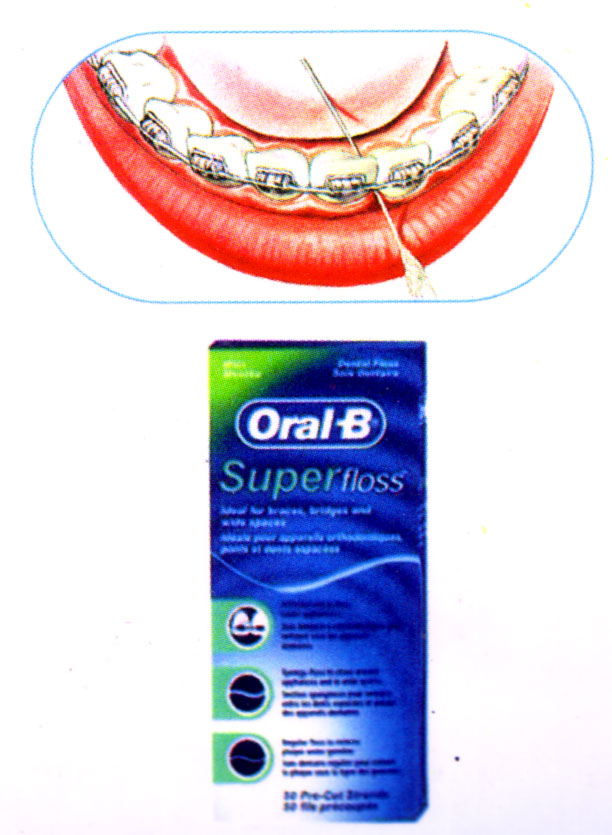
For people with widely spaced teeth, braces, bridges or implants, they may benefit from an interdental toothbrush.

Video: How to brush your teeth – source Health Education England (NHS)
![Consultation01 [1600x1200]](https://prestige-dental-care.com.my/wp-content/uploads/2011/02/Consultation01-1600x1200.jpg)

Diabetic patients are more likely to develop periodontal disease, which in turn can increase blood sugar and diabetic complications.
 People with diabetes are more likely to have periodontal disease than people without diabetes, probably because diabetics are more susceptible to contracting infections. In fact, periodontal disease is often considered the sixth complication of diabetes. Those people who don’t have their diabetes under control are especially at risk.
A study in the Journal of Periodontology found that poorly controlledtype 2 diabetic patients are more likely to develop periodontal disease than well-controlled diabetics are.
Research has emerged that suggests that the relationship between periodontal disease and diabetes goes both ways – periodontal disease may make it more difficult for people who have diabetes to control their blood sugar.
Severe periodontal disease can increase blood sugar, contributing to increased periods of time when the body functions with a high blood sugar. This puts diabetics at increased risk for diabetic complications. Thus, diabetics who have periodontal disease should be treated to eliminate the periodontal infection.
This recommendation is supported by a study reported in the Journal of Periodontology in 1997 involving 113 Pima Indians with both diabetes and periodontal disease. The study found that when their periodontal infections were treated, the management of their diabetes markedly improved.
-Source: perio.org-
Researchers have found that people with gum disease are almost twice as likely to suffer from coronary artery disease. – American Academy of Periodontology
 Several theories exist to explain the link between periodontal disease and heart disease. One theory is that oral bacteria can affect the heart when they enter the blood stream, attaching to fatty plaques in the coronary arteries (heart blood vessels) and contributing to clot formation. Coronary artery disease is characterized by a thickening of the walls of the coronary arteries due to the buildup of fatty proteins. Blood clots can obstruct normal blood flow, restricting the amount of nutrients and oxygen required for the heart to function properly. This may lead to heart attacks.
Another possibility is that the inflammation caused by periodontal disease increases plaque build up, which may contribute to swelling of the arteries.
Researchers have found that people with periodontal disease are almost twice as likely to suffer from coronary artery disease as those without periodontal disease.
Periodontal disease can also exacerbate existing heart conditions. Patients at risk for infective endocarditis may require antibiotics prior to dental procedures. Your periodontist and cardiologist will be able to determine if your heart condition requires use of antibiotics prior to dental procedures.
Additional studies have pointed to a relationship between periodontal disease and stroke. In one study that looked at the causal relationship of oral infection as a risk factor for stroke, people diagnosed with acute cerebrovascular ischemia were found more likely to have an oral infection when compared to those in the control group.
-Source: perio.org-

 For many individuals, visiting a dental clinic is the worst fear they are going to face. Partly due to the unknown or unexpected procedure that they are going to face which is usually a painful or uncomfortable. Some people might have previous experiences from childhood dental clinics or traumatic dental treatments have left many patients with underlying dental fears and phobias of the dentist, which in turn leads to missed dental appointments, neglected teeth (dentition) and in worse cases dental toothache / dental pain. Regular dental examinations (check-ups) by your dentist will reduce your need for emergency dental treatment and toothache. If you have any concerns or worries about your teeth and gums, make a dental appointment with our team.

By definition, conscious sedation is:
“A technique in which the use of a drug or drugs produces a state of depression of the central nervous system enabling treatment to be carried out, but during which verbal contact with the patient is maintained throughout the period of sedation. The drugs and techniques used to provide conscious sedation for dental treatment should carry a margin of safety wide enough to render loss of consciousness unlikely.”
Conscious dental sedation is a technique used widely in dentistry to help those patients’ with a fear of the dentist. The sedative drug/gas is introduced through inhalation, orally or via a needle in the back of your hand or in your arm, you will become relax, drowsy and unaware of treatment but will still be able to cooperate with your dentist. The sedative drug will not render you unconscious but it will make you very relaxed and you will still be able to understand and cooperate with your dentist. The sedative drug also has amnesic properties so you may not remember your dental visit. Throughout your dental procedure, your dentist will monitor your pulse and your oxygen saturation levels in your blood, these measurements helps the dentist keep an eye on you and makes sure you are alright.Book an appointment with our doctors now!! Click here
We accept Cash, Credit Card, Grabpay, Alipay, Touch n Go, MayBank QRPAY and Boost
Copyright 2026. All rights reserved.
Get in touchContact us now
If you have any question, don’t hesitate to contact us, we are more than glad to provide you with the information you need!


 :
:  :
: 