Blog

NEWS AND DENTAL EDUCATION

We share informative articles and news.


20/Feb/2011

Why do we have to clean our teeth?

Tartar (calculus) are deposits that have built up on the teeth over time. Dental cleanings involve removing plaque (soft, sticky, bacteria infested film) and tartar (calculus) deposits that have built up on the teeth over time. Your teeth are continually bathed in saliva which contains calcium and other substances which help strengthen and protect the teeth. While this is a good thing, it also means that we tend to get a build-up of calcium deposits on the teeth. This chalky substance will eventually build up over time. Usually it is tooth coloured and can easily be mistaken as part of the teeth, but it also can vary from brown to black in colour.

If the calculus (or tartar, as dentists like to call it) is allowed to accumulate on the teeth it will unfortunately provide the right conditions for bacteria to thrive next to the gums. The purpose of the scaling and polishing is basically to leave the surfaces of the teeth clean and smooth so that bacteria are unable to stick to them and you have a better chance of keeping the teeth clean during your regular home care. Also it leaves your teeth feeling lovely and smooth and clean, which is nice when you run your tongue around them.

10 Reason why you need to have Dental Cleaning


How are dental cleanings done?

Dental surgeon or dental hygienist uses specialized instruments to gently remove these deposits without harming the teeth.

1) Ultrasonic instrument (Scaler)

Ultrasonic Scaling

Commonly used first is an ultrasonic instrument or scaler unit which uses tickling vibrations to knock larger pieces of tartar loose. It also sprays a cooling mist of water while it works to wash away debris and keep the area at a proper temperature. The device typically emits a humming or high pitched whistling sound. This may seem louder than it actually is because the sound may get amplified inside your head, just like when you put an electric toothbrush into your mouth.

The ultrasonic instrument tips are curved and rounded and are always kept in motion around the teeth. They are by no means sharp since their purpose is to knock tartar loose and not to cut into the teeth. It is best to inform the operator if the sensations are too strong or ticklish so that they can adjust the setting appropriately on the device or modify the pressure applied.

With larger deposits that have hardened on, it can take some time to remove these, just like trying to remove baked-on grime on a stove that has been left over a long time. So your cleaning may take longer than future cleanings. Imagine not cleaning a house for six months versus cleaning it every week. The six-month job is going to take longer than doing smaller weekly jobs.

2) Air polishing

After the dentist has done scaling using the ultrasonic scaler, he will proceed with polishing either using air polishing or polishing cup. Air polishing is an alternative more advance method  than the polishing cup and paste method. It requires a special ultrasonic unit (e.g. Air Flow from EMS) that allows use of this insert in the handpiece.

EMS Air polishing unit

Air polishing uses medical-grade sodium bicarbonate and water in a jet of compressed air to “sandblast” the surface of the enamel leaving your teeth smooth and clean.

Indications for air polishing

  • Heavily smoking stain on the teeth
  • Staining due to coffee or tea
  • To remove fine tartar that are still attached to the teeth surface after scaling
Tobacco and coffee stain

Video: Air polishing method with EMS Air Flow®

Advantages of using air polishing

  • There is no physical contact with the tooth, therefore thermal injury is of no concern.
  • It is ideally suited for teeth separated by wide diastemata and considerable in shape and size.
  • Particularly good for cats where teeth are so small that standard cups can create gingival damage.
  • They are very efficient at removing stains from teeth.

Is scaling & air polishing going to be painful?

Most people find that cleanings are painless, and find the sensations described above – tickling vibrations, the cooling mist of water, and the feeling of pressure during “scraping” – do not cause discomfort. A lot of people even report that they enjoy cleanings and the lovely smooth feel of their teeth afterwards! There may be odd zingy sensations, but many people don’t mind as they only last a nanosecond.

Be sure to let your dentist/hygienist know if you find things are getting too uncomfortable for your liking. They can recommend various options to make the cleaning more enjoyable.

Painful cleaning experiences can be caused by a number of things: a rough dentist or hygienist, exposed dentine (not dangerous, but can make cleanings unpleasant), or sore gum tissues.

In case you may have had painful cleaning experiences in the past, switching to a gentle hygienist/dentist and perhaps a spot of nitrous oxide can often make all the difference. You could also choose to be numbed. If you find the scaling a bit uncomfortable because the gum tissues (rather than the teeth themselves) are sensitive, topical numbing gels can be used.

More info


Treatments of gum disease:


20/Feb/2011

Prestige Dental Care

Tooth Crystal

Skyce Crystal

Beutiful Skyce crystals from Ivoclar Vivadent applied to the tooth in minutes without drilling or pain that will not harm the tooth and can last for up to one year. Skyce crystals will definitely enhance your smile.

It is a professional solution for stylish tooth jewellery

The tooth jewels Skyce can simply be bonded to the tooth surface without preparation using tried-and-tested materials. Skyce is putting an extra sparkle into every smile. The crystal glass stones are available in two different sizes: Ø 1.9 mm and Ø 2.4 mm.

Indications

  • To be bonded to the labial (front) surfaces of upper anterior teeth

Advantages

  • Bonding without preparation
  • Tried-and-tested materials are used
  • Oral health is maintained

Cases done in our clinic

Skyce crystal was attached to the front surface of right lateral incisor
Another case where two Skyce crystals were attached to the incisor and canine

Read more

..


20/Feb/2011


Full porcelain crown

Topics

  • Intro..
  • What is a crown
  • Indications for full porcelain crown
  • The procedure
  • Cases of Full Porcelain done in our clinic
  • Advantages of full porcelain

Intro…

Full porcelain crown is a crown frabricated for highly aesthethic demand patient as people today want to see their crown to be as natural as possible and bleanch to the rest of his/her teeth.

This is where full porcelain material comes in!! It is made mostly of Zirconia or E-Max (lithium disilicate) material. The conventional porcelain is made of porcelain layer fused to a metal surface which make is less transucent and greyish.

With zirconia or E-Max material , no metal use, therefore, no greyish appearance and more natural!!

What is a crown?

A crown is a replacement of the outside casing of your teeth that is permanently fixed to the tooth below.  They are few types of crown depends on the material used:

Crown
  1. Full porcelain (highly aesthetic  crown)
  2. Porcelain fused to metal (commonly used)
  3. Full metal crown (either precious/non-precious metal crown)

Indications

Because full porcelain crown is highly aesthetic, it is used to improve the appearance of the front teeth. For those that are insecure about the appearance of their teeth or their smile, porcelain crowns can be a one-fix-for-all-problems solution.

Full porcelain crown mainly used :

  • to  brighten teeth
  • to make the tooth slight translucent thus making it more natural
  • indicated for the front teeth where aesthetic demand is higher
  • close gap narrowing
  • fix teeth that stick out
  • reduce crowding in the mouth

The procedure

To fit the crowns, a thin layer is shaved off teeth that are to receive treatment, and this prepares them for the crowns. On the patient’s first visit of the treatment a mould is taken of their teeth in order to get the perfect shape for the next session. The crowns are then bonded onto the teeth using a bonding material of some sort. Once the bonding has taken place, which will normally take one session at the dentist, the patient’s can eat as normal.

Cases of Full Porcelain done in our clinic

Case 1

Before

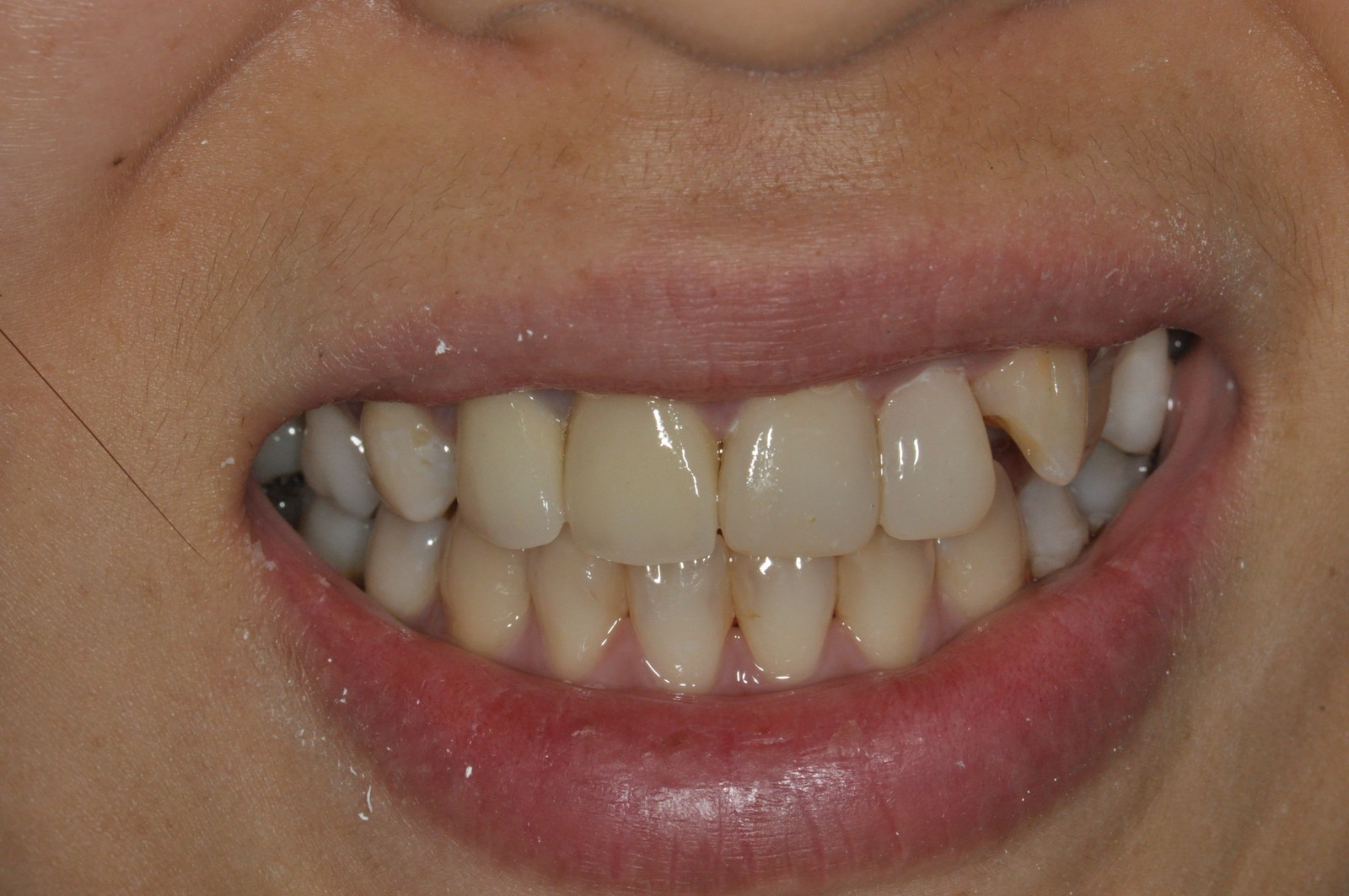
This young lady presented with a discolour right lateral incisor and her right central slanting inwards. Two full porcelain crowns were fabricated to change the colour of the lateral incisor as well as to change the shape of the right central incisor (below).

After

Case 2

After tooth preperation

A case for prepared tooth (right lateral incisor) for impression taking. A full porcelain crown was fabricated and cemented onto the tooth (below).

Full porcelain crown cemented onto the tooth

Case 3

Before

This young gentleman presented with poorly restore filling material on his front teeth. The fillings were removed  and the front teeth were prepared for porcelain crown.

Full porcelain crowns fabricated on the model

The full porcelain crowns were constructed on the model and finally cemented into patient’s mouth (below).

After

Case 4

Before

Another case of discolour tooth which was treated with full porcelain crown.

After

Case 5

Before

This man had a non-vital tooth (left central incisor) which was root treated had showed badly discolouration. The tooth was treated with porcelain crown.

After

Case 6

Before

Another case of discolouration which was treated with full porcelain crown

After

Advantages of full porcelain

Crowns are very popular because they have an excellent history of fixing dental issues, and their track record is proven to work in all countries in the world. Up until quite recently, crowns were bonded to the tooth using a metal-based framework (porcelain fused to metal) so that the crown could withstand the pressures involved with daily chewing of food in the mouth. Today, most of the time the metal framework is not required, since modern technology has advanced up to the point where pure porcelain is strong enough even for use on hard working molar teeth. The metal framework had an issue – after a few years the gum line of a patient would recede with age, revealing an ugly grey line at the top of the crowned tooth. Due to the color of the metal showing through, it was difficult to make crowned teeth look natural for more than a few years.

The advantage of using pure porcelain is that the crowns are near identical in color to the existing colors of the patient’s teeth, making it nigh on impossible for others to discern a crowned tooth from a real one. A dentist will match the color of the crown to the tooth color already in the mouth, and then they will place an order with a lab to create the tooth with the perfect color and shape, taken from the previously mentioned mold, and patients are very happy with the results, and their new smile.

Read More


20/Feb/2011

Topics

  • What is a veneer?
  • Case study
  • Other Clinical Cases with porcelain veneer
  • Dental veneers vs dental crowns
  • How to care for your cosmetic veneers
  • Benefits of Cosmetic Veneers
  • Porcelain veneers vs Resin veneers
  • Traditional porcelain veneers vs Lumineers

What is a veneer?

Nowadays there is a wide variety of treatments and methods that dentists can use to enhance a person’s smile. Cosmetic veneers have really gained in popularity over the last few years, and recently came to evolve into a veritable art form. Cosmetic veneers are usually sought by patients who have discolored, stained, chipped or uneven teeth. Placement of dental veneers requires the artistry, precision and skill of a talented cosmetic dentist.

Porcelain Veneers

Veneers are thin, semi-transparent facings usually made out of porcelain that are bonded onto the front of teeth to create a smile makeover. They create a beautiful result. Porcelain mimics tooth structure better than any other restorative material and it is a very durable and extraordinarily strong material that has similar texture, translucence and color to the enamel of your natural teeth.  Dental artists can manipulate the color and translucency to re-create the look of any tooth. And it resists stain better than tooth enamel. Very rarely will it discolor, unless the surface has been damaged. These thin shells of porcelain are bonded to your frontal surface of teeth to conceal any discoloration, damage or altered alignment.

The procedure normally requires two or three appointments to be completed. The cosmetic dentist will begin the procedure by roughening the surface of your teeth to make sure the veneers will perfectly bond to the teeth. He will next trim down the outer surface of the teeth enamel to accommodate the veneers. Impression of the trimmed teeth will be taken. Your teeth will be covered with temporary veneers while the actual veneers are created in a dental laboratory. The lab technician will develop the permanent veneers after which your cosmetic dentist will have them placed in your mouth.

Case study

Before Treatment

This young lady presented with a ‘space’ between her front central incisor which looked rather unnatural and  unattractive especially when she smiled (below).

She decided to have all her upper front incisors to be veneered to close the gap. Before her teeth were prepared, the natural colour of teeth were recorded so that the porcelain veneer will match with the ‘neighbour’ teeth later.

Colour/Shade selection

Under local anesthesia, a thin layer (0.7mm) of tooth structure was removed at the front surface of each teeth (below). Then, an impression was taken to get a negative copy of her dentition and later, a dental model was produced.

The teeth were minimally prepared for porcelain veneers

The dental model was sent to lab where the laboratory technician would fabricate veneers over the dental model (below)

This is how porcelain veneers look like

Finally, the veneers would be cemented onto patient’s mouth with strong resin cement.

Final result!!

Before and after result!!!

Before
After

Other Clinical Cases with porcelain veneer

Another case of closing mid-line spacing with veneer

Before
After

Crooked front teeth were corrected with veneer

Before
After

Discolour front teeth

Discolour and malalignment 6 front teeth
6 porcelain veneers fabricated on the model
The veneers were cemented with resin cement to the front teeth

More cases of aesthethic makeover with full porcelain crowns and veneers, click here

Dental veneers vs dental crowns

Dental veneers and dental crowns are two different types of dental restorations that have similar cosmetic end results. Cosmetic dentists use these two dental procedures to correct similar dental issues. Each of these two dental techniques carries its advantages and disadvantages.

The main difference between crowns and veneers regards the amount of the tooth’ structure each restoration typically covers over. Dental veneers require significantly less reduction of the tooth structure than dental crowns. Porcelain veneers will cover over only the side of the tooth that shows when the patient smiles while dental crowns cover the tooth entirely.

While dental veneers are recommended to patients whose gums and teeth are generally healthy dental crowns are more appropriate for patients who wish to rebuild teeth that are decayed or badly broken. Dental crowns are ideal for teeth that are misshaped, worn down, cracked, broken or extremely weak. Individuals who have a tendency to clench or grind their teeth may want to treat their dental issues with dental crowns because bruxism can chip or crack dental veneers.

Make sure you find a knowledgeable cosmetic dentist who can determine which of the two techniques is right for your situation.

How to care for your cosmetic veneers

  • You should avoid extreme temperatures in food and beverages for at least two weeks following the veneers placement.
  • You should also stay away as much as possible from hard foods that may twist or stress the veneers.
  • Oral habits such as opening bobby pins or nail biting, could damage your veneers.
  • Frequent flossing will keep your veneers free of plaque so make sure you floss your veneers just like they were natural teeth.
  • Use a soft toothbrush to brush your dental veneers after every meal.
  • Don’t forget to keep up with your regular maintenance.
  • Make sure you have your teeth cleaned and checked every six months or so.
  • Your cosmetic veneers are designed to last up to fifteen years but it is up to you to make that happen.

Benefits of Cosmetic Veneers

  • Dental veneers can completely conceal the imperfections of your front teeth, providing a total smile makeover. The change in your smile will help you project an image of confidence and high self-esteem.
  • Cosmetic veneers can cover a wide variety of dental flaws including misalignment, discoloration, stains caused by excessive smoking or antibiotics, trauma-damaged and fractured teeth, diastemas, crooked, chipped or broken teeth, etc.
  • Dental veneers are compatible with most other cosmetic dental procedures. For example, you can place veneers in combination with TMJ treatment, teeth whitening, neuromuscular dentistry, or a full-mouth reconstruction to completely reshape your smile.
  • Many patients consider dental veneers a great alternative to traditional braces. Unlike other alternatives, cosmetic veeners wont’t compromise the strength and integrity of your teeth.
  • Porcelain veneers act as a barrier between your teeth and staining agents such as tobacco products, chocolate, sugary foods, wine, tea or coffee. Veneers can strengthen old filings and teeth that have been weakened by root canal treatments.
  • Cosmetic veneers can last up to 15 years if you maintain a proper oral hygiene through daily brushing and flossing.
  • Veneers can change the appearance of your smile within as little as three visits.
  • Anesthesia is usually not required as the procedure normally causes no pain or discomfort.
  • Cosmetic veneers are designed to look and feel just like natural teeth. Veneers however will not discolor over time as natural teeth do.

Porcelain veneers vs Resin Composite veneers

If you are considering dental veneers to restore your teeth, you may have to choose between the two types of cosmetic veneers that are currently available today, ceramic or porcelain veneers and composite resin veneers. Other dental restorative materials such as gold and amalgam cannot offer the same natural teeth color. The question is, which of the two is a better choice? Composite veneers are inexpensive, insoluble, insensitive to dehydration and aesthetically pleasing. In terms of durability however, porcelain veneers have a life span of about 15 years while composite resin veneers can break or chip more easily and may require touch-ups. While porcelain veneers are more durable, composite resin veneers are easier to repair.

Porcelain veneers possess a much more natural color compared to resin veneers which don’t look exactly as normal teeth. That’s what makes porcelain veneers an ideal option for front teeth while resin veneers are more suited for back teeth. Both composite veneers and porcelain veneers can be indirectly fabricated but only resin veneers can also be directly fabricated inside the patient’s mouth. Even though ceramic veneers can be up to 10 times more expensive than composite veneers, resin veneers will require much more aftercare that will add up to the initial, affordable cost. Make sure you find a qualified cosmetic dentist that can help you determine the best solution for your individual needs!

Read More


20/Feb/2011

Topics

Vital Bleaching

Teeth Whitening

Bleaching result

Bleaching or teeth whitening provides a conservative treatment for mild to moderately discoloured vital teeth or root filled teeth. It is a common procedure in general dentistry but most especially in the field of cosmetic dentistry. A child’s deciduous teeth are generally whiter than the adult teeth that follow. As a person ages the adult teeth often become darker due to changes in the mineral structure of the tooth, as the enamel becomes less porous. Teeth can also become stained by bacterial pigments, foodstuffs and tobacco. Certain antibiotic medications (like tetracycline) can also cause teeth stains or a reduction in the brilliance of the enamel.

Vital bleaching

Bleaching treatment which is done on healthy teeth. There are few methods done for vital bleaching:

  • Non-professional home whitening
  • Professional home bleaching
  • ‘In-office’ bleaching

1. Non-professional home whitening

There are many teeth whitening product sell over the counter in dental store/pharmacy or even online and is much more cost-effective than the in-office procedure: bleaching strips, bleaching pen (eg: BriteSmile To Go whitening pen), bleaching gel, or even whitening toothpaste. Traditionally, at-home whitening involves applying bleaching gel to the teeth using a standard guard trays. At-home whitening can also be done by applying small strips that go over the front teeth. Oxidizing agents such as hydrogen peroxide or carbamide peroxide are used in these products to lighten the shade of the tooth. The oxidizing agent penetrates the porosities in the rod-like crystal structure of enamel and oxidizes interprismatic stain deposits; over a period of time, the dentin layer, lying underneath the enamel, is also bleached.

Whitening Pen

Home kit whitening system

In some whitening toothpastes contain small particles of silica, aluminum oxide, calcium carbonate, or calcium phosphate that used to grind off stains formed by colored molecules that have adsorbed onto the teeth from food. Unlike bleaches, these whitening toothpaste does not bleach or alter the intrinsic (internal) color of teeth.
Whitening toothpaste

Whitening Toothpaste

We have BriteSmile To Go whitening pen

2. Professional home bleaching

Professional home bleaching system

For professional home bleaching (eg. Opalescence, Discuss), clinician/dentist have more control over the usage of the bleaching agent on patient. Usually patient’s teeth will be assess and the expected result should be agree before treatment started. Patient will be prescribed bleaching gel (in syringes)  and a customized bleaching tray and he will be taught to used the product properly at home.
Bleaching Tray

Bleaching gel is dispensed onto the tray and loaded into your mouth

Basically, patient has to clean his teeth before bleaching. Then, the bleaching agent has to be dispensed into the tray and wore it onto his teeth for 8 hours each day for several week (usually 2 weeks). After treatment, he has to brush his teeth again. He has to reduce or stop smoking and the ingestion of dark colored liquids like coffee, tea and red wine as these factors that decrease whitening.
Home bleaching gel contains 10-15% carbamide peroxide. This agent cause less irritation to the gum because it can be contained just on the teeth surface with  custom-made tray. Bleaching result is usually better than the ‘over the counter’ product.

Home bleaching technique
  • Take an alginate impression
  • Ask the laboratory to make a bleaching splint
  • Fit the splint, dispense the carbamide peroxide (10%), and give instructions
  • Advice 6-8 hours treatment per day
  • Review weekly

3. ‘In-office’ bleaching

In-office bleaching  (Eg. ZOOM!! Whitening system) in a treatment done in the dental clinic; usually required patient to be seated on the dental chair for 1-3 hours. Immediately after treatment, patient can see the final result!!. Because In-surgery or in-office bleaching is in total control by the clinician/dentist, the bleaching gels used are highly-concentration (25-38% of carbamide or hydrogen peroxide).  The gel is caustic, hence, protective eyewear and isolation of gum with a resin-based, light-curable barrier required before treatment starts.

Dental light curing lights are commonly needed to activate the bleaching agent. This ‘Light cure’ unit usually use halogen, LED, or plasma to produce light energy to accelerate the process of bleaching. Most in-office teeth whitening treatments can be done in approximately 30 minutes to one hour, in a single visit to a dental physician. Treatment times and recommendations are dependent on the condition of a person’s teeth at time of treatment.

In-office bleaching

‘In-office’ bleaching technique
  • Polish teeth with pumice
  • Isolation of gum/soft tissue with a resin-based, light-curable barrier
  • Etch enamel, wash and dry, although the need to etch has been questioned
  • Apply the bleaching agent according to the manufacturer’s instructions
  • Bleaching gel is activated with light energy from ‘light cure’ or laser unit
  • Wash teeth with copious amounts of water
  • Remove gum/soft tissue barrier and polish teeth
  • Advice patient to avoid tea, coffee, red wine, cigarettes etc, for a week and that some sensitivity may occur
  • Can repeat as required

Case of in-office bleaching using ZOOM whitening system…Click here

Risk/Complication

Side effects of teeth bleaching include:

  • Chemical burns from gel bleaching (if a high-concentration oxidizing agent contacts unprotected tissues, which may bleach or discolor mucous membranes), sensitive teeth
  • Overbleaching  – noticeable chalk white spot on the bleached teeth which usually lessen in a period of time
  • Pain if you have “sensitive teeth” caused by open dentinal tubules.

The side effects that occur most often are a temporary increase in tooth sensitivity and mild irritation of the soft tissues of the mouth, particularly the gums. Tooth sensitivity often occurs during early stages of the bleaching treatment. Tissue irritation most commonly results from an ill-fitting mouthpiece tray rather than the tooth-bleaching agent. Both of these conditions usually are temporary and disappear within 1 to 3 days of stopping or completing treatment.
Individuals with sensitive teeth and gums, receding gums and/or defective restorations should consult with their dentist prior to using a tooth whitening system. People who are sensitive to hydrogen peroxide (the whitening agent) should not try a bleaching product without first consulting a dentist. Also, prolonged exposure to bleaching agents may damage tooth enamel. This is especially the case with home remedy whitening products that contain fruit acids.
Bleaching is not recommended in children under the age of 16. This is because the pulp chamber, or nerve of the tooth, is enlarged until this age. Tooth whitening under this condition could irritate the pulp or cause it to become sensitive. Tooth whitening is also not recommended in pregnant or lactating women.

Limitation

In certain cases where the teeth are severely discolour, bleaching treatment might not be the best solution as it not achieve what patient desire. In this kind of situation, Porcelain veneer or full porcelain crown might be a better options.   Therefore, you have to discuss with you dentist and tell him what you really and the pros & cons for each option.

Read more

Causes of tooth discolouration
Non-professional whitening method: BriteSmile To Go whitening pen
In-office bleaching: ZOOM!! Whitening system
Cases with in-office bleaching
Cases with in-office bleaching (II)
Non-vital bleaching
Porcelain Veneer or Full porcelain crown
Tooth Crystal


12/Feb/2011

Have your teeth checked regularly..


A standard dental checkup should take place every six months, and any additional procedures such as fillings or root canals, for example, require you to make additional appointments at later stage. This is because many of these procedures take longer than the time allotted to a checkup. They may even required preparation time on the part of the dentist, or time between appointments for the dental laboratory to manufacture crowns and dentures, among other fittings. Consequently, if your dentist finds any problems during the checkup, be prepared to visit him again in the near future.
At the routine checkup, the procedure is fairly simple. Generally, when reporting to the dentist’s receptionist, you are required to update your personal details and then wait to be called into the consulting or surgery room.
Once in the dentist’s chair, you are hoisted up and backward into a reclining position, and a light is positioned above you to afford the dentist the best view of your entire mouth. This is when you will be ask to relax – and open your moth wide!
The dentist will take a careful look at different parts of your mouth. He usually starts with your teeth, looking for any visible signs of disease. Then, taking a probe, he examines the surfaces of your teeth, keeping an eye out for any discolouration, soft spots and cavities.

Next he looks at the gum area to see if there are any signs of infection or recession, or bad deposits of plaque or tartar. He also looks for any lesions that might indicate more serious disease such as cancer, although these are rare. Overall, the dentist is assessing the quality of the gum tissue. Then, finally, he checks your tongue and palate to ensure they are healthy.
All of these procedures are completely painless; good news for those who avoid the dentist for most of their lives out of fear!

Patient position while taking X-ray

The next step is X-rays that are really quite quick and easy, although they may cause a little discomfort. This is because the X-ray plates are placed inside your mouth, and you have to bite down on them to hold them in place while the X-ray is taken. From time to time they may feel uncomfortable, or may press on your gums or teeth. However, they take only a couple of seconds each, and are important for your dentist to be able to see cavities in your teeth, as well as the state of each tooth in its entirety, and the bone.

Dental X-ray

Once your dentist has checked the X-rays, his assessment of your oral health is complete. Should you have no problems requiring treatment, he simply cleans and polishes your teeth and says goodbye until six months later. If you do have any disorders such as caries or gum disease, you will still go through the cleaning and polishing. However, your dentist will also spend some time with you outlining the treatment plan and discussing your options.

Read More

More info on General Dental Treatment


12/Feb/2011

Topics

  • Introduction
  • Reasons for Extraction
  • Types of Extraction
  • Simple Extraction
  • What can I Expect After an Extraction?
  • Instructions after tooth extraction

Tooth extraction

Introduction
Generally, dentists do everything within their power to preserve your natural teeth. However, in cases of advance caries or periodontitis, a tooth may have to be extracted. Teeth may also be removed for the purposes of orthodontics when teeth are straightened using braces. For example, your front teeth may be skew because there is not enough room for them in your mouth. An orthodontist may, therefore, suggest extraction of certain teeth to make space for teeth in your jaw.

Reasons for Extraction

The most most common reason for extraction is tooth damage due to breakage or decay. There are additional reasons for tooth extraction:

  • Severe tooth decay or infection.
  • Extra teeth which are blocking other teeth from coming in.
  • Severe gum disease which may affect the supporting tissues and bone structures of teeth.
  • In preparation for orthodontic treatment (braces)
  • Teeth in the fracture line
  • Fractured teeth
  • Insufficient space for wisdom teeth (impacted third molars).
  • Receiving radiation to the head and neck may require extraction of teeth in the field of radiation.
  • Deliberate, medically unnecessary, extraction as a particularly dreadful form of physical torture.

Types of Extraction

Extractions are often categorized as “simple” or “surgical”.
1.) Simple extractions are performed on teeth that are visible in the mouth, usually under local anaesthetic, and require only the use of instruments to elevate and/or grasp the visible portion of the tooth. Typically the tooth is lifted using an elevator, and using dental forceps, rocked back and forth until the Periodontal ligament has been sufficiently broken and the supporting alveolar bone has been adequately widened to make the tooth loose enough to remove. Typically, when teeth are removed with forceps, slow, steady pressure is applied with controlled force.
2.) Surgical extractions involve the removal of teeth that cannot be easily accessed, either because they have broken under the gum line or because they have not erupted fully. Surgical extractions almost always require an incision. In a surgical extraction the doctor may elevate the soft tissues covering the tooth and bone and may also remove some of the overlying and/or surrounding jawbone tissue with a drill or osteotome. Frequently, the tooth may be split into multiple pieces to facilitate its removal. Surgical extractions are usually performed under a general anaesthetic.

Simple Extraction

To extract a tooth, your dentist first administers a local anaesthetic in the area. Next, he firmly places extraction forceps over the crown of the tooth. He manually loosens the tooth, and then removes it. This is the most basic method of tooth extraction. Alternatively, he places an elevator between the tooth and the tooth socket, and carefully levers the tooth out.
However, sometimes it is impossible to remove a tooth using these methods, and then surgical intervention is required. Under local or general anaesthetic, the gum is cut over the relevant area, and the bone exposed. A section of bone is then removed to expose the root of the tooth, which is removed. Finally, the gum is stitched back together again.

What can I Expect After an Extraction?

It is critical to keep the area clean and prevent infection immediately following the removal of a tooth. Your dentist will ask you to bite down gently on a piece of dry, sterile gauze, which you must keep in place for up to 30 to 45 minutes to limit bleeding while clotting takes place. For the next 24 hours, you shouldn’t smoke, rinse your mouth vigorously, or clean the teeth next to the extraction site.

Sterile gauze to be placed at the extracted socket to stop bleeding

A certain amount of pain and discomfort is to be expected following an extraction. In some cases, your dentist will recommend a pain killer or prescribe one for you. It may help to apply an ice pack to the face for 15 minutes at a time. You may also want to drink through a straw, limit strenuous activity, and avoid hot liquids. The day after the extraction, your dentist may suggest that you begin gently rinsing your mouth with warm salt water (do not swallow the water). Under normal circumstances, discomfort should lessen within three days to two weeks. If you have prolonged or severe pain, swelling, bleeding or fever, call your dentist at once.

Instructions after tooth extraction

These are the instruction usually given to reduce complication such as excessive bleeding or infection after extraction:

  1. Please don’t spit or rinse after extraction for today.
  2. Make sure to bite gauze which ha s been placed over the extracted socket.
  3. Please bite the gauze for 30 minutes to allow bleeding ceased.
  4. Please not to change gauze too often.
  5. Take pain killer given if painful.
  6. Avoid taking food or drink which is too hot.
  7. If socket still bleeds; not to be too worry. You can rinse gently with some cold water.
  8. You can brush your teeth but gently and avoid the extraction site.
  9. On the following day, rinse with salt water.

Read more….


12/Feb/2011


Surgeons
An oral and maxillofacial surgeon is a regional specialist surgeon treating the entire craniomaxillofacial complex: anatomical area of the mouth, jaws, face, skull, as well as associated structures.
In the US, the name oral and maxillofacial surgery should be abbreviated most appropriately as OMS, rather than OMFS as some sources suggest. The abbreviation OMFS may be appropriate only in the European system where Maxillo-Facial is hyphenated. In the US, maxillofacial is the official entry in the American language dictionary defining the anatomical region, and is also the official term used by all related surgical organizations, including the AAOMS, ABOMS, and ACOMS.

Maxillofacial surgeons are usually initially qualified in dentistry and have undergone further surgical training. Some OMS residencies integrate a medical education as well and an appropriate degree in medicine (MBBS or MD or equivalent) is earned, although in the United States there is legally no difference in what a dual degree OMS can do compared to someone who earned a four year certificate. Oral & maxillofacial surgery is universally recognized as a one of the nine specialties of dentistry. However also in the UK and many other countries OMFS is a medical specialty as well culminating in the FRCS (Fellowship of the Royal College of Surgeons). Regardless, all oral & maxillofacial surgeons must obtain a degree in dentistry (BDS, BDent, DDS, or DMD or equivalent) before being allowed to begin residency training in oral and maxillofacial surgery.
MAOMS

MAOMS

They also may choose to undergo further training in a 1 or 2 year subspecialty fellowship training in the following areas:

  • Head and neck cancer – microvascular reconstruction
  • Cosmetic facial surgery
  • Craniofacial surgery/Pediatric Maxillofacial surgery
  • Cranio-maxillofacial trauma
  • Head and neck reconstruction (plastic surgery of the head and neck region)
  • Maxillofacial regeneration(reformation of the facial region by advanced stem cell technique)

The popularity of oral and maxillofacial surgery as a career for persons whose first degree was medicine, not dentistry, seems to be increasing in few EU countries However the public fund spend for 14 years of training is a big concern of the state. Integrated programs are becoming more available to medical graduates allowing them to complete the dental degree requirement in about 3 years in order for them to advance to subsequently complete Oral and Maxillofacial surgical training.

Surgical procedures

Treatments may be performed on the craniomaxillofacial complex: mouth, jaws, neck, face, skull, and include:

  • Dentoalveolar surgery (surgery to remove impacted teeth, difficult tooth extractions, extractions on medically compromised patients, bone grafting or preprosthetic surgery to provide better anatomy for the placement of implants, dentures, or other dental prostheses)
  • Diagnosis and treatment of benign pathology (cysts, tumors etc.)
  • Diagnosis and treatment (ablative and reconstructive surgery, microsurgery) of malignant pathology (oral & head and neck cancer).
  • Diagnosis and treatment of cutaneous malignancy (skin cancer), lip reconstruction
  • Diagnosis and treatment of congenital craniofacial malformations such as cleft lip and palate and cranial vault malformations such as craniosynostosis, (craniofacial surgery)
  • Diagnosis and treatment of chronic facial pain disorders
  • Diagnosis and treatment of temporomandibular joint (TMJ) disorders
  • Diagnosis and treatment of dysgnathia (incorrect bite), and orthognathic (literally “straight bite”) reconstructive surgery, orthognathic surgery, maxillomandibular advancement, surgical correction of facial asymmetry.
  • Diagnosis and treatment of soft and hard tissue trauma of the oral and maxillofacial region (jaw fractures, cheek bone fractures, nasal fractures, LeFort fracture, skull fractures and eye socket fractures).
  • Splint and surgical treatment of sleep apnea, maxillomandibular advancement, genioplasty (in conjunction with sleep labs or physicians)
  • Surgery to insert osseointegrated (bone fused) dental implants and Maxillofacial implants for attaching craniofacial prostheses and bone anchored hearing aids.
  • Cosmetic surgery limited to the head and neck: (rhytidectomy/facelift, browlift, blepharoplasty/Asian blepharoplasty, otoplasty, rhinoplasty, septoplasty, cheek augmentation, chin augmentation, genioplasty, oculoplastics, neck liposuction, lip enhancement, injectable cosmetic treatments, botox, chemical peel etc.)

Taken from Wikipedia


01/Feb/2011

We close from 2nd February (Wednesday) to 9th February 2011 (Wednesday) due to Chinese New Year festival. We will resume business as usual on 10th February 2011 (Thursday).

我们将在日(星期日(星期)休息。我们将在月十日(星期照常营


22/Jan/2011

Prestige Dental Care

Topics

  • To read on dental bridge click here
  • Crown – What is it?
  • How do we do it?
  • Picture on cases done in our clinic
  • Maintenance

Crown – What is it?

A crown is a replacement of the outside casing of your teeth that is permanently fixed to the tooth below. In other words, the decayed or damaged area of your tooth is removed and replaced by synthetic material, such as porcelain, to create a new ‘tooth’ with permanent results.

A crown is a replacement of the outside casing of your tooth

Crowns are often used after a root canal treatment, because the removal of a nerve causes a tooth to discolour. However, there are other reasons your dentist might crown one or more of your teeth: to restore a damaged or fracture tooth, to protect a weakened tooth so that it does not fracture under stress or to reinforce a large filling where there is not enough tooth structure left below.
Crowns are also made out of various material: gold or non-precious alloy, porcelain or ceramics, acrylic or composite resin, or even a combination of porcelain on metal. Obviously the material chosen will be in line with what will work best for your particular problem.

Gold crown

Non-precious Metal Crown

Porcelain fused with metal crown (PFM)

Full porcelain crown

Currently, most dentist use porcelain fused to metal crown or full porcelain crown as both crowns produce good aesthetic result

How do we do it?

When crowning a tooth, your dentist starts by filing away away between 1mm and 2mm on every surface of your teeth, and then the entire surface is smoothed. Next, an impression is taken of the prepared tooth by syringing an impression material into the space around the tooth and holding an impression tray in position until the material has set. This gives the laboratory a perfect negative copy of your tooth, which allows them to make up the permanent crown. The dentist also ensures he sends the laboratory details of what the colour porcelain to use, to ensure the crown looks natural.

1) Tooth are prepared and smoothen

2) Impression material is syringed into the space around the tooth to get the copy of the tooth

3) Negative copy of the teeth produced by impression material which is hardened on the impression tray

4) The crowns are fabricated on the model by laboratory technician

5) Finally, the crown is cemented onto the prepared tooth

Your are then fitted with a temporary crown, which is really just a rough space-filler, while you wait for the laboratory manufacture the permanent fixture.
At the following appointment, the dentist will have taken delivery of the permanent crown. The temporary crown is then removed, and the prepared tooth below thoroughly cleaned and dried. Then the new, permanent crown is cemented onto the tooth below. Any excess cement is removed, and the treatment completed.

Picture on cases done in our clinic

Here is a example of a discolour tooth that is replaced with a full porcelain crown (E-Max)

The young gentleman dislike his front discolour right central incisor

His tooth discolouration was due to old filling and the tooth is non-vital

After the tooth is prepared, colour of the porcelain crown is chosen to match his neighbour teeth

The full porcelain crown is cemented onto the tooth

Final Result – natural looking crown!!  (Treatment done by Dr. H.W.NG)

Maintenance

You do need to take care of your crown and not overstress it by biting or chewing very hard food. You can also floss normally around a crown. If at a later stage, your crown should break, you need to see your dentist as soon as possible, especially if the tooth inside becomes sensitive. Save the fractured piece if you can, as this can be glued back on temporarily until a new crown is made.

Read more

More info on General Dental Treatment


Get in touch

Contact us now

Book an appointment with our doctors now!! Click here
If you have any question, don’t hesitate to contact us, we are more than glad to provide you with the information you need!

We accept Cash, Credit Card, Grabpay, Alipay, Touch n Go, MayBank QRPAY and Boost


Follow us

Our Activity

Curious about what we do every day? Follow us to learn more about the dental health care we provide.


Copyright 2023. All rights reserved.