Porcelain bridge
Nowadays, more and more people want to replace their missing teeth with the material that is as near as possible to their natural teeth. Porcelain fused to metal bridge is one of the conventional choice. However, because of the presence of metal in this type of material, the bridge somehow look dull, opaque and non-translucent. On top of that, it has a ‘dark’ margin due to the thinning of porcelain at that area especially dark gum line that is very obvious when patient smile.
Porcelain bridge is invented to over come all the problems above. Because of its metal-free property, porcelain bridge can look like ‘real’ teeth and strong enough to withstand the biting force. The preparation on the teeth prior to porcelain bridge placement is same with the conventional bridge. Currently, for missing single tooth, we provide glass type of porcelain (eg. IPS e.max®) while for multiple missing teeth, zirconia bridge (eg. Procera®) will be used.
Cases of porcelain bridge
Case one: Missing front tooth
This young lady had a missing upper front tooth. She wanted replacement which looked as natural as possible. A porcelain bridge was suggested.
Unfortunately, the space for the front left central incisor was inadequate for a front tooth!!
Impression of her upper jaw and a study model was fabricated for assessment.
Diagnostic wax-up of the her bridge was made on the study model. Then, the patient’s teeth were prepared for bridge construction.
The porcelain bridge was constructed by laboratory technician. Back view of the bridge (below).
Full porcelain bridge IPS e.max®.
The porcelain bridge was cemented with transparent resin cement.
She was very pleased with the final outcome. Now she can smile!
Case 2: Badly decay front teeth
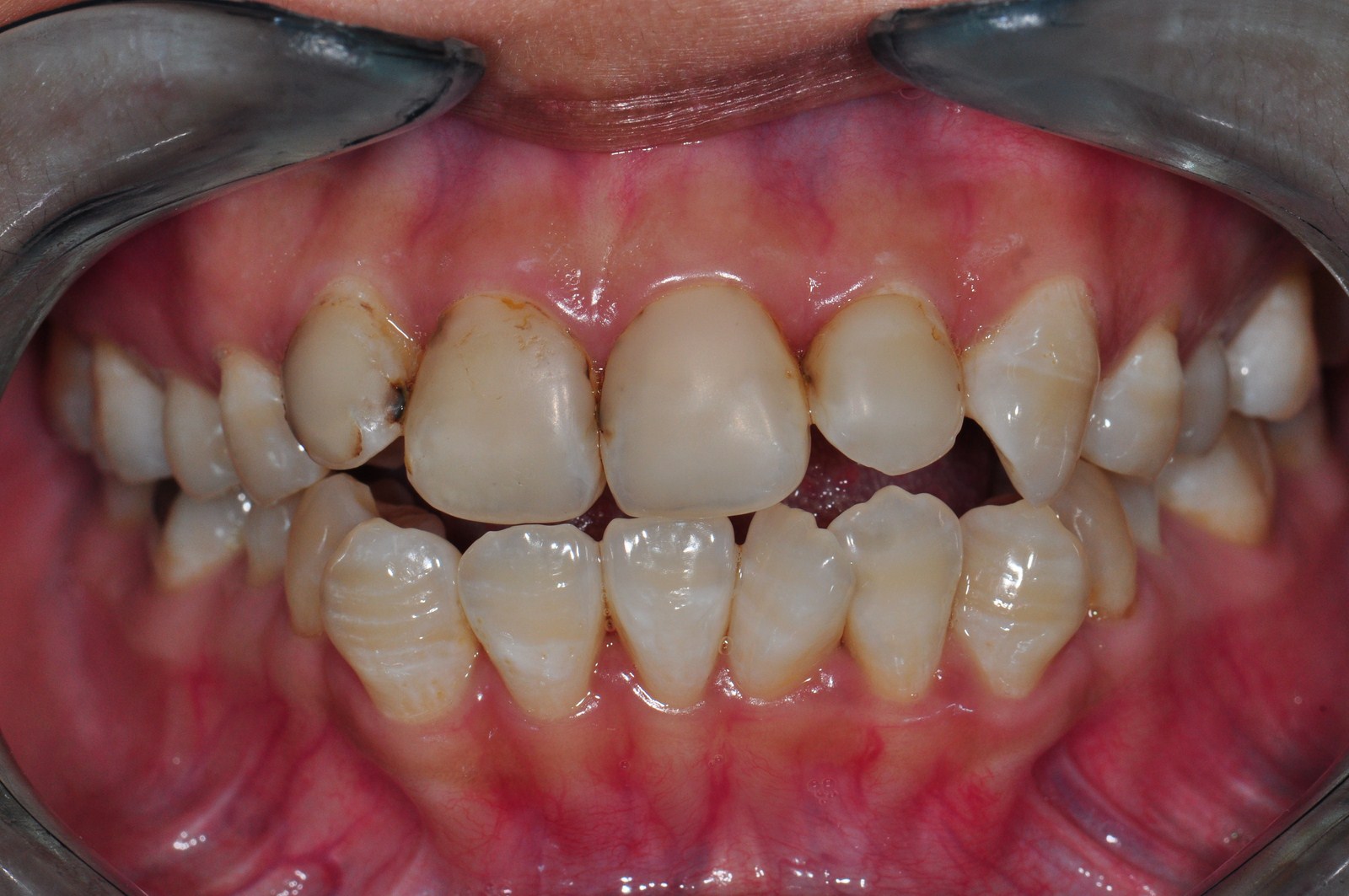
This young man presented with a badly decay front teeth with both lateral incisor placed behind. He wanted to make over all his front teeth.
In the assessment, we found numerous problems: decay front teeth, lateral front teeth placed backward and the canines looked unnatural. We started with root canal treatment on his front teeth. Due to backward position of the lateral incisors, we have the teeth extracted and after healing, he was ready for bridge construction. We proposed to him to have 2 porcelain bridge (each consist of 3 unit tooth) from his canine to the other side of his canine. (Want to know more about root canal treatment click here).
An study model was duplicated from his mouth and diagnostic wax-up was done to reassemble the final outcome of his bridges.
The teeth was prepared for bridges construction under local anaesthesia.
A provisional bridge was fabricated for him to wear while waiting for the final bridge
Finally, the porcelain bridges were cemented with transparent resin cement
The back view of the bridges with healing socket of the extracted lateral incisors.
Now, he can smile confidently!!
Most people want a gap in their mouth filled for cosmetic reasons, and understandably so: beautiful smile is a very important part of the impression you make to the outside world. However, there is a more important reason to close gaps in your mouth where teeth are missing; it is actually harmful to have a missing tooth, because teeth tend to drift out of place when there is a gap and move forward into the space that has been created. This leads to all kinds of serious problems, including bone loss, and, if left untreated, you can loose more teeth. Therefore, replacing a tooth is important!! Usually it can be done by fabricating a denture, bridge or implant.
What is a dental bridge?
Dental BridgeBridge stting on the implants
A bridge is a way of replacing one or more missing teeth in the mouth. It is also known as fixed partial denture, which used to replace a missing tooth by joining permanently to adjacent teeth or dental implants. Unlike traditional removable dentures, a dental bridge is permanent as it’s anchored to the teeth at one, or both, sides using metal bands held in place by resin or cement. If well cared for, a dental bridge should last for 10 to 15 years.
Anatomy of a dental bridge
A bridge consist of a ‘false teeth/tooth which is called pontic connected by connectors to retainers. Bothe retainers sit on the abutment teeth: Retainers. Part of the bridge will have metal castings, called retainers. They are made to fit onto what the dentist has cut away on the abutment teeth. Retainers also secure and support the bridge’s artificial tooth or teeth. Pontics. A pontic is an artificial tooth that is suspended from the retainer casting. A pontic occupies the space formerly filled by the crown of a natural tooth. Connectors. A pontic is attached to a retainer by a connector. Connectors can be rigid or nonrigid. Nonrigid connectors take the form of male- and female-locking arrangements. Rigid connectors are classified as either cast or soldered. Abutments. The teeth that support and hold the retainer are called abutments. It is almost mandatory that an bridge be supported by an abutment at both ends. This requirement is waived in special situations. When a pontic is suspended from only one retainer, it is cantilevered.
Composition of a dental bridge
The materials used for the bridges include gold, porcelain fused to metal, or in the correct situation porcelain alone (full porcelain). The amount and type of reduction done to the abutment teeth varies slightly with the different materials used. The recipient of such a bridge must be careful to clean well under this prosthesis.
Types of dental bridge
There are three types of dental bridge: fixed, resin bonded, and cantilever. The type of bridge used will depend on the quality of the teeth on either side of the gap, as well as the position of the gap. 1.) Fixed Bridges With a fixed bridge, the false tooth, or pontic, is anchored to new crowns attached to the teeth either side of the gap. These crowns are usually made from porcelain with the new tooth made from either ceramic or porcelain. This forms a very strong bridge that can be used anywhere in the mouth. 2) Resin Bonded Bridges Sometimes called Maryland Bonded, these dental bridges do not involve crowning the adjacent teeth, so are useful where these show little or no previous damage. The new tooth is generally made from plastic and is attached via metal bands bonded to the adjacent teeth using resin. This type of bridge is particularly suitable for front teeth where stress is minimal, and the bond can be made out of view behind the teeth. 3) Cantilever Bridges These dental bridges are used where there is a healthy tooth only on one side of the gap. The bridge is anchored to one or more teeth on just one side. As a result, this type of bridge is generally only suitable for low stress bridges such as front teeth.
How your bridge is fitted
Getting a bridge usually requires two or more visits. While the teeth are numb, the two anchoring teeth are prepared by removing a portion of enamel to allow for a crown. Next, a highly accurate impression (mold) is made which will be sent to a dental laboratory where the bridge will be fabricated. In addition, a temporary bridge will be made and worn for several weeks until your next appointment. At the second visit, you permanent bridge will be carefully checked, adjusted, and cemented to achieve a proper fit. Occasionally your dentist may only temporarily cement the bridge, allowing your teeth and tissue time to get used to the new bridge. The new bridge will be permanently cemented at a later time.
Cases done in our clinic:
Case One: Multiple missing teeth This patient was a young female, wearing denture for more many years. She came to us, wanted something fix or permanent which looked more natural than her denture. She presented with multiple missing (below). After assessing her, we suggested a 9 unit bridge extending from upper left canine to her upper right molar with non-rigid connector between her upper right canine and first premolar. We also suggested her to have a implant-supported bridge for her upper left quadrant. Shade or colour selection was chosen and the remaining teeth were prepared for bridge construction under local anaesthesia. Impression of her teeth were taken and a dental model was fabricated. The laboratory technician construction the bridge on the model. The non-rigid connector just behind the right canine used to connect the rest of the bridge a the posterior right (above) The connector at the back of the upper right canine was covered properly with porcelain. The anterior part of the bridge was cemented onto patient’s mouth (above and below – the back view) Finally, the back portion of the bridge is cemented to the back molar Final result!! Case Two: Multiple missing teeth This gentleman complained that his old denture was getting shorten and he wanted something permanent His denture looked really old with discolouration over the ‘pink’ part of the denture On the palatal view showed multiple missing teeth involving the upper front and right side. A 9 unit bridge was constructed and cemented onto patient’s mouth. Due to bone resorption at the front part, ‘pink’ porcelain was added to supported his upper lip giving him a youthful look. Palatal view: the bridge extended from left canine to right molar Final result!!
Maintenance of dental bridge
Superfloss
Dental hygiene becomes a little more complicated if you have a bridge, making normal flossing impossible in that area, nevertheless you do have to take care that the teeth adjoining the artificial tooth are thoroughly cleaned. Even the best fitting bridge will still have gaps around and beneath it, and these can quickly accumulate damaging debris if you do not follow a strict hygiene regime.Your dentist can show you how to do this, using special floss (eg. superfloss) or flossing needles. These floss go ‘under’ the pontic area and area near to the abutment to remove the food usually stagnant there.
How Long do Bridges Last?
While crowns and bridges can last a lifetime, they do sometimes come loose or fall out. The most important step you can take to ensure the longevity of your crown or bridge is to practice good oral hygiene. A bridge can lose its support if the teeth or bone holding it in place are damaged by dental disease. Keep your gums and teeth healthy by brushing with fluoride toothpaste twice a day and flossing daily. Also see your dentist and hygienist regularly for checkups and professional cleanings. To prevent damage to your new crown or bridge, avoid chewing hard foods, ice or other hard objects.
Resin Veneers or better know as composite veneers are thin shells of tooth-colored, translucent filling, custom made to fit over teeth and improve their color, shape and overall appearance. Placement of composite veneers can dramatically improve your smile and appearance.
Composite veneer technique
Types of problems that composite veneers can correct
Placement of dental veneers is sometimes referred to as “instant orthodontics” because they can be used to cover a variety of dental problems involving teeth in the “smile zone” including:
Generalize spacing and ‘peg’ shape right lateral incisor
Chipped incisor
Unsightly or stained fillings
Dental veneers (either composite or porcelain veneer) can improve the appearance of the teeth but they cannot realign the jaw or correct overbites and underbites. Orthodontics are required to correct these more complicated problems.
Composite veneers can be done on the spot. The time spent might be from 30 minutes to 2 hours or more depends on the number of tooth involved. They do not required second visit.
Composite veneers produce the same aesthetic result as porcelain veneers. Therefore, no one can tell whether you have a composite or porcelain done except your dentist!
Composite veneers can be repair if there is any chipping or fracture.
Composite veneers are very cheap (From MYR150 toMYR250 per tooth; depends on how difficult and big the defect is).
The major disadvantages of porcelain veneers over composite resin include the following:
Porcelain veneers are not made at chairside. Porcelain veneers are fabricated in a dental laboratory and therefore require at least two visits. Composite resin veneers are accomplished in one visit. An adequate amount of tooth structure is removed to allow for placement of composite resin in the desired shape without added tooth bulk. Bonding agent is applied. Composite resin is then added, light cured, then finished and polished.
Porcelain veneers are more expensive than composite veneers. The placement of veneers requires more time, expertise and resources in order to fabricate and bond and therefore cost more.
Porcelain veneers cannot be repaired. If they break porcelain veneers must be replaced.
The advantages of porcelain veneers
Porcelain veneers have several advantages compared to composite resin including:
Porcelain veneers are very durable. Although porcelain veneers are very thin, usually between 0.5 – 0.7 millimeters and inherently brittle, once bonded to healthy tooth structure it becomes very strong. Porcelain veneers can last for many years, usually 10-15 years, if you take good care of them using good oral hygiene and avoiding using them to crack or chew hard objects like ice.
Porcelain veneers create a very life-like and natural tooth appearance. The translucent properties of the porcelain allows the veneers to mimic the light handling characteristics of enamel giving it a sense of depth which is not possible with other cosmetic bonding materials such as composite resin.
Porcelain veneers resist staining. Unlike other cosmetic dental bonding materials, porcelain is a smooth, impervious ceramic and therefore will not pick up permanent stain from cigarette smoking or from dark or richly colored liquids or spices.
Porcelain veneers are conservative. Only a small amount of tooth structure is removed, if any during the procedure.
Cases done in our practice using composite veneers…
Case 1
This young man complaint of generalized spacing and a peg-shaped right lateral incisor. Composite material was used to close all the gaps between his teeth (Below).
Case 2
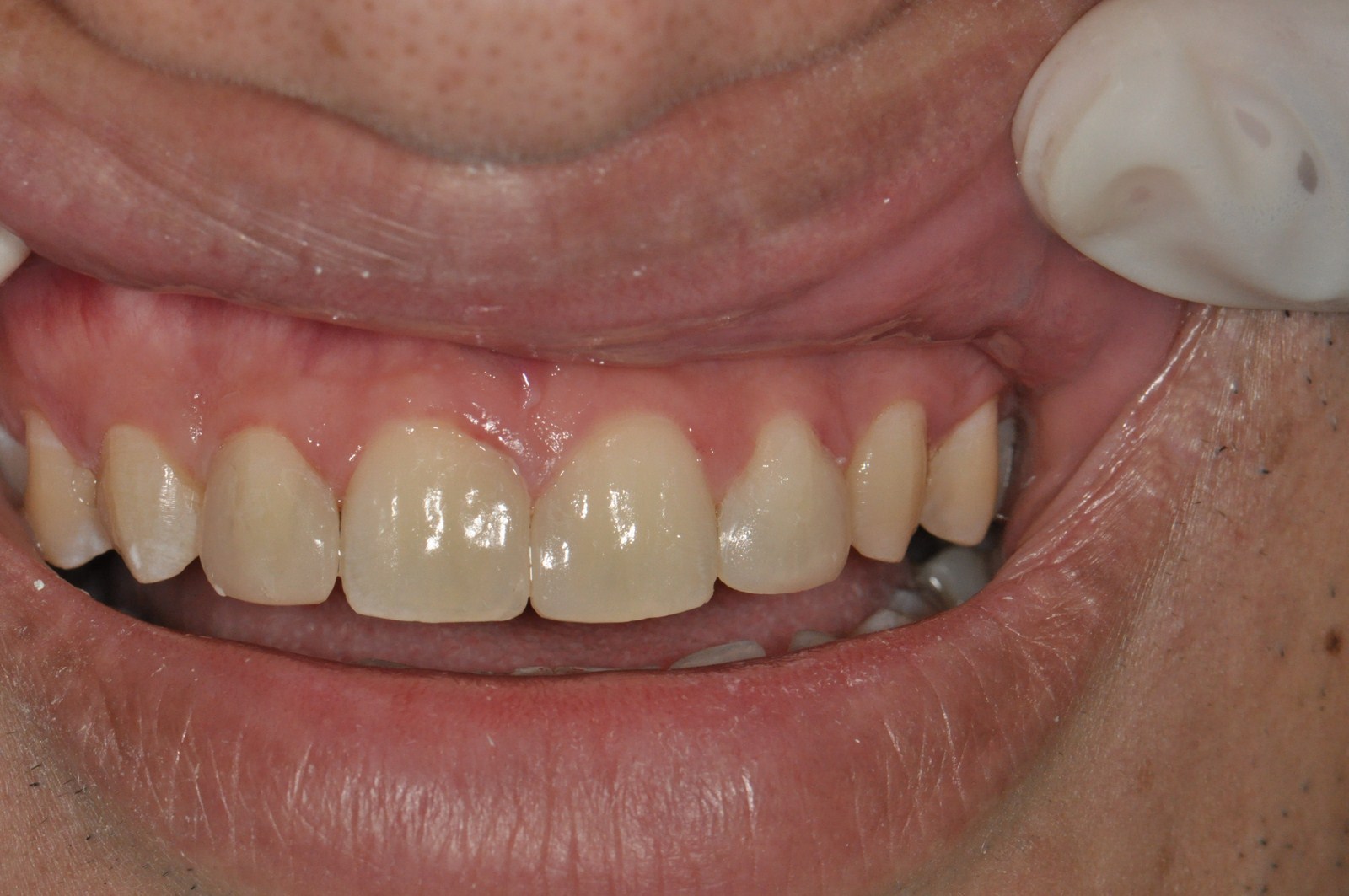
This patient fell down and broke her front teeth while playing spot. The tooth was restore with composite veneer. ‘Stained’ or chalky white patches resin composite was place on the front surface of the veneer to mimic the neighbour teeth (Below).
Case 3
Old filling at the center of his upper front teeth looked yellowish and rough. Those fillings were removed and replaces by new composite veneers (Below).
Case 4
Yellow stain due to uneven surface at the front teeth and old yellow filling were replace by composite veneers (Below).
Case 5
Multiple decays at the front teeth were treated with composite veneer (Below).
Case 6
Defect of the lateral incisor was repaired with resin composite (Below).
Case 7
Generalize unevenness of this young man front teeth gave a older look. With composite veneer correction, he looks youthful again!! (Below).
Case 8
Old composite veneers on all the six front teeth on this lady was stained at the margin. The composite were removed and were replaced with the new one (Below).
Are you a good candidate for dental veneers?
Dental veneers are not appropriate for everyone or every tooth. Case selection is an extremely important factor in the success of this technique. Veneering teeth is not a reversible procedure if tooth structure must be removed to achieve your desired result Only an examination by your dentist can determine whether dental veneers are appropriate for making the changes you want. Some of the situations where certain teeth or people are not good candidates for dental veneers include:
Unhealthy teeth. Dental decay and active gum disease must be treated prior to fabricating and bonding dental veneers.
Weakened teeth. If a significant amount of tooth structure is missing or has been replaced by a large filling the teeth will not be strong enough to function with a dental veneer.
Teeth with an inadequate amount of enamel present. Dental veneers are more successfully bonded onto tooth enamel.
People who habitually clench or grind on their teeth. Habitual clenching and grinding of the teeth can easily chip or break dental veneers. Dental nightguards may be a solution for this in some cases.
Persons without a stable bite.
Severely malpositioned teeth or misaligned teeth. Orthodontic treatment may be required to achieve the desired result.
How to maintain Dental Veneers?
Dental veneers can chip or come off if not cared for properly. To improve their durability and longevity you need to maintain consistent good oral hygiene and have regular dental examinations and cleanings at least twice each year. In addition, you must avoid using them to bite or crack hard objects like nuts and ice.
What are the alternatives to composite veneers?
The closest cosmetic alternative to composite veneers is porcelain veneers which are more durable and more resistance to staining. However, they are more costly and require at least 2 visits. On top of that, there is another method to improve smile: Snap-on Smile, a multi-purpose restorative appliance that requires no preparation or altering of tooth structure, no injections, and no adhesives. It is non-invasive, making it completely reversible.
Dental crowns may also be used to correct the same problems that dental veneers correct, however it is a much less conservative procedure.
Internal bleaching procedures are performed on devitalized (dead) teeth that have undergone root canal therapy (or RCT) but are discolored due to internal staining of the tooth structure by blood and other fluids that leached in. Unlike external bleaching, which brightens teeth from the outside in, internal bleaching brightens teeth from the inside out. Yellow-brown discoloration of tooth after RCT treatment and the clinical results after 3 applications of the walking bleach technique.
Bleaching the tooth internally involves drilling a hole to the pulp chamber, cleaning, sealing, and filling the root canal with a rubber-like substance, and placing a peroxide gel into the pulp chamber so the gel can work directly inside the tooth on the dentin layer.In this variation of whitening the peroxide is sealed within the tooth over a period of some days and replaced as needed, the so called “walking bleach” technique.
‘Walking bleach’ technique
Before treatment a radiograph would be made to check the quality of the root filling.
The quality and colour (shade) of any restoration present are assessed.
Tooth colour was evaluated and clinical photographs were taken at the beginning of and throughout the procedure.
Rubber dam should applied to isolate the treated tooth, to prevent reinfection of the root canal, and to protect the adjacent structures from the bleaching agent.
The restorative and the obutarating material was removed until below gum margin
A layer of cement was applied on top of the obturating material.
Bleaching agent: sodium perborate mixed with 30% hydrogen peroxide into paste form was be loaded into the pulp chamber of the tooth.
Finally, a temporary restoration was used to cover the cavity
The patient was rescheduled approximately 1 month later and the procedure was repeated 2 to three times.
Walking bleach, A, Internal staining of dentin caused by remnants of obturating materials (OM) in the chamber as well as by materials and tissue debris in pulp horns (PH). B, Coronal restoration is removed completely. C, A protective cement base (B) is placed over the gutta-pecha. A paste (P) of sodium perborate and hydrogen peroxide is placed. D, A thick mix of temporay cement (Z) seals access. E, At a subsequent appointment when the desired shade reached, a permanent cement is placed (TS) at the pulp chamber and composite resin (C) to seal of the access
Complication
External resorption – Internal bleaching occasionally induces external cervical root resorption. Chemicals combine with heat are likely cause necrosis of the cementum, inflammation of the periodontal ligament, and root resorption. Crown (Coronal) fracture – Increased brittleness of the crown part of the tooth, particularly when heat is applied resulting in the tooth is more susceptible to fracture.
Chemical burn – 30% hydrogen peroxide is caustic and will cause chemical burns and sloughing of gingiva. Therefore, rubber dam is needed to protect the gum from chemical burn.
Limitation
Even though internal bleaching can produce satisfactory result in most cases, no all will achieve the desirable result. Therefore, other options such as full porcelain crown, porcelain veneer will be the alternative to whiten non-vital tooth!!
The Zoom! ™ In-Office Whitening System is a revolutionary tooth whitening procedure. It’s safe, effective and fast, very fast. In just over an hour, your teeth will be dramatically whiter. Zoom!™ Whitening is ideal for anyone looking for immediate results. The convenience of Zoom!™ in comparison to days of wearing trays and gradual whitening makes it the perfect choice for the busy individual.
Get ready to Zoom!
The Zoom! ™ Whitening procedure is simple and painless. It begins with a short preparation to isolate your lips and gums. The Zoom! ™ clinician then applies the proprietary Zoom!™ Whitening Gel, which is activated by a specially designed light. Teeth typically become at least six to ten shades whiter, sometimes more. A fiveminute fluoride treatment completes the procedure. You’ll be amazed with the results. In most cases, teeth get even whiter the first few days after the procedure.
How Zoom! works
The Zoom!™ light activated gel was developed after years of research by Discus Dental, the leaders in professional take-home tooth whitening. The gel is a scientifically formulated, pH balanced Hydrogen Peroxide that, when activated by the Zoom!™ light, gently penetrates the teeth to remove deep stains and discoloration. With proper care and an occasional touch-up at home, your whiter smile will sparkle for years.
Zoom! Teeth Whitening procedure
The Zoom! Whitening procedure is simple. It begins with a short preparation to isolate your lips and gums. Isolation of lips and gums before bleaching
The accredited and trained dentist then applies the proprietary Zoom Whitening Gel, which is activated by a specially designed light. Activation of bleaching gel with Whitening Lamp
Teeth typically become at least six to twelve shades whiter, sometimes more. A fluoride treatment for a few minutes completes the procedure. You’ll be amazed with the results. In most cases, teeth get even whiter the first few days after the procedure. We recommend a consultation and a thorough clean around one or two weeks before the Zoom! Teeth Whitening procedure if you have tartar or superficial stains.
Tune in to Zoom!
Ask your dental professional how the Zoom!™ In-office Whitening System will work for you. Take your first step to feeling good, looking great and making a memorable impression every time you smile. You owe it to yourself!
Frequent Asked Questions
Q. What is Zoom!™ tooth whitening?
A. Zoom!™ is a bleaching process that lightens discoloration of enamel and dentin.
Q. What causes tooth discoloration?
A. There are many causes. The most common include aging and consumption of staining substances such as coffee, tea, colas, tobacco, red wine, etc. During tooth formation, consumption of tetracycline, certain antibiotics or excessive fluoride may also cause tooth discoloration.
Q. Who may benefit from tooth whitening?
A. Almost anyone. However, treatment may not be as effective for some as it is for others. Your dental professional can determine if you are a viable candidate for this procedure through a thorough oral exam, including a shade assessment.
Q. Do many people whiten their teeth?
A. More people than you might imagine. A bright, sparkling smile can make a big difference for everyone. The Zoom!™ Whitening System makes it easier and faster than ever before.
Q. Is whitening safe?
A. Yes, extensive research and clinical studies indicate that whitening teeth under the supervision of a dentist is safe. In fact, many dentists consider whitening the safest cosmetic dental procedure available. As with any tooth whitening product, Zoom!™ is not recommended for children under 13 years of age and pregnant or lactating women.
Q. How does Zoom!™ work?
A. The Zoom!™ light-activated whitening gel’s active ingredient is Hydrogen Peroxide. As the Hydrogen Peroxide gel is broken down, oxygen enters the enamel and dentin bleaching colored substances, while the structure of the tooth is unchanged.
Q. What does a patient experience during the Zoom!™ procedure?
A. During the procedure, patients may comfortably watch television or listen to music. Many actually fall asleep. Individuals with a strong gag reflex or anxiety may have difficulty undergoing the entire procedure.
Q. How is exposure to the Zoom!™ light controlled?
A. The Zoom!™ procedure requires that all soft tissue in and around the mouth be protected. The clinician is required to monitor the procedure to insure any exposed skin or tissue is isolated and protected. Protective eyewear is required during the procedure. Light sensitive individuals including those undergoing PUVA therapy (Psoralen+UV Radiation) or other photochemotherapy, as well as patients with melanoma, should not undergo the Zoom!™ in-office procedure. Also, patients taking any light sensitive drugs or substances, whether over-the-counter, prescription or homeopathic, should consult their primary physician prior to procedure.
Q. How long does Zoom!™ Whitening take?
A. The complete procedure takes just over an hour. The procedure begins with a preparation period followed by one hour of bleaching. A five minute fluoride treatment completes the procedure. (A cleaning is recommended prior to the actual Zoom!™ Whitening session)
Q. Are there any side effects?
A. Sensitivity during the treatment may occur with some patients. The Zoom!™ light generates minimal heat which is the usual source for discomfort. On rare occasions, minor tingling sensations are experienced immediately after the procedure but always dissipate.
Q. How white will my teeth become ?
A. The results are spectacular. Clinical studies have shown that the Zoom teeth whitening treatment achieves up to 12 shades lighter with the average being 8 shades (On Vita-Shade guide). Individual results may vary and will depend upon your age, type of stain, initial tooth colour and any visible restorations (White fillings, crowns etc). Please ask our qualified dental staff how much whiter your teeth can be and we will show you what is possible on a tooth shade guide as shown below.To boost your results we recommend using custom made whitening trays for only 30 minutes a day for 5 to 10 days.
Some whitening clinics will only recommend either surgery whitening or home whitening. We have found that combining both methods is the best way to get the most dramatic results and keep them for life. Vita Shade Guide
Q. How long do the results last?
A. By following the Zoom!™ Post Whitening Care Instructions, your teeth will always be lighter than they were prior to the procedure. The Zoom!™ whitening procedure includes a take-home touch-up kit and trays that can be used whenever discoloration is noticed. Most often a touch-up once a year will maintain a whiter smile that sparkles for years.
A Note of Assurance
Tooth whitening is a well-established procedure in cosmetic dentistry. Hydrogen Peroxide, the active agent in Zoom!,™ has also been safely used for many years in the treatment of gums and other oral soft tissue. The whitening process is effective on most discolored teeth. Darker stains, such as those caused by antibiotics, are more difficult to whiten. The degree of whiteness will vary from patient to patient, depending on the structure of the teeth. If you have any questions, please ask your dental professional who is there to help maximize your smile using the Zoom!™ Whitening System.
I’m sure some of you have been wondering about it. So here’s why dentist takes photo of your teeth and even portraits sometimes.
Photostudio in our clinic
Photography act as a vital communicating tool between dentist and the patient so that a clearer message or explanation can be delivered.
Imperfections that are not readily visible to the patient will be apparent in still photographs, patient get to visualise his/her oral condition.
Establish a baseline so that dentist able to monitor any recession or suspicious lesions that you may have in your mouth to discover if these conditions are getting better or worse.
Document cases by dentist for recording purpose.
DSLR Camera
Multiple system can be choose for dental photography and generally work well for practices. However, the digital single lens reflex (DSLR) camera still the most ideally suited for practices that to use photography for documentation for lectures or publications.
Basic kit for dental photography:
DSLR camera system
Macro lens (85–105 mm)
External ring flash / Dual Flash
Retractors
Mirror
Contrastor
Digital SLR Camera
105mm lens
Retractors and mirrors
Intra-Oral Photos
Multiple views of intra-oral photos will be taken. The basic views are:
Front view without retractor
Front view with retractor
Left buccal view
Right buccal view
Upper occlusal view
Lower occlusal view
Example of Intra-oral Pictures
Dentist might take some extra photos which specifically focus on a tooth/ area to focus on the problematic part.
Studio Photography
Sometimes additional extra-oral photos are needed. In our clinic, there’s a room set up with some additional tools for portraits such as NiceFoto TB-400C Flash with a diffuser/ softbox, and a white lighting board mounted on a wall.
Studio flash kit
Extra Oral Photos
For extra-oral, pictures of patient must include full face. The basic views are:
Cosmetic gum surgery – It is a type of surgery used to reshape healthy gum tissue around the teeth to make them look better. If a person has tooth recession where the gum is pushed away from the tooth, a gingivoplasty surgery can be done. Basically to ‘bring’ back the gum to cover the expose root surface of a tooth:
Before cosmetic gum surgery (gingivoplasty surgery) – receding gum especially on patient’s left sideAfter cosmetic gum surgery (gingivoplasty surgery)
To read more on the gingivoplasty procedure click here.
On the other hand, if there is excessive gum covering the teeth, then the procedure is to remove some part of the gum covering the teeth (gingivectomy surgery) to show more of the tooth thus reduce gummy smile and improve smile line.
Before gingivectomyAfter gingivectomy
To read more on the gingivectomy procedure click here.
After gum surgery, it is important that the periodontist or dental hygienist inform you how to clean the teeth and gum tissue with a toothbrush and an antimicrobial fluoride toothpaste, floss and antibacterial mouth rinse. Please consult your periodontal specialist or dentist for more information of how to care for your gum tissue and teeth after gum surgery.
Orthodontics is the art of repositioning the teeth in the mouth, and is traditionally thought of as something only buck-toothed children go through. In fact, orthodontics helps a host of positional problems in the mouth, in both children and adults.
Take for example, some one with a large gap between his front teeth. There are several ways to close that gap, depending on what caused it, where it is, and the state of health of the surrounding teeth. You could restore the teeth through the use of a crown, or you could remove the affected teeth and replace them with a bridge or implants, which is clearly the least desirable option. Alternatively, you could reposition the teeth using orthodontics: the ideal treatment when your teeth are healthy and look attractive, because you don’t lose some of the healthy parts of your teeth as you would during crowding. You simply move the teeth in the gums and put them in a more attractive position.
Orthodontics is mostly used for cosmetic reasons such as straightening teeth or closing gaps. You might have buck teeth, or you might have very skew teeth. Perhaps you have a gap that has bothered you all your life. If your teeth are healthy, but your simle needs improvement, orthodontics may be the way to go.
Orthodontic treatment does take a long time, there’s no getting away from it. You’re looking at six months to three years, depending, of course on what your particular problem is, and you will require regular checkups and adjustments to ensure the desired result is achieved. However, modern braces are far less visible (as compared to the traditional full-sized braces), and treatment may be as simple as a retainer plate for a couple of months.
Traditional Braces
Traditional full-sized braces
Mini Braces
Mini braces are the most popular braces people wear today.
Lingual Braces
These days, some problems may be corrected with lingual braces. These are mounted on the back surface of the teeth, and are virtually invisible. If those are not an option for your problem, you can also have clear plastic/crystal brackets fitted to your teeth instead of traditional metal ones, which also reduces their visibility to others.
Lingual braces
Crystal Braces
Unlike ceramic brackets that are opaque and colored to mimic a particular tooth shade, clear brackets are crystal clear and virtually disappear regardless of tooth shade. For more info, click here
Crystal brackets
Of course, there are possible complications, of which you should be aware. In some cases, the teeth move back to their original positions. This is the reason you are required to wear a retainer plate that ensures the teeth stay put after the actual treatment. In additional, loose bands on the teeth can create decalcified areas where decay can begin. However, this is not common, and modern bonding methods ensure the brackets are fixed to the teeth in such a way that the risk of decay is greatly reduced.
Colour on braces
Invisalign Aligner
InvisalignInvisalign is a well known clear aligner used to correct misaligned teeth with ease and comfort from the US.
Mbrace Aligner
MBraceMBrace is a clear aligner used to correct misaligned teeth with ease and comfort. It is clear and removable which makes it almost unnoticeable by others and convenient to use. The aligners are custom-made digitally and fabricated individually to ensure a perfect and accurate fit for your teeth.
Treatment can be performed by a general dental practitioner who has sufficient training in orthodontic field or by an orthodontist who specializes in this field. Generally, your dentist refers you to an orthodontist, with whom you make an initial appointment, so that he can assess the state of your teeth and propose a treatment plan. It is good idea, at this stage, to discuss cost implications, as orthodontic treatment can be very costly, and you need to know what you are letting yourself in for.
Your treatment plan may consist purely of braces and retainers, just retainers, or may even require that two or more teeth are removed to make space in your mouth. For example, you may have buck teeth in your mouth because there simply wasn’t enough space for all your adult teeth in your gums when they erupted. To correct this, the orthodontist may have to extract the back molar on each side of the top set of teeth to make extra room in your mouth. This then allows him to move the remaining teeth into a more favorable position.
Also don’t forget to ask the orthodontist how long the treatment is likely to take. It’s a lot easier to put up with braces if you know when they’re likely to come out. All in all, however, orthodontics is a painless procedure; there is some initial discomfort from braces or even from a retainer, but this generally disappears after a few weeks. It’s more a case of getting used to the foreign objects in your mouth than them causing discomfort.
Tartar (calculus) are deposits that have built up on the teeth over time. Dental cleanings involve removing plaque (soft, sticky, bacteria infested film) and tartar (calculus) deposits that have built up on the teeth over time. Your teeth are continually bathed in saliva which contains calcium and other substances which help strengthen and protect the teeth. While this is a good thing, it also means that we tend to get a build-up of calcium deposits on the teeth. This chalky substance will eventually build up over time. Usually it is tooth coloured and can easily be mistaken as part of the teeth, but it also can vary from brown to black in colour.
If the calculus (or tartar, as dentists like to call it) is allowed to accumulate on the teeth it will unfortunately provide the right conditions for bacteria to thrive next to the gums. The purpose of the scaling and polishing is basically to leave the surfaces of the teeth clean and smooth so that bacteria are unable to stick to them and you have a better chance of keeping the teeth clean during your regular home care. Also it leaves your teeth feeling lovely and smooth and clean, which is nice when you run your tongue around them.
Dental surgeon or dental hygienist uses specialized instruments to gently remove these deposits without harming the teeth.
1) Ultrasonic instrument (Scaler)
Ultrasonic Scaling
Commonly used first is an ultrasonic instrument or scaler unit which uses tickling vibrations to knock larger pieces of tartar loose. It also sprays a cooling mist of water while it works to wash away debris and keep the area at a proper temperature. The device typically emits a humming or high pitched whistling sound. This may seem louder than it actually is because the sound may get amplified inside your head, just like when you put an electric toothbrush into your mouth.
The ultrasonic instrument tips are curved and rounded and are always kept in motion around the teeth. They are by no means sharp since their purpose is to knock tartar loose and not to cut into the teeth. It is best to inform the operator if the sensations are too strong or ticklish so that they can adjust the setting appropriately on the device or modify the pressure applied.
With larger deposits that have hardened on, it can take some time to remove these, just like trying to remove baked-on grime on a stove that has been left over a long time. So your cleaning may take longer than future cleanings. Imagine not cleaning a house for six months versus cleaning it every week. The six-month job is going to take longer than doing smaller weekly jobs.
2) Air polishing
After the dentist has done scaling using the ultrasonic scaler, he will proceed with polishing either using air polishing or polishing cup. Air polishing is an alternative more advance method than the polishing cup and paste method. It requires a special ultrasonic unit (e.g. Air Flow from EMS) that allows use of this insert in the handpiece.
EMS Air polishing unit
Air polishing uses medical-grade sodium bicarbonate and water in a jet of compressed air to “sandblast” the surface of the enamel leaving your teeth smooth and clean.
Indications for air polishing
Heavily smoking stain on the teeth
Staining due to coffee or tea
To remove fine tartar that are still attached to the teeth surface after scaling
Tobacco and coffee stain
Video: Air polishing method with EMS Air Flow®
Advantages of using air polishing
There is no physical contact with the tooth, therefore thermal injury is of no concern.
It is ideally suited for teeth separated by wide diastemata and considerable in shape and size.
Particularly good for cats where teeth are so small that standard cups can create gingival damage.
They are very efficient at removing stains from teeth.
Is scaling & air polishing going to be painful?
Most people find that cleanings are painless, and find the sensations described above – tickling vibrations, the cooling mist of water, and the feeling of pressure during “scraping” – do not cause discomfort. A lot of people even report that they enjoy cleanings and the lovely smooth feel of their teeth afterwards! There may be odd zingy sensations, but many people don’t mind as they only last a nanosecond.
Be sure to let your dentist/hygienist know if you find things are getting too uncomfortable for your liking. They can recommend various options to make the cleaning more enjoyable.
Painful cleaning experiences can be caused by a number of things: a rough dentist or hygienist, exposed dentine (not dangerous, but can make cleanings unpleasant), or sore gum tissues.
In case you may have had painful cleaning experiences in the past, switching to a gentle hygienist/dentist and perhaps a spot of nitrous oxide can often make all the difference. You could also choose to be numbed. If you find the scaling a bit uncomfortable because the gum tissues (rather than the teeth themselves) are sensitive, topical numbing gels can be used.
Beutiful Skyce crystals from Ivoclar Vivadent applied to the tooth in minutes without drilling or pain that will not harm the tooth and can last for up to one year. Skyce crystals will definitely enhance your smile.
It is a professional solution for stylish tooth jewellery
The tooth jewels Skyce can simply be bonded to the tooth surface without preparation using tried-and-tested materials. Skyce is putting an extra sparkle into every smile. The crystal glass stones are available in two different sizes: Ø 1.9 mm and Ø 2.4 mm.
Indications
To be bonded to the labial (front) surfaces of upper anterior teeth
Advantages
Bonding without preparation
Tried-and-tested materials are used
Oral health is maintained
Cases done in our clinic
Skyce crystal was attached to the front surface of right lateral incisor
Another case where two Skyce crystals were attached to the incisor and canine
Book an appointment with our doctors now!! Click here
If you have any question, don’t hesitate to contact us, we are more than glad to provide you with the information you need!


 This young lady had a missing upper front tooth. She wanted replacement which looked as natural as possible. A porcelain bridge was suggested.
 Unfortunately, the space for the front left central incisor was inadequate for a front tooth!!
 Impression of her upper jaw and a study model was fabricated for assessment.
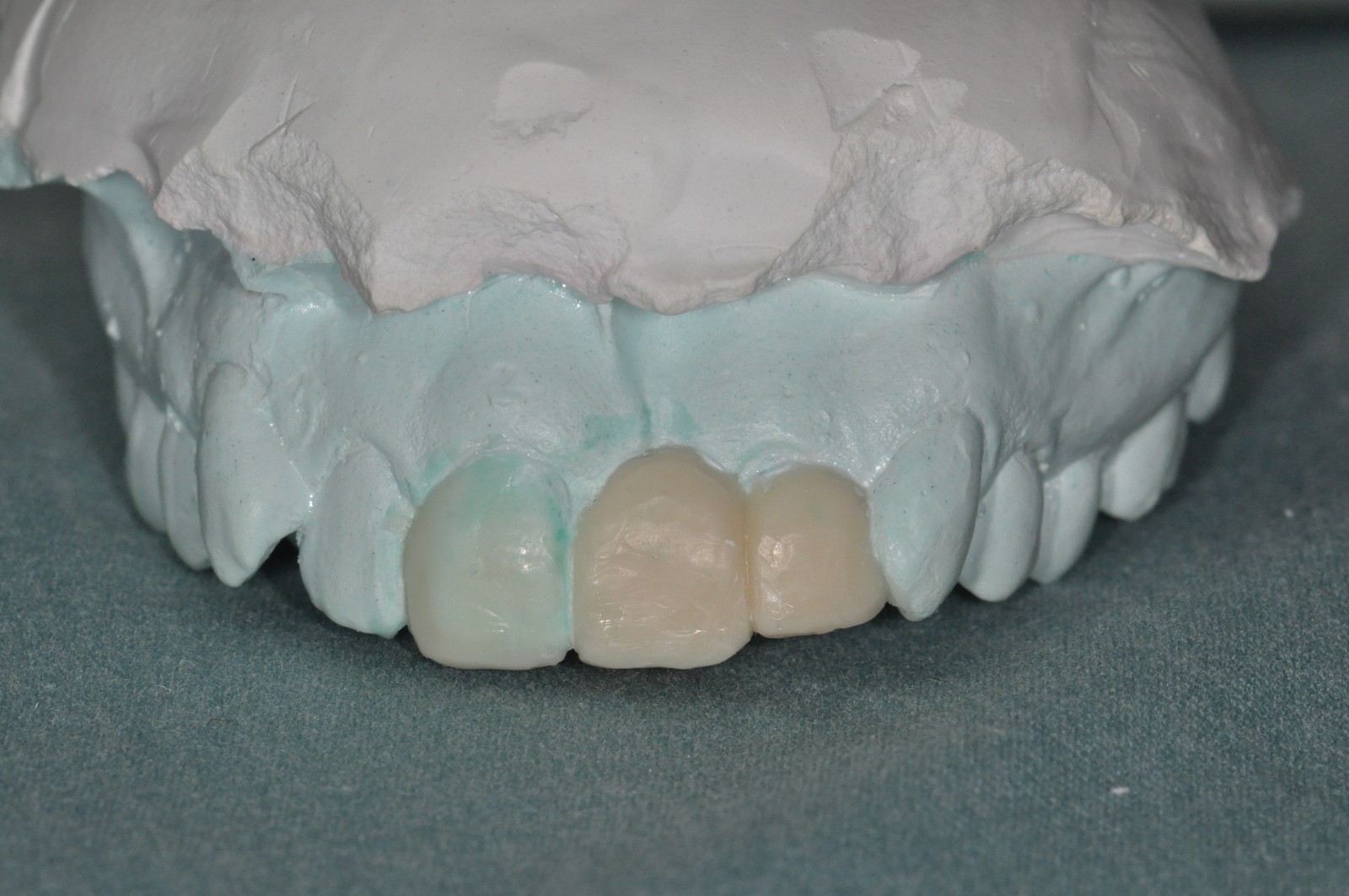 Diagnostic wax-up of the her bridge was made on the study model. Then, the patient’s teeth were prepared for bridge construction.
 The porcelain bridge was constructed by laboratory technician. Back view of the bridge (below).

 Full porcelain bridge IPS e.max®.

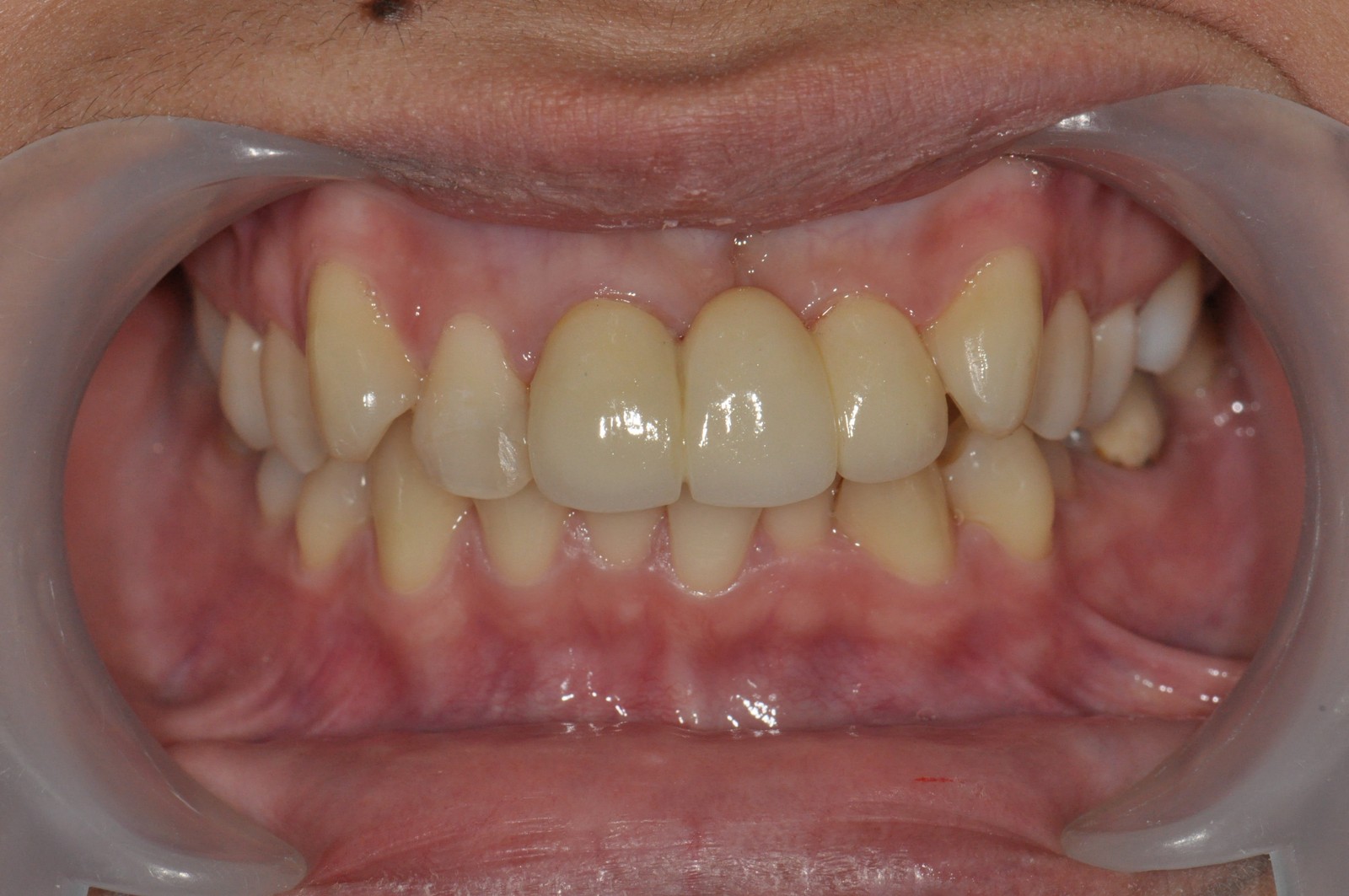 The porcelain bridge was cemented with transparent resin cement.
 She was very pleased with the final outcome. Now she can smile!
 This young man presented with a badly decay front teeth with both lateral incisor placed behind. He wanted to make over all his front teeth.
 In the assessment, we found numerous problems: decay front teeth, lateral front teeth placed backward and the canines looked unnatural. We started with root canal treatment on his front teeth. Due to backward position of the lateral incisors, we have the teeth extracted and after healing, he was ready for bridge construction. We proposed to him to have 2 porcelain bridge (each consist of 3 unit tooth) from his canine to the other side of his canine. (Want to know more about root canal treatment click here).
 An study model was duplicated from his mouth and diagnostic wax-up was done to reassemble the final outcome of his bridges.
 The teeth was prepared for bridges construction under local anaesthesia.
 A provisional bridge was fabricated for him to wear while waiting for the final bridge
 Finally, the porcelain bridges were cemented with transparent resin cement
 The back view of the bridges with healing socket of the extracted lateral incisors.
 Now, he can smile confidently!!






 :
:  :
: 