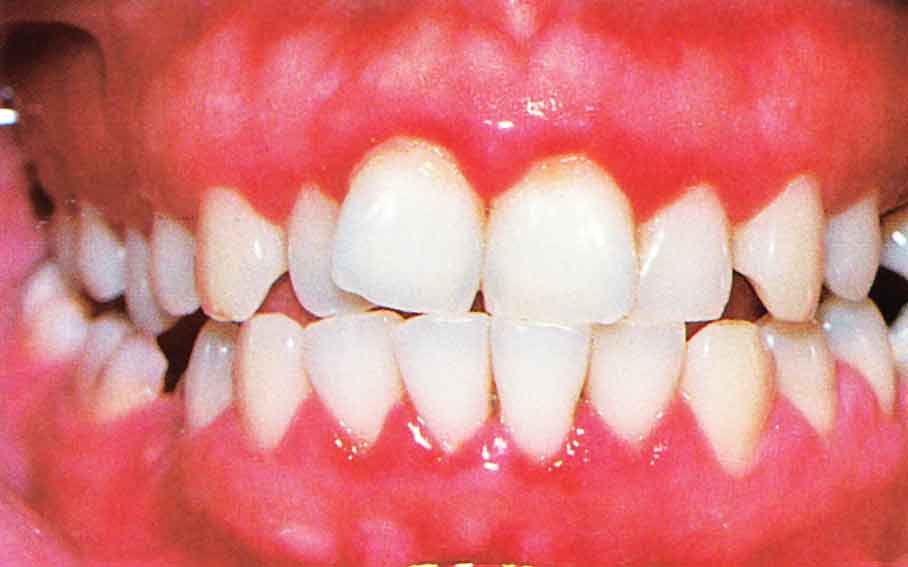
Gingivitis is the inflammation of the gingiva due to bacterial infection that can occur at any age but most frequently arises during adolescence. It is a disease that requires the presence and maturation of bacterial plaque Gingivitis is diagnosed by bleeding and by changes in the colour, contour and consistency of the gingiva. Features include red swollen marginal gingiva; loss of stippling; red-purple, bulbous interdental papillae; and the increased fluid flow from the gingival crevice. Gingival bleeding and pain are induced by tooth-brushing and slight probing. Treatment of gingivitis consists of frequent and regular removal of plaque through dental scaling and root planing. If gingivitis is left untreated for a long period of time, it will lead periodontitis which will result in loosing teeth.
After the age of 35, gum disease or periodontitis is the major cause of tooth loss in adults, far more so than tooth decay. In fact, about 80% of tooth loss can be ascribed to periodontal disease in this age group. A lot of time and money could be saved by early detection and treatment of the disease and many more people would keep their teeth if they were aware of this fact.
Sequela of gum disease
Periodontal disease affects the support structures of the teeth: the bone, gums and ligament (Click here for Dental Anatomy). It is long-term and slow-moving disease: painless in its initial stages, but later presenting as a chronic inflammation that damages both the gums and bone holding the teeth in place. Bacterial plaque is the main culprit here, and only fastidious daily brushing and flossing can effectively remove it.
The most common form of periodontitis is adult periodontitis. It can be localized or generalized and appears to progress episodically. During periods of exacerbationthere is advancing loss of epithelial attachment, increase periodontal pocket depth, increased gingival crevicular fluid, loss of alveolar bone and connective tissue attachment and gingival bleeding.
The predominant species associated with adult periodontitis ace Actinobaccillus actinomycetemcomitans (25-30%), Actinomyces naeslundii, Bacteriods forsythus, Campylobacter rectus, Eikenella corrodens, Eubacterium species, Fusobacterium nucleatum, Peptostreptococcus micros, Prevotella intermedia, Prophyromonas gingivalis, Selenomonas sputigena, Streptococcus intermedius and Treponema species
Types of periodontitis
Adult periodontitis can be devided into 3 types base on severity:
i) Mild (Early) Adult Periodontitis
Mild periodontitis. From Colour Atlas of Common Oral Disease
Clinical features:
3mm epithelial attachment loss or less (gum recession)
periodontal pocket depths of 3-5mm (determine by using a periodontal probe)
class I furcation involvement
alveolar bone loss of 2mm or less (Alveolar bone loss is determined by vertical periapical bitewing radiograph)
ii) Moderate Adult Periodontitis
Moderate periodontitis. From Colour Atlas of Common Oral Disease
Clinical features:
4-5mm epithelial attachment loss
periodontal pocket depths of 4-6mm
alveolar l bone loss of 3-5mm
gingival exudate and bleeding
horizontal, vertical bone loss and osseous defects
mobile teeth and class II furcation involvement
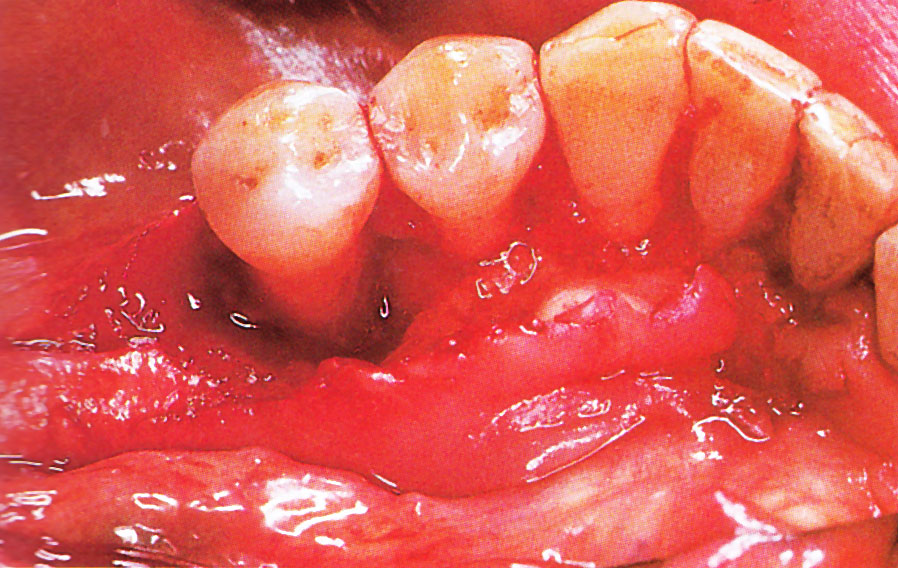
iii) Advanced Adult Periodontitis
Advanced periodontitis. From Colour Atlas of Common Oral Disease
Clinical features:
At least 6mm epithelial attachment loss
periodontal pocket depths exceed 6mm
alveolar crestal bone loss is more than 5mm
gingival recession
significant tooth mobility and class III furcation involvement (A through-and-through bony defect)
Other types of periodontitis
Early-onset periodontitis which can be prepubertal periodontitis and juvenile periodontitis
PURE® Patient Aesthetics
Pure monocrystalline sapphire for a virtually invisible bracket. PURE® Patient Comfort
Each PURE bracket has been diamond and heat polished for an ultra-smooth finish. PURE® Bond Strength
Propietary bonding base ensures the PURE brackets stay put until you are ready to remove them. PURE® Contoured Base
Bracket base allows for quick and easy bracket placement. PURE® Predictable Debonding
The bracket is designed to fail at the bracket/adhesive interface.
A young lady came to our clinic complaint of her teeth were crooked and her front teeth were jerking out (below). She wanted to have them corrected.
We suggested to her that braces would be the best treatment option.
She went through orthodontic treatment for 1 years and finally, all her teeth were well aligned (below) and she has the confident to smile again!!
Read more on how we corrected her teeth…
Some of the Whitening Result with Zoom In-Office Whitening System
Before Bleaching After Bleaching
In-office whitening procedure using ZOOM whitening system required only one dental appointment and you will have white, attractive teeth. Below are some of the results with ZOOM whitening
Book an appointment with our doctors now!! Click here
If you have any question, don’t hesitate to contact us, we are more than glad to provide you with the information you need!





 :
:  :
: 