Below are some of the digital radiography images taken for assessment and consultation prior to surgery removal of wisdom teeth in our clinic
The difficulty of the surgery to removal wisdom teeth are relied on a few factors:
the position of the wisdom tooth – deep impaction, horizontal impaction would be more difficult than the forward or backward tilt of the wisdom teeth
the number of roots – the more root a wisdom tooth has, the more difficult it is going to be
the morphology of wisdom teeth – if the crown is big than surgery will be easier, but if the roots are long, slender and curve then it will be more difficult to be removed as compared to short and fat roots
near to nearby structure – if the root lies in or very near to the nerve canal in the jaw bone then surgery to remove it has to be very careful not to damage the nerve.
Other factors: mouth opening, cooperation, the level of anxiety, age
Vertical Impaction of Lower Wisdom Teeth
* “R” side is the patient’s right
Left lower wisdom tooth was in vertical position, 2 separated roots. Surgical difficulty – simple. Right lower wisdom tooth (red arrow) was tilted backward (distally impaction), with 2 separated roots. The distal root curve 90 degree. Surgical difficulty – moderate to difficult.
Oral health is integral to general health – from the Surgeon General’s Report on Oral Health, 2000
What is the association?
The mouth is directly connected to the body by the bloodstream and the digestive system
Left untreated, plaque and inflammation can lead to gingivitis
Untreated gingivitis may progress to periodontitis
Recent evidence suggests that periodontitis is associated with systemic diseases such as heart disease (eg. heart attack, stroke) and diabeties.
Prevention is better than cure
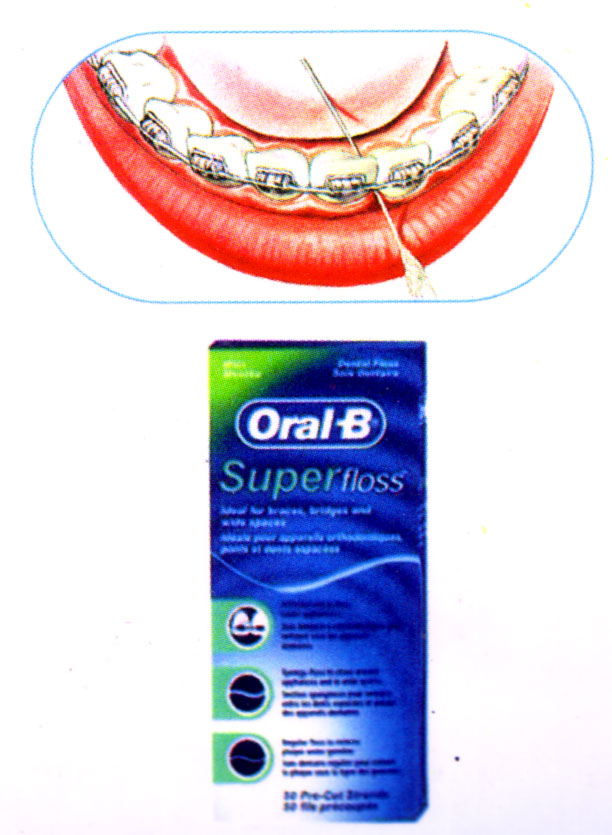
Daily Oral Care: Cleaning In Between
1. Dental Floss
Step 1
Step One:
Take about 18 inches (50cm) of floss and loosely wrap most of it around each middle finger (wrapping more around one finger then the other) leaving 2 inches (5cm) of floss in between
Step 2
Step Two:
With your tumb and index fingers holding the floss taut, gently slide it down between your teeth, while being careful not to snap it down on your gums.
Step 3
Step Three:
Curve the floss around each tooth in a “C” shape and gently move it up and down the sides of each tooth, including under the gumline
Diabetic patients are more likely to develop periodontal disease, which in turn can increase blood sugar and diabetic complications.
People with diabetes are more likely to have periodontal disease than people without diabetes, probably because diabetics are more susceptible to contracting infections. In fact, periodontal disease is often considered the sixth complication of diabetes. Those people who don’t have their diabetes under control are especially at risk.
A study in the Journal of Periodontology found that poorly controlledtype 2 diabetic patients are more likely to develop periodontal disease than well-controlled diabetics are.
Research has emerged that suggests that the relationship between periodontal disease and diabetes goes both ways – periodontal disease may make it more difficult for people who have diabetes to control their blood sugar.
Severe periodontal disease can increase blood sugar, contributing to increased periods of time when the body functions with a high blood sugar. This puts diabetics at increased risk for diabetic complications. Thus, diabetics who have periodontal disease should be treated to eliminate the periodontal infection.
This recommendation is supported by a study reported in the Journal of Periodontology in 1997 involving 113 Pima Indians with both diabetes and periodontal disease. The study found that when their periodontal infections were treated, the management of their diabetes markedly improved.
-Source: perio.org-
Researchers have found that people with gum disease are almost twice as likely to suffer from coronary artery disease. – American Academy of Periodontology
Heart Disease
Several theories exist to explain the link between periodontal disease and heart disease. One theory is that oral bacteria can affect the heart when they enter the blood stream, attaching to fatty plaques in the coronary arteries (heart blood vessels) and contributing to clot formation. Coronary artery disease is characterized by a thickening of the walls of the coronary arteries due to the buildup of fatty proteins. Blood clots can obstruct normal blood flow, restricting the amount of nutrients and oxygen required for the heart to function properly. This may lead to heart attacks.
Another possibility is that the inflammation caused by periodontal disease increases plaque build up, which may contribute to swelling of the arteries.
Researchers have found that people with periodontal disease are almost twice as likely to suffer from coronary artery disease as those without periodontal disease.
Periodontal disease can also exacerbate existing heart conditions. Patients at risk for infective endocarditis may require antibiotics prior to dental procedures. Your periodontist and cardiologist will be able to determine if your heart condition requires use of antibiotics prior to dental procedures.
Stroke
Additional studies have pointed to a relationship between periodontal disease and stroke. In one study that looked at the causal relationship of oral infection as a risk factor for stroke, people diagnosed with acute cerebrovascular ischemia were found more likely to have an oral infection when compared to those in the control group.
-Source: perio.org-
When you have heart disease, maintaning goor oral health is important. Remember:
Make sure your dentist and hygienist know you have a heart problem
Have regular dental checkups
Maintain good oral health by brushing and flossing twice a day
For many individuals, visiting a dental clinic is the worst fear they are going to face. Partly due to the unknown or unexpected procedure that they are going to face which is usually a painful or uncomfortable. Some people might have previous experiences from childhood dental clinics or traumatic dental treatments have left many patients with underlying dental fears and phobias of the dentist, which in turn leads to missed dental appointments, neglected teeth (dentition) and in worse cases dental toothache / dental pain. Regular dental examinations (check-ups) by your dentist will reduce your need for emergency dental treatment and toothache. If you have any concerns or worries about your teeth and gums, make a dental appointment with our team.
Nervous Patients
We in Prestige Dental Care understand how daunting and nerve wracking a trip to the dentist can be, we aim to take our time with you during your dental appointment and hope to allay those fears. We provide a calming atmosphere starting from your welcoming entry into reception, to the relaxing waiting area, stylish surgeries and friendly staff. Within time you can build up a good relationship with your dentist and feel confident in any dental treatment you may require.
During your initial appointment with your dental practitioner, you should use this time to discuss your fears and anxieties regarding dental care. Perhaps a certain treatment or procedure makes you feel uneasy, often once the dental surgeon has explained what they are going to do, you can feel reassured and know what to expect. It is often advantageous to agree a stop signal with your dentist, such as the lift of your hand, so the dental practitioner knows when you need a rest during the treatment appointment.
For those among us that have a deep set anxiety in relation to dental treatment we offer conscious dental sedation making dental treatment more acceptable.
Conscious Dental Sedation
For some people the word dentist does evoke a deep fear and this unfortunately prevents patients from seeking treatment. For our patients we offer conscious dental sedation which alleviates the anxiety associated with dental treatment making it a more tolerable experience.
Introduction: What is conscious dental sedation?
By definition, conscious sedation is:
“A technique in which the use of a drug or drugs produces a state of depression of the central nervous system enabling treatment to be carried out, but during which verbal contact with the patient is maintained throughout the period of sedation. The drugs and techniques used to provide conscious sedation for dental treatment should carry a margin of safety wide enough to render loss of consciousness unlikely.”
Conscious dental sedation is a technique used widely in dentistry to help those patients’ with a fear of the dentist. The sedative drug/gas is introduced through inhalation, orally or via a needle in the back of your hand or in your arm, you will become relax, drowsy and unaware of treatment but will still be able to cooperate with your dentist. The sedative drug will not render you unconscious but it will make you very relaxed and you will still be able to understand and cooperate with your dentist. The sedative drug also has amnesic properties so you may not remember your dental visit.
Throughout your dental procedure, your dentist will monitor your pulse and your oxygen saturation levels in your blood, these measurements helps the dentist keep an eye on you and makes sure you are alright.
Range of Techniques:
Intravenous sedation with midazolam
Inhalation sedation with nitrous oxide and oxygen
Oral sedation with benzodiazepines/midazolam
The majority of anxious or phobic patients can be treated with these techniques or a combination of them. Others may respond better with alternative techniques such as:
Intravenous sedation with more than one drug
Intravenous sedation with propofol
Transmucosal sedation (nasal, sublingual)
Some reasons for prescribing sedation:
To treat anxious or phobic patients who would otherwise be denied access to dentistry.
To enable an unpleasant procedure to be carried out without distress to the patient.
To avoid general anaesthesia
Transforming dental anxiety into soothing, peaceful relaxation with absolute safety.
Breathing nitrous oxide will put a smile on your face from the moment you slip into the dentist’s chair. This safe and highly effective method of patient relaxation has helped millions of people overcome their anxieties about dental treatment.
As you try nitrous oxide, your feelings of anxiety will melt away quickly and be replaced by a warm, gentle feeling. Patient describe the experince as peacefully floating in pleasant dreamlike state. The apprehensive child or adult, nitrous oxide can be the key to an enjoyable, comfortable and anxiety-free dental experience.
Nitrous oxide administrator unit
What is nitrous oxide?
Commonly known as “laughing gas”, nitrous oxide is a non-allergenic, non-irritating gas that affects the central nervous system. It is one of the safest forms of sedation available and is easily and completely reversed by breathing normally for 5 to 10 minutes following treatment.Nitrous oxide is used in combination with pure oxygen to relieve dentistry-related anxiety. When inhaled and absorbed into the body, nitrous oxide has a natural calming effect that lasts only as long as your dental procedure.
The goal of nitrous oxide inhalation..
The goal of use of nitrous oxide in dentistry is to eliminate dental anxiety, making the patient more comfortable while the sedation dentist is able to more effectively complete the planned dental care procedure while the patient is sedated. Consult with your dentist to find out if this pain free procedure right for you.
Is nitrous oxide safe?
COMPLETELY. Nitrous oxide is recognized as the safest sedative used in dentistry today. It is mild, non-toxic and removes itself naturally from your body after use. Its benefits are even recommended for patients with certain medical conditions, including high blood pressure, angina and a history of heart attacks. And, unlike general anaesthesia, patients on nitrous oxide remain fully conscious and responsive at all times.
Is nitrous oxide safe for children?
ABSOLUTELY. While our practice goes to great lengths to make every child feel at ease, some children required a degree of sedation to achieve successful treatment. Nitrous oxide is the safest, most effective form of sedation to relieve your child’s fears and ensure a positive experience.
Patient ready for nitrous oxide adminstration
What are the advantages of nitrous oxide?
It’s fast acting – Within minutes of administration, your stress will be transformed into a sensation of smoothing relaxation and pain-killing properties develop after 2 or 3 minutes..
Your depth of sedation can be adjusted easily – The depth of nitrous oxide sedation can be adjusted to quickly achieve your optimal level of relaxation. Other sedation techniques don’t allow for this. For example, with IV sedation, it’s easy to deepen the level of sedation, but difficult to lessen it.
Recovery time is short – In just 3 to 5 minutes after the flow of nitrous oxide is stopped (100% Oxygen flush), the effects completely disappear from your system. In fact, nitrous oxide is the only form of sedation that has no lasting after-effects that impair your ability to drive. You will simply feel refreshed and ready to go about your daily activities.
Certain procedures can be done without local anaesthesia– those that usually involved the gums such as deep cleaning. Nitrous oxide acts as a painkiller on soft tissues such as gums. However, its pain-relieving effects vary a lot from person to person and can’t be relied upon.
Very safe – Inhalation sedation has very few side effects and the drugs used have no ill effects on the heart, lungs, liver, kidneys, or brain.
Reduce gagging – Inhalation sedation can be very effective in eliminating or at least minimizing severe gagging.
Monitoring the oxygen level and the hearth rate throughout the procedure will make gas sedation a safe procedure
Disadvantages of nitrous oxide?
Not comfortable with laughing gas – Some patients might afraid they might ‘lose control’ and some actually feel nauseous when inhaling nitrous oxide which are quite rare and usually due to over-sedation.
Inadequate of sedation – Some people will not achieve adequate sedation with permissible levels of oxygen.
Not comfortable with nasal mask – If you can’t breathe through your nose (either because you’re a pure mouth breather, or because your nose is blocked), or you feel too claustrophobic when something is put over your nose, it can’t be used.
Contraindications of nitrous oxide
Significant respiratory compromise
Upper respiratory tract infection
Conditions related to vitamin B12 deficiency
Nitrous oxide is relatively contraindicated in pregnancy
What does it feel like?
The most common sensations that patients experience are:
tingling of hands and feet
a general feeling of warmth
numbness of your legs, tongue and oral tissues
a ringing sensation or droning sound
feelings of euphoria
feelings of heaviness or lightness
If you feel nauseous while breathing nitrous oxide, please inform the dentist immediately so that the level can be adjusted. Not everyone enjoys the feeling of nitrous oxide. If you feel uncomfortable at any time while breathing nitrous oxide, you can discontinue it at once by breathing deeply through your mouth. Be sure to let the dentist know so that the gas can be turned off.
Before taking nitrous oxide:
1. Do not eat or drink anything for 2 hours prior to your appointment. Otherwise you may feel nauseous or vomit during treatment. 2. Inform us of any changes to your medical history or any medications you are presently taking. 3. Use the restroom before your dental procedure.
Is nitrous oxide right for me?
Please discuss the possibility of nitrous oxide conscious sedation with us. It may be just the solution you or your child have been waiting for. If you have any questions regarding the use of nitrous oxide, feel free to discuss it with our dentist.
Book an appointment with our doctors now!! Click here
If you have any question, don’t hesitate to contact us, we are more than glad to provide you with the information you need!



![Consultation01 [1600x1200]](https://prestige-dental-care.com.my/wp-content/uploads/2011/02/Consultation01-1600x1200.jpg)


 :
:  :
: 