Blog

NEWS AND DENTAL EDUCATION

We share informative articles and news.


20/Feb/2011

ZOOM!! Whitening System


The Zoom! ™ In-Office Whitening System is a revolutionary tooth whitening procedure. It’s safe, effective and fast, very fast. In just over an hour, your teeth will be dramatically whiter. Zoom!™ Whitening is ideal for anyone looking for immediate results. The convenience of Zoom!™ in comparison to days of wearing trays and gradual whitening makes it the perfect choice for the busy individual.

Get ready to Zoom!

The Zoom! ™ Whitening procedure is simple and painless. It begins with a short preparation to isolate your lips and gums. The Zoom! ™ clinician then applies the proprietary Zoom!™ Whitening Gel, which is activated by a specially designed light. Teeth typically become at least six to ten shades whiter, sometimes more. A fiveminute fluoride treatment completes the procedure. You’ll be amazed with the results. In most cases, teeth get even whiter the first few days after the procedure.

How Zoom! works

The Zoom!™ light activated gel was developed after years of research by Discus Dental, the leaders in professional take-home tooth whitening. The gel is a scientifically formulated, pH balanced Hydrogen Peroxide that, when activated by the Zoom!™ light, gently penetrates the teeth to remove deep stains and discoloration. With proper care and an occasional touch-up at home, your whiter smile will sparkle for years.

Zoom! Teeth Whitening procedure

The Zoom! Whitening procedure is simple. It begins with a short preparation to isolate your lips and gums.

Isolation of lips and gums before bleaching

The accredited and trained dentist then applies the proprietary Zoom Whitening Gel, which is activated by a specially designed light.
Activation of bleaching gel with Whitening Lamp

Teeth typically become at least six to twelve shades whiter, sometimes more. A fluoride treatment for a few minutes completes the procedure. You’ll be amazed with the results. In most cases, teeth get even whiter the first few days after the procedure. We recommend a consultation and a thorough clean around one or two weeks before the Zoom! Teeth Whitening procedure if you have tartar or superficial stains.

Tune in to Zoom!

Ask your dental professional how the Zoom!™ In-office Whitening System will work for you. Take your first step to feeling good, looking great and making a memorable impression every time you smile. You owe it to yourself!

Frequent Asked Questions

Q. What is Zoom!™ tooth whitening?

A. Zoom!™ is a bleaching process that lightens discoloration of enamel and dentin.

Q. What causes tooth discoloration?

A. There are many causes. The most common include aging and consumption of staining substances such as coffee, tea, colas, tobacco, red wine, etc. During tooth formation,  consumption of tetracycline, certain antibiotics or excessive fluoride may also cause tooth discoloration.

Q. Who may benefit from tooth whitening?

A. Almost anyone. However, treatment may not be as effective for some as it is for others. Your dental professional can determine if you are a viable candidate for this procedure through a thorough oral exam, including a shade assessment.

Q. Do many people whiten their teeth?

A. More people than you might imagine. A bright, sparkling smile can make a big difference for everyone. The Zoom!™ Whitening System makes it easier and faster than ever before.

Q. Is whitening safe?

A. Yes, extensive research and clinical studies indicate that whitening teeth under the supervision of a dentist is safe. In fact, many dentists consider whitening the safest cosmetic dental procedure available. As with any tooth whitening product, Zoom!™ is not recommended for children under 13 years of age and pregnant or lactating women.

Q. How does Zoom!™ work?

A. The Zoom!™ light-activated whitening gel’s active ingredient is Hydrogen Peroxide. As the Hydrogen Peroxide gel is broken down, oxygen enters the enamel and dentin bleaching colored substances, while the structure of the tooth is unchanged.

Q. What does a patient experience during the  Zoom!™ procedure?

A. During the procedure, patients may comfortably watch television or listen to music. Many actually fall asleep. Individuals with a strong gag reflex or anxiety may have difficulty undergoing the entire procedure.

Q. How is exposure to the Zoom!™ light controlled?

A. The Zoom!™ procedure requires that all soft tissue in and around the mouth be protected. The clinician is required to monitor the procedure to insure any exposed skin or tissue is isolated and protected. Protective eyewear is required during the procedure. Light sensitive individuals including those undergoing PUVA therapy (Psoralen+UV Radiation) or other photochemotherapy, as well as patients with melanoma, should not undergo the Zoom!™ in-office procedure. Also, patients taking any light sensitive drugs or substances, whether over-the-counter, prescription or homeopathic, should consult their primary physician prior to procedure.

Q. How long does Zoom!™ Whitening take?

A. The complete procedure takes just over an hour. The procedure begins with a preparation period followed by one hour of bleaching. A five minute fluoride treatment completes the procedure. (A cleaning is recommended prior to the actual Zoom!™ Whitening session)

Q. Are there any side effects?

A. Sensitivity during the treatment may occur with some patients. The Zoom!™ light generates minimal heat which is the usual source for discomfort. On rare occasions, minor tingling sensations are experienced immediately after the procedure but always dissipate.

Q. How white will my teeth become ?

A. The results are spectacular. Clinical studies have shown that the Zoom teeth whitening treatment achieves up to 12 shades lighter with the average being 8 shades (On Vita-Shade guide). Individual results may vary and will depend upon your age, type of stain, initial tooth colour and any visible restorations (White fillings, crowns etc). Please ask our qualified dental staff how much whiter your teeth can be and we will show you what is possible on a tooth shade guide as shown below.To boost your results we recommend using custom made whitening trays for only 30 minutes a day for 5 to 10 days.
Some whitening clinics will only recommend either surgery whitening or home whitening. We have found that combining both methods is the best way to get the most dramatic results and keep them for life.

Vita Shade Guide

Q. How long do the results last?

A. By following the Zoom!™ Post Whitening Care Instructions, your teeth will always be lighter than they were prior to the procedure. The Zoom!™ whitening procedure includes a take-home touch-up kit and trays that can be used whenever discoloration is noticed. Most often a touch-up once a year will maintain a whiter smile that sparkles for years.

A Note of Assurance

Tooth whitening is a well-established procedure in cosmetic dentistry. Hydrogen Peroxide, the active agent in Zoom!,™ has also been safely used for many years in the treatment of gums and other oral soft tissue. The whitening process is effective on most discolored teeth. Darker stains, such as those caused by antibiotics, are more difficult to whiten. The degree of whiteness will vary from patient to patient, depending on the structure of the teeth. If you have any questions, please ask your dental professional who is there to help maximize your smile using the Zoom!™ Whitening System.

Read More


20/Feb/2011


What is Electrosurgery?

Electrosurgery is the application of a high-frequency electric current to biological tissue as a means to cut, coagulate, desiccate, or fulgurate tissue. (These terms are used in specific ways for this methodology—see below). Its benefits include the ability to make precise cuts with limited blood loss. Electrosurgical devices are frequently used during surgical operations helping to prevent blood loss in hospital operating rooms or in outpatient procedures.

In electrosurgical procedures, the tissue is heated by an electric current. Although electrical devices may be used for the cauterization of tissue in some applications, electrosurgery is usually used to refer to a quite different method than electrocautery. The latter uses heat conduction from a probe heated to a glowing temperature by a direct current (much in the manner of a soldering iron). This may be accomplished by direct current from dry-cells in a penlight-type device. Electrosurgery, by contrast, uses alternating current to directly heat the tissue itself. When this results in destruction of small blood vessels and halting of bleeding, it is technically a process of electrocoagulation, although “electrocautery” is sometimes loosely and nontechnically used to describe it. (Source from Wiakipidia)

Electrosurgery unit

Using electrosurgery in oral surgery procedures

Electrocautery is a very useful tool to make a cut or excise soft tissue just like a scaple blade does. While a cut is made; at the same time, electrosurgery coagulate the surrounding blood vessels make surgery bloodless. This will improve visibility during surgery and less blood loss. More over, healing of a wound with electrosurgery is proven to be faster that wound made by scaple blade.

Electrosurgery: Coagulating the gum area before impression taking during tooth preparation for crown fabrication

Dental procedure which can be done with

  • Excision of  lesions (eg. cysts, tumors)
  • Gum surgery
  • Implant placement
  • Crown lengthening
  • Coagulating the gum area before impression taking during tooth preparation for crowns/bridges

Advantages of using electrocautery

  • Less bleeding
  • Can be use to control bleeding
  • Wound heal faster with electrosurgery than using scaple blade


20/Feb/2011

Oral Sedation – Anti-Anxiety Medication

Oral sedation dentistry is a medical procedure involving the administration of oral sedative drugs (usually in the form of a tablet), generally to facilitate a dental procedure and reduce patients fear and anxiety related to the experience. It is the most commonly used method in relieving anxiety before a dental appointment. An anti-anxiety or a sleeping pill can be taken the night before the appointment, an hour before going to bed can help with falling asleep and getting some rest; or it can be just taken an hour before dental treatment.


Anti-Anxiety Pills (Benzodiazepines or “Benzos”)

In dentistry, the most commonly prescribed drugs for anxiety belong to the “benzodiazepine” family (eg. diazepam, triazolam, zaleplon, lorazepam, and hydroxyzine). You’ve probably heard of them by their tradenames – for example, Valium, Halcion, Xanax, or Ativan.

Benzos decrease anxiety by binding with receptors in the brain which tone down activity in those parts of the brain responsible for fear.

Travel warning!

You shouldn’t travel on your own after you’ve taken benzodiazepines – make sure you have an escort, even if you’re walking there! It’s easy to become disorientated and miss your stop if going by bus or train, or walk straight in front of a car – or you might even forget that you’re on your way to your dentist’s clinic.  So find someone to accompany you. And please don’t pop pills and drive!

Benzodiazepines has two main fuctions:

  1. Sedative-Hypnotics: drugs which induce drowsiness (“sedation”). In higher doses, they induce a state resembling physiological sleep (“hypnosis”).
  2. Anti-Anxiety Drugs: drugs which act primarily to relieve anxiety and make you feel calm.
Central Nervous System (CNS)

While all benzodiazepines act as sedatives and anti-anxiety drugs, some are more targeted at brain areas which control sleep and wakefulness, while others are more specifically targeted at brain areas which control emotions such as fear. The classification of whether a benzodiazepine is sedative-hypnotic or anti-anxiety is to some extent an arbitrary one, as the boundaries are quite fluid. As a rule of thumb, in higher doses benzos act like sedatives and may promote sleep, while in lower doses, they simply reduce anxiety.


Benzodiazepines are Central Nervous System (CNS) depressants (for example, there can be a decline in blood pressure and breathing – which is good, because if your heart isn’t racing, you’ll feel calmer). They should not be mixed with other CNS depressants such as alcohol. Don’t self-medicate and stick to the dose your dentist or doctor recommends (which may be a higher dose than specified on the drug package insert. Reason being that the package inserts recommend a dose to induce sedation or sleep in a nonstress situation such as the home environment). It is possible to overdose on these things, and overdoses could lower breathing to dangerously low levels, which could result in coma or even death.

People for whom benzos have worked well describe them as “working wonders”, as having a calming and relaxing effect, or as making you feel “out of it”. Giddiness, confusion and saying silly things are also common. Benzos may make you forget large parts of what happened while you were under their influence, which can be handy if you don’t want to remember very much! However, this effect is not reliable.

Dentists who offer oral sedation will have particular preferences, depending on their experience (and experiences) with various drugs. Commonly prescribed benzos include:

Midazolam (Dormicum):

We use this drug mostly to sedate our customers  for dental treatment.  Midazolam is a short-acting benzo which can produce high levels of sleepiness and memory loss (amnesia). It is given in tablet form (7.5mg for adult) by dentist usually half an hour before procedure. It kicks in very quickly, after about 10-20 minutes. The effect last 1 to 2 hours.

Diazepam (Valium):

Diazepam is another sedative drug widely used for dental treatment as well as in the hospital setup. It  produces a mild level of sleep and amnesia, and takes effect about an hour after taking it. The average dose for an adult is 5 to 10 mg. The disadvantage of diazepam is that it stays in the system for much longer than it is needed (it has a half-life of 20-100 hours).

Temazepam (Restoril):

Temazepam is quite frequently used in the UK. In contrast to Valium, its half-life is about 10 hours, so quite a bit shorter. It kicks in after about half an hour. The recommended dose is 10 – 40 mg (with the most common one being 30 mg). Why this huge range? In some people 40 mg of temazepam produces minimal effects whilst in others as little as 10 mg produces profound sedation. This is a problem with all benzos – there is no known method of identifying who is susceptible and who is resistant to benzodiazepines.

Lorazepam (Ativan):

Lorazepam can produce a higher level of sleepiness and memory loss than diazepam. The usual dose is 2 to 3 mg. It kicks in after about one hour, like diazepam, but its half-life is much shorter (12 to 14 hours).

Midazolam (Versed):

Midazolam is a short-acting benzo which can produce high levels of sleepiness and memory loss. It is given as a syrup or mixed into a drink. The drink would usually be given at the dentist’s. It kicks in very quickly, after about 10-20 minutes.

Triazolam (Halcion):

This is not available in the U.K., but is hugely popular in the U.S. Unlike the other benzos mentioned here, it is not so much used as a premedication, but as an alternative to IV sedation in the dental office. This can work really well for some people and many swear by it! But as with all benzos, other people find it has little effect on them.

Controversies in Dentistry – Titration of Oral Sedatives

Occasionally, Halcion is used in the United States as an alternative to IV sedation. One of the effects of Halcion is that it can induce amnesia (memory loss) for what’s happening from the point the drug kicks in to the point it wears off. (All benzos can have this effect to some extent, but Halcion somewhat more so than others. However, the amnesia effect is unreliable – this also applies to Halcion). If Halcion is given intermittently one hour before an appointment and then during treatment at intermittent intervals, it can work well for some people as a substitute for IV sedation.

However, in 2002 the American Dental Association came out in a position paper against titration of oral sedation medication (titration means adding more of the drug, i. e. giving extra pills until the desired effect is achieved). This statement followed the rise of an organization called the “Dental Organization for Conscious Sedation” (or DOCS for short) which was founded in 2000 by a DDS called Michael Silverman and provides training in oral sedation. In 2004, DOCS had more than 1,900 member dentists in the US. DOCS is where the misleading term “sleep dentistry” (applied to oral sedation) was first invented. The training courses also advocate titration of oral medication. Many dentists feel that this practice is unsafe and/or that the training is not thorough enough. Even with thorough training, many dentists believe that titration of oral medication is too unpredictable. Oral medication can take up to two hours to absorb – so a patient could swallow a pill and the dentist, not seeing the effects of the drug an hour or two later, delivers a second pill. Meanwhile, the first pill is being absorbed and the patient has ingested twice the amount he or she needs. To be fair, it should be mentioned that there have been no adult deaths reported using the DOCS regime so far.

Because of the medical and legal situation, many dentists do not feel comfortable with this method.

Can I take benzos as a premedication before IV sedation?

Yes you can. You must however let your dentist know that you have taken them and what dose (unless your dentist has prescribed them and knows anyway). Be sure to inform your dentist beforehand, rather than on the day, because you may forget to mention it otherwise.

When not to take benzodiazepines (contraindications):

This varies from drug to drug. For example, some benzos are safe to take if you have liver problems, while others are not, and some are safe to take if you have heart problems, while others are not. You should be sure to inform your doctor or dentist if any of the following apply: known allergy to the drug, narrow-angle glaucoma, pregnancy, severe respiratory disease (COPD), congestive heart failure (CHF), impaired kidney or liver function, depression/bipolar disorder/psychoses, chronic bronchitis and some other conditions. Also if you’re taking other medications be sure to mention this.

Oral sedation – A hit-and-miss affair?

One problem associated with oral sedation is that it can be a bit of a hit-and-miss affair. Basically, you don’t know how well the drug will be absorbed from the stomach. Because the response to a drug is unpredictable anyway, you have to tailor the dose so that the 25% of people most susceptible to the drug won’t get an overdose. But that means that the 25% who are least susceptible won’t get enough… Body weight, height, or gender are not good indicators of how high the “ideal dose” should be, because the drug exercises its effects on the nerve cells in the brain. So, if you’re quite large, don’t take a little extra “just in case”. A standard dose might have virtually no effect on a petite female, but a large guy might be totally zonked after taking the same dose… you get the picture!

Other factors which may affect how well a benzo will work include whether you want it to work and your (and your doctor’s/dentist’s!) belief that it will work (the so-called “placebo effect”, which, BTW, has been shown to work even if you’re aware of it). If you don’t want the drug to work, for example because you’re scared of losing control, your brain may try and fight the effects of the drug. As a result, you may not experience much of an effect at all, or else experience the effect as unpleasant. In which case, oral sedation may not be for you.

What people said about benzos:

“My doctor prescribed me valium. I take one 30 minutes before my appt. It makes you a little sleepy and your anxiety disappears. It puts you in a “whatever” mood and helps you stop thinking about the pain or worries. ”

“I remember being taken to the chair and them giving me a vial of liquid Halcion…This stuff tastes like Peppermint Cherry…leaves a strong taste in your mouth, but no side effects… Everything around me went fuzzy and blurry, like I was in a dream or something. They moved me to the other room, where everything happened so fast!!! I don’t actually remember much, but I did feel bits and pieces… it wasn’t like a “Get me out of this chair now, feeling” but something that I could deal with… I remember them preparing the molds for my bridge and crown, but I didn’t quite care, and I didn’t even GAG! Which normally I would have!

I did have some amnesia, and I did feel somewhat calm and distant from the procedures, which made me feel good. The appointment was 2 hours, but it felt like I was in and out of there in like 15 minutes. I don’t remember walking to the car or the ride home.”

Zolpidem (Ambien)

Ambien is a sedative/hyppnotic drug designed to relax you and help you fall asleep. So it can be useful for the night before an appointment. It is chemically similar to benzodiazepines. It is not a barbiturate (the traditional “sleeping pill”, which thankfully has fallen out of favour).

Source: Dental Fear Central

Read More


20/Feb/2011


What is an apex locator?


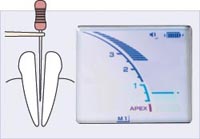
An apex locator (or electronic apex locator – EAL) is an electronic device used in endodontics/root canal therapy to determine the position of the apical foramen and thus determine the length of the root canal space. The apex of the root has a specific resistance to electrical current, and this is measured using a pair of electrodes typically hooked into the lip and attached to an endodontic file. The electronic principle is relatively simple and is based on electrical resistance; when a circuit is complete (tissue is contacted by the tip of the file), resistance decreases markedly and current suddenly begins to flow. According to the device, this event is signaled by a beep, a buzz, a flashing light, digital readouts, or a pointer on a dial. – source from wikipedia

Role of Electronic Apex/ Foramen Locators

Working length determination during root canal therapy has been greatly aided by Electronic apex locators (EALs). They can save time in determining initial working length, save on the number of X rays taken, and can be particularly helpful when the periapex is unclear on radiographs or when there is a question about whether a perforation has occurred.
As the matter of fact,  foramen does not coincide with the anatomical apex in most teeth. You can confirm this fact by examining the morphology of extracted teeth. One of the earliest brands was Root ZX by JMorita of Japan which still is the gold standard in accuracy as confirmed by various studies. We have been using it for many years. Intraoral radiographs do not show the apical foramen and are often misleading, leading to compromising results, see below. Picture shows how radiographs can be deceptive in determing correct working length-WL, you will never be able to assess correct WL without a good apex locator.

Root ZX II – Accurate apical foramen measurement

Root ZX Apex locator

Currently, we are using Root ZX apex locator for our root canal treatments.
Invented in 1992, the J. Morita Root ZX II is currently one of the best selling apex locators. It has proven itself safe and accurate, and was the first unit providing dentists the capability to work in wet canals. Blood and other fluids do not typically affect measurements.
Root ZX II patented technology offers an accuracy rate above 96%. LCD readout is large and easy to read. Action of the meter in the display corresponds to the tactile sensation of using the file.
Other Root ZX II Features:

  • slim, lightweight file holder
  • no zero-adjustment
  • automatic calibration
  • battery power indication
  • automatic power off function

An in vitro comparison of three apex locators concluded that the Root ZX II was significantly more accurate at finding the apical foramen than competitive models.

Read more


20/Feb/2011

An articulator is a mechanical device used in dentistry which represents the anatomy of temporomandibular joint (the joint connecting lower jaw to the skull), upper jaw and lower jaw of patient to which upper teeth cast and lower teeth cast are fixed to the articulator in order to reproduce patient’s jaw movements. By nature, the purpose of these articulators can only be achieved when the position of the maxilla is duplicated with respect to the skull. The upper teeth cast should be mounted on a semi-adjustable articulator using a face bow. The closer the articulator matches the patient’s anatomy, the better the treatment outcome will be, hence shorter dental treatment time is required. It is a complex articulator which almost imitates the anatomy of the temporomandibular joint and follows the movement of your lower jaw. Therefore, it can be used in the fabrication of complex crowns, long span bridges and full mouth rehabilitation. This articulator is also used for jaw surgery (orthognathic) planning. Semi-adjustable articulator is adjustable in certain areas but not all. They have adjustable horizontal condylar paths, adjustable lateral condylar paths, adjustable incisal guide tables, and adjustable intercondylar distances. Nevertheless, this articulator is adequate for most of the cases. Uses of articulators
  • Educate to patient their jaw relation
  • Reproduce patient’s jaw movement like opening and closing of mouth
  • To diagnosis the state of patient’s occlusion
  • To help in treatment planning
  • To help in fabrication and modifying of dental restoration (dental crown and bridge)
  • To obtain good occlusion for dental restoration
  • For jaw surgery planning
  • Allows teeth arrangement for denture
Advantages of articulator
  • Dentist allows to adjust patient’s dental restoration on the articulator (outside patient’s mouth) without the disturbance of patient’s tongue, cheek, and saliva.
  • Reduce dental visits and treatment time because articulator helps to resemble patient’s jaw relation.
  • Adjustment and correction of dental restoration can be done in the absence of patient
  • With the help of articulator, your dentist allows to visualize the inner side of your teeth easily


20/Feb/2011

“Why does my dentist takes photo of my teeth?”

I’m sure some of you have been wondering about it. So here’s why dentist takes photo of your teeth and even portraits sometimes.

Photostudio in our clinic
  1. Photography act as a vital communicating tool between dentist and the patient so that a clearer message or explanation can be delivered.
  2. Imperfections that are not readily visible to the patient will be apparent in still photographs, patient get to visualise his/her oral condition.
  3. Establish a baseline so that dentist able to monitor any recession or suspicious lesions that you may have in your mouth to discover if these conditions are getting better or worse.
  4. Document cases by dentist for recording purpose.

DSLR Camera

Multiple system can be choose for dental photography and generally work well for practices. However, the digital single lens reflex (DSLR) camera still the most ideally suited for practices that to use photography for documentation for lectures or publications.

Basic kit for dental photography:

  1. DSLR camera system
  2. Macro lens (85–105 mm)
  3. External ring flash / Dual Flash
  4. Retractors
  5. Mirror
  6. Contrastor
105mm lens
Retractors and mirrors

Intra-Oral Photos

Multiple views of intra-oral photos will be taken. The basic views are:

  1. Front view without retractor
  2. Front view with retractor
  3. Left buccal view
  4. Right buccal view
  5. Upper occlusal view
  6. Lower occlusal view
Example of Intra-oral Pictures

Dentist might take some extra photos which specifically focus on a tooth/ area to focus on the problematic part.

Studio Photography

Sometimes additional extra-oral photos are needed. In our clinic, there’s a room set up with some additional tools for portraits such as NiceFoto TB-400C Flash with a diffuser/ softbox, and a white lighting board mounted on a wall.

Studio flash kit

Extra Oral Photos

For extra-oral, pictures of patient must include full face. The basic views are:

  1. Front profile view
  2. Front smiling view
  3. Left & Right profile view
  4. Left & Right 45° profile view
Example of Extra-oral (Portrait) Pictures


20/Feb/2011

Why is it important?

There is a significant risk of cross infection between patients and dental personnel. Patient’s safety and well-being is of utmost priority to every dental team. Effective infection control helps in preventing transmission of infectious diseases (such as Hepatitis B & C, HIV etc.). We strictly adhere to universal precautions developed by the Centers for Disease Control and Prevention in our dental clinic. 

What are the precautions?

  • Medical history
  • Personal Hygiene
  • Personal Protection
  • Handling Dental Instrument
  • Surface cleaning

Medical history

Thorough medical history is mandatory and should be up-dated not only to detect any presence of active infections but some medical conditions may adversely affect the content of the dental treatments.

Personal hygiene

Hand washing

Hand hygiene is the most important measure to prevent spread of infection. Hand washing prior to and immediately after every visit as hands are the most common way to transmit diseases.

Personal protection

Appropriate protective equipments such as uniform/ disposable gown, masks, gloves and protective eyewear are required to protect dental personnel from spatter and aerosols during dental treatment. After each appointment, disposable items such as face masks and gloves are discarded.

Handling Dental instruments

Used instruments are cleaned and presoak in disinfactant
The dental instruments are place in the ultrasonic cleaner to further cleaning
After cleaning, the instrument are packed before sterilization
After sterilization, they will be placed back into the drawers ready to be used again!!

Non-disposable items like dental tools are cleaned and sterilized before use. Disposable items such as injection needle and blades are disposed and never reused on another patient. Handpieces are cleaned with handpiece cleaner unit before re-use. Dental instruments are presoaked in the disinfectant and cleaned, packed and sent to autoclave unit to be sterilized after every use. After sterilization, all the instruments are stored in drawers to prevent recontamination.

Surface disinfection

Disinfection Solution

Before any appointment, all the surfaces such as dental chair, light handles and handpieces are wiped and cleaned. Disposable coverings are used on handpieces and suctions and discarded after use.

Waste disposal

Yellow Bin

Sharp wastes such as needles and blades are disposed into special bin called Yellow Bin. Clinical waste will be collected in the clinical waste bin.

Conclusion

Effective infective control is crucial in dental practice so that oral health can be delivered to patients in a safe manner.

We have the best infection control and sterilization method in town and we always upkeep ourselves with the latest technology and ideas to keep our customers and ourselves safe. I guess most of us want the cleanest and safest clinic as none of us want to get infected when we just go for a simple scaling!!


20/Feb/2011

In Malaysia, 2 persons are diagnosed with oral cancer every day where 75% seek treatment at the later stages and only half of them survives. According to the National Cancer Registry, Ministry of Health, mouth cancer is the third most common cancer among Malaysian Indian community. If cancer is detected earlier, the treatment outcome is more favorable and the chance of survival is definitely much higher. And of course, prevention is better than cure. Biopsy can be performed to detect the abnormalities of the swelling whether it is benign (good) or cancerous.

Tissue sample for biopsy


What is biopsy?


A biopsy is a procedure where a small part of tissue is removed so that it can be looked closely under microscope.

When is it indicated?

  • A sore or lesion on any area of your mouth which lasts for more than 2 weeks.
  • A white or red patch on your mouth.
  • An non-healing ulcer for more than 2 weeks.


What is the purpose of a biopsy?

a. For definitive diagnosis so that correct treatment can be initiated as soon as possible

b. To establish prognosis of a pre-cancerous or cancerous lesion


Types of biopsy

There are few types of biopsy but most commonly used are:

a. Incisional biopsy

  • A small portion of suspicious swelling will be removed and sent to the laboratory for diagnosis purpose.
  • Pathologists will determine the nature of the swelling and staging of swelling if it is found to be cancerous.
  • Often indicated when the swelling is large and has differing charecteristics, so it may need investigation on several areas.

b. Excisional biopsy

  • Whole swelling will be removed for both diagnosis and treatment purpose.
  • Often indicated when the swelling is small, usually less than 2cm.


How is it performed?

Excisional Biopsy

The procedure is painless as it is done under local anesthetic (numbing injection). Dentist will take small piece of the tissue and stitching is often required afterwards. The tissue specimen will then be labeled and stored into container with special solution inside. It will be sent to the laboratory for investigation. The procedure usually takes 15 minutes from start to finish.


So, if you have a persistent swelling inside your mouth, do seek a dentist for consultation. Don’t be panic, not all the swelling are cancerous but it is better to get it check as soon as possible.

Read More…


20/Feb/2011

Gum surgery sometimes needed to correct the gum defect caused by gum disease (such as periodontitist) or gum recession usually due extensive brushing. Gum surgery will helps to impove the gum aesthetically but most importantly, it enable the patient to clean his teeth better.

Different Types of Gum Surgery

There are certain  types of gum surgery that usually the dentist will perform depend on the condition of the patient’s gum:

  • Pocket reduction (Gingiva Flap Surgery) This procedure is indicated for patient with deep pocketing on his gum as the result of gum disease (periodontitist). In this procedure, dentist or periodontist (gum specialist) will reflect the gum to expose the root of deep cleaning and then reposition the gum slightly lower in order to reduce pocket. Thus, this allows the patient to clean his teeth more efficiently.


  • Regeneration (Guided bone regeneration GBR) When there is excessive bone lost to a single or few teeth in the mouth, the dentist/periodontist might try to ‘re-grow’ the bone back around the tooth. The procedure can be done only after the gum disease ceased. Dentist/periodontist folds back the gums and removes disease-causing bacteria, then inserts bone grafts, membranes, or tissue-stimulating proteins (or any combination of the three) to encourage your gum tissues to regenerate and fit snugly around the teeth again.


  • Crown lengthening This procedure is done to lengthen the crown of the tooth for restoration later (Example: porcelain crowns or fillings). In cases where the tooth breaks down badly, sometimes, up to the gum level; crown lengthening is performed before restoration. The gum around the tooth will be removed to expose the root. This can be done with laser or electrocautery under local anesthetic. Once the gum healed, the tooth finally will be restore with filling or porcelain crown.


  • Removing excessive gum (Gingivectomy) In certain conditions where overgrowth of gum covering the teeth (gingiva hyperplasia), gingivectomy can be performed to reduce it. Gingiva hyperplasia usually cause be irritation to the gum, or certain medication patient taking causing the gum grows excessively or can be unknown reason. Basically, gingivectomy improves the teeth aesthetically and reduce plaque accumulation around them.


  • Soft tissue graft (Gingivoplasty)This procedure is performed on the gum that is thin and receded due to over-brushing. Dentist will take a tissue from elsewhere in your mouth (usually on the palate) and attaches it to your gums to replace gum tissue that has receded or has been removed due to gum disease. This procedure is often used for cosmetic purposes as well as to treat gum disease because it covers areas where the root is becoming exposed and improves the appearance of the teeth.

Is Gum Surgery Painful?

Most people will have only mild to moderate pain after surgery that can be managed with pain relievers. If the is moderate swelling on the gum, cold pack can be used to reduce it. Usually the dentist will give instructions on managing the wound after surgery.

More info


Treatments of gum disease:


Get in touch

Contact us now

Book an appointment with our doctors now!! Click here
If you have any question, don’t hesitate to contact us, we are more than glad to provide you with the information you need!

We accept Cash, Credit Card, Grabpay, Alipay, Touch n Go, MayBank QRPAY and Boost


Follow us

Our Activity

Curious about what we do every day? Follow us to learn more about the dental health care we provide.


Copyright 2023. All rights reserved.